How Many Koi Fish Is Good Luck? Every Lucky Number Explained
By Giovanni Carlo · Koi keeper & founder, Giobel Koi Center · Updated June 8, 2026

Quick Answer
The luckiest number of koi fish is 9 — specifically 8 red or gold koi plus 1 black koi. But the right number for you depends on your goal: 2 for love, 3 for growth, 6 for smooth wealth, 8 for abundance, 9 for complete lasting prosperity. Always avoid 4 — it sounds like “death” in both Chinese and Japanese.
In This Guide
- Choose by Goal: Which Number Is Right for You?
- Every Lucky Number Explained (1 to 9)
- The One Number to Always Avoid
- Color Matters As Much As Number
- Pond Sizing: How Many Koi Fit Safely?
- Why Overcrowding Cancels Your Good Luck
- No Pond? Alternatives That Still Work
- Common Myths About Koi Fish and Good Luck
- Frequently Asked Questions
Choose by Goal: Which Number Is Right for You?
The most common mistake people make when setting up a feng shui koi pond is choosing a number based purely on what “sounds lucky” without considering what they actually want to attract. In feng shui, each number carries a specific energetic intention — and matching your number to your goal is what makes the practice work.
Use this table to find your ideal koi count based on what you want most right now:
| Your Goal | Best Number | Best Colors |
|---|---|---|
| Fresh start / new chapter | 1 Koi | Gold Ogon or Kohaku |
| Love, romance, partnership | 2 Koi | Red + White (Benigoi + Shiro Muji) |
| Business growth / creativity | 3 Koi | Mixed — Kohaku, Chagoi, Showa |
| Full elemental balance | 5 Koi | One of each: red, white, black, gold, blue |
| Steady career / smooth wealth flow | 6 Koi | Gold Ogon or Yamabuki Ogon |
| Maximum financial abundance | 8 Koi | All red or gold |
| Complete prosperity + protection ✦ Best overall | 9 Koi | 8 red/gold + 1 black (guardian) |

Every Lucky Number Explained: 1 to 9 Koi Fish
1 Koi Fish — New Beginnings and Independence
A single koi represents unity, self-reliance, and the energy of a fresh start. In Japanese tradition, one koi symbolizes a lone warrior — determined and focused on a singular path. If you are embarking on a new chapter — a new job, a move, a business launch, or a personal reinvention — one strong, vibrant koi is a powerful intention setter. Choose a gold Ogon for wealth or a Kohaku for good fortune and vitality.
2 Koi Fish — Love, Partnership, and Harmony
Two koi swimming together is one of the oldest and most enduring feng shui love symbols. A pair — particularly one red and one white — represents the perfect yin-yang balance of a harmonious partnership. This is why two koi are a classic choice for newlyweds, couples seeking deeper connection, or anyone wanting to attract a meaningful relationship. In Chinese feng shui, two fish together is a direct remedy for romance and fidelity.
3 Koi Fish — Growth, Creativity, and Happy Families
Japanese culture holds three in particularly high regard — it is associated with creativity, expansion, and joy. Three koi bring a lively, generative energy to a pond or home, supporting the growth of anything you are building: a business, a family, a creative project, or a career. This is an excellent number for entrepreneurs and young families.
5 Koi Fish — Balance of the Five Elements
Five corresponds directly to the five fundamental elements of feng shui: Wood, Fire, Earth, Metal, and Water. A pond of five koi — ideally one representing each element’s color (green or blue, red, yellow, white, black) — creates a fully balanced energetic environment. This is the choice for those who want harmony across all areas of life simultaneously, rather than focusing on one specific goal.
6 Koi Fish — Smooth Wealth and Career Flow
In Chinese numerology, six (liù, 六) sounds like the word for “smooth” or “flowing.” Six koi represents wealth that arrives without friction — a steady, reliable stream of financial progress rather than a sudden windfall. Business owners, professionals seeking promotion, and anyone who wants their finances to flow more easily often choose six gold Ogon koi for this purpose.
7 Koi Fish — Universal Good Luck
Seven is one of the few numbers that carries lucky significance across both Eastern and Western cultures. In feng shui it represents togetherness and good relations. For Western hobbyists who want a number that blends their own cultural luck traditions with feng shui principles, seven is a meaningful bridge — attracting general positivity, strong relationships, and well-being.
8 Koi Fish — Maximum Financial Abundance
Eight is the most powerful pure wealth number in Chinese culture. The word bā (八) sounds nearly identical to the word for “prosper” or “wealth” — which is why the number 8 is so coveted in Chinese business culture (phone numbers, license plates, addresses, launch dates). The figure 8 also mirrors the infinity symbol, suggesting wealth that flows without limit or end. Eight gold or red koi is the most direct feng shui statement for attracting continuous, growing financial prosperity.
9 Koi Fish — The Most Auspicious Number Overall
Nine is universally recognized as the luckiest number for koi fish, and the reasons run deep. In Chinese, nine (jiǔ, 九) sounds like “long-lasting.” In Japanese, nine (ku) carries the same phonetic link to permanence and eternity. As the highest single-digit number, nine represents the pinnacle of attainment — wealth, health, love, longevity, and wisdom, all achieved simultaneously.
The classic nine-fish setup — 8 red or gold koi plus 1 black koi — is not arbitrary. The 8 bright fish actively attract positive chi and wealth from every direction, while the lone black koi acts as a guardian, absorbing sha chi (negative energy) before it can harm the household. This combination attracts abundance and protects it at the same time.
The One Number to Always Avoid: 4 Koi Fish
Important Warning
Never keep 4 koi fish. In both Chinese (sì, 四) and Japanese (shi), the word for “four” is a homophone for “death.” This makes it the most universally avoided number across East Asian feng shui practice. The association is so strong that many hospitals, hotels, and apartment buildings in China, Japan, Korea, and Taiwan skip the fourth floor entirely.
If you currently have 4 koi and want to realign with feng shui principles, the simplest fix is to add one more fish, bringing your total to 5 — a balanced, auspicious number. You can also remove one to reach 3. Either adjustment immediately shifts the energy of your pond from inauspicious to positive.
Color Matters As Much As Number
A common gap in most “how many koi” guides is that they focus entirely on number while ignoring color — but in feng shui, the two work together. Choosing the right number with the wrong colors can dilute or redirect the energy you are trying to attract. Here is how koi colors map to specific life areas:
| Koi Color | What It Attracts | Feng Shui Element | Best Variety |
|---|---|---|---|
| 🟡 Gold | Wealth, financial prosperity | Metal | Gold Ogon, Yamabuki Ogon |
| 🔴 Red / Orange | Love, success, passion, vitality | Fire | Benigoi, Kohaku |
| ⚫ Black | Protection, absorbs negative energy | Water | Karasu, Matsukawabake |
| ⚪ White | Purity, new beginnings, career | Metal | Shiro Muji, Platinum Ogon |
| 🔵 Blue | Calm, peace, mental clarity | Water | Asagi, Shusui |
| 🥈 Silver | Career achievement, business growth | Metal | Platinum Ogon |
For a full breakdown of every koi color and variety, see: The Meaning Behind Koi Fish Colors.
Pond Sizing: How Many Koi Fit Safely?
This is where feng shui ambition and practical fish keeping must work hand in hand. The luckiest number of koi is meaningless if your pond cannot support them healthily. Koi are large, active fish that produce significant waste — adult koi typically grow to 18–24 inches and can reach 36 inches in ideal conditions.
The widely accepted stocking rule used by professional koi keepers and pond builders is:
The Golden Stocking Rule
1 adult koi per 250 gallons of pond water — assuming quality filtration and regular maintenance. For juvenile koi (under 6 inches), use the backup rule of 10 gallons per 1 inch of fish length.
| Lucky Number | Minimum Pond Size | Approx. Pond Dimensions | Goal |
|---|---|---|---|
| 1 Koi | 250 gallons | ~5ft × 4ft × 3ft deep | New beginnings |
| 2 Koi | 500 gallons | ~7ft × 5ft × 3ft deep | Love & partnership |
| 3 Koi | 750 gallons | ~8ft × 6ft × 3ft deep | Growth & creativity |
| 6 Koi | 1,500 gallons | ~10ft × 8ft × 3ft deep | Smooth wealth flow |
| 8 Koi | 2,000 gallons | ~12ft × 8ft × 3ft deep | Maximum abundance |
| 9 Koi ✦ | 2,250 gallons | ~13ft × 9ft × 3ft deep | Complete prosperity |
Why Overcrowding Cancels Your Good Luck
This is the most important practical warning in this guide. Many beginners hear that 9 koi is the luckiest number and immediately try to fit 9 koi into a pond sized for 3 or 4. This is a serious mistake — and in feng shui terms, it actually reverses the intended effect.
Here is what overcrowding does to your pond and your luck:
Practical Damage
- Ammonia spikes from excess waste
- Oxygen depletion — fish gasp at surface
- Disease spreads rapidly in stressed fish
- Stunted growth from territorial fighting
- Filter overload and water quality crash
Feng Shui Damage
- Stressed koi radiate negative chi
- Sick or dying fish signal misfortune
- Stagnant, dirty water = blocked energy
- Symbolic intent becomes hollow
- The pond becomes a drain on luck
The rule is simple: a smaller number of thriving, healthy koi is infinitely more auspicious than a large number of stressed, struggling ones. If your pond can only support 3 koi comfortably, keep 3 beautiful, vibrant koi and let them flourish. That is far more powerful feng shui than cramming in 9 and watching them deteriorate.
No Pond? Alternatives That Still Work
Living in an apartment, a rented property, or simply without the budget or space for a koi pond does not mean you miss out on koi’s good fortune. Feng shui has always recognized that the symbol carries much of the same power as the living creature, when used with intention and correct placement.
- Koi painting or wall art: A painting of 9 koi (8 red/gold + 1 black) on the southeast wall of your living room is one of the most widely used feng shui wealth remedies worldwide. Fish must appear to swim inward, not toward the wall or window.
- Indoor aquarium: A large indoor tank with 9 koi works well — but koi need substantial space (250 gallons per adult fish). For small apartments, goldfish in the same 8+1 color arrangement is a practical and accepted substitute.
- Koi figurines and sculptures: A gold koi statue placed in the southeast corner of your desk or home office activates the wealth sector directly. Face the fish inward.
- Koi jewelry: A koi pendant worn close to the body is a portable good-luck charm. See: Benefits of Wearing a Fish Pendant.
Common Myths About Koi Fish and Good Luck
Several widely repeated beliefs about koi and luck are either exaggerated or simply wrong. Here are the most common ones:
| The Myth | The Truth |
|---|---|
| “More koi = more luck” | Overcrowded, stressed koi create negative chi. Quality and health matter far more than quantity. |
| “Color doesn’t matter, any koi will do” | Color is half the equation in feng shui. Gold attracts wealth, red attracts love, black provides protection — the colors are intentional choices. |
| “A koi dying is terrible bad luck” | In feng shui, a koi death is believed to mean the fish absorbed negative energy on your behalf — acting as a protector. Replace promptly and care for the remainder well. |
| “You need a live pond — paintings don’t count” | A well-placed, high-quality koi painting carries significant feng shui power. Live koi are more potent, but artwork is a fully accepted and widely practiced alternative. |
| “Only specific koi breeds bring luck” | The feng shui effect comes from color, number, health, and placement — not from breed. A healthy Chagoi is just as auspicious as a champion Kohaku. |
| “Any placement works as long as the number is right” | Placement matters enormously. Southeast activates wealth, north activates career. Avoid bathrooms and kitchens regardless of the number of fish. |
Related Reading on Giobel Koi Center
- Lucky Number of Koi Fish in a Pond — Full Feng Shui Guide
- 9 Koi Fish Meaning: Symbolism, Feng Shui & Paintings
- 9 Koi Fish Feng Shui: Placement, Colors & Benefits
- Koi Fish Meaning: Symbolism Across Cultures
- The Meaning Behind Koi Fish Colors
- Benefits of Wearing a Fish Pendant
- Koi Dragon Legend: The Full Story
Frequently Asked Questions
How many koi fish is good luck?
Is 2 koi fish good luck?
Is 3 koi fish good luck?
Why is 4 koi fish bad luck?
How many koi fish should I have in a small pond?
Does the color of koi fish affect good luck?
Can too many koi fish be bad luck?
What is the best number of koi fish for wealth?
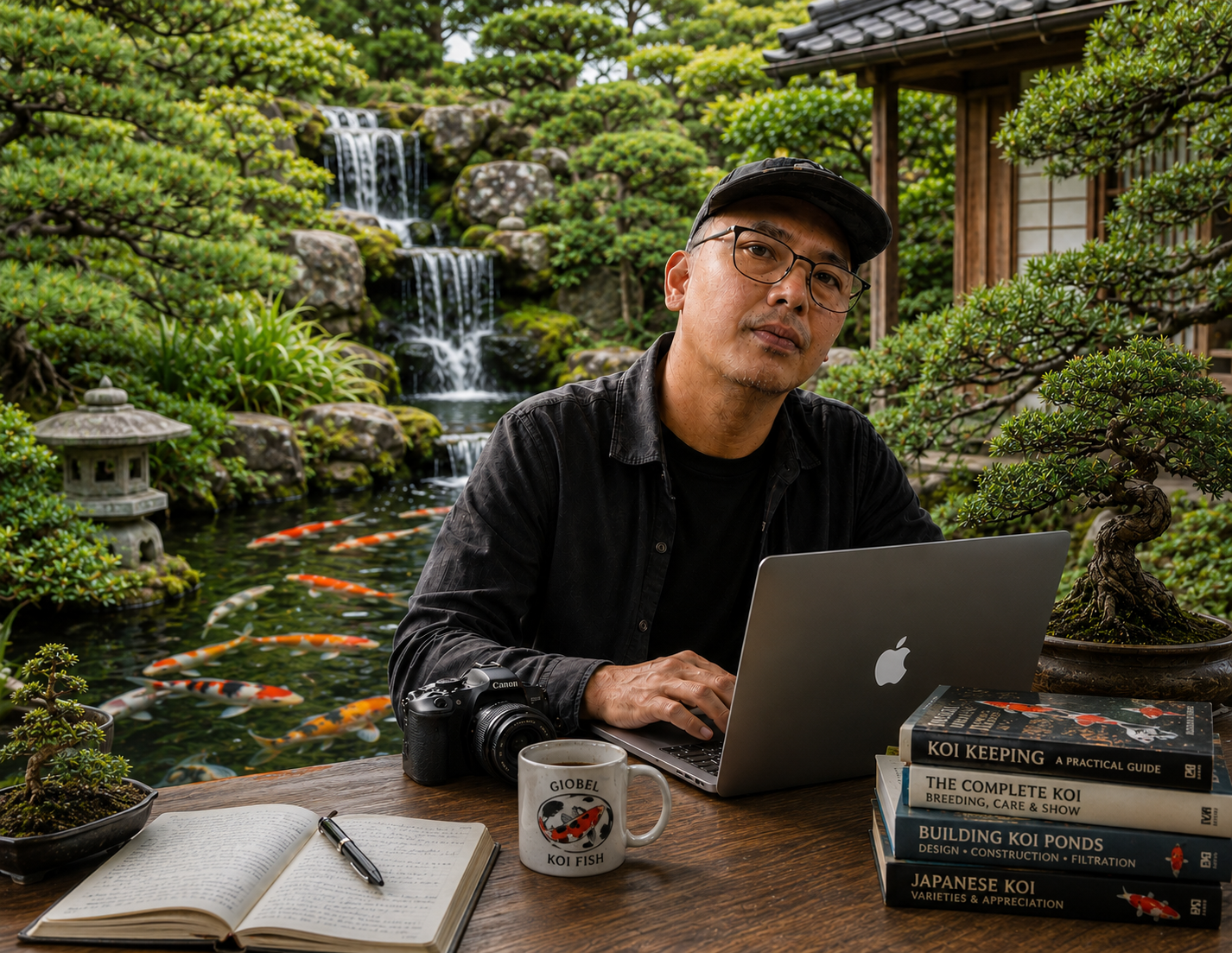
Giovanni Carlo
Koi keeper & founder, Giobel Koi Center · Labangan, Zamboanga del Sur
Giovanni has been keeping koi since the 1980s and runs one of the Philippines’ most widely read koi fish resources. He writes from hands-on experience breeding, raising, and selling Japanese koi on his farm in Mindanao — combining decades of practical fish keeping with deep study of koi symbolism and feng shui.

Passionate about fish keeping since elementary school in the 1980s, Giovanni Carlo has dedicated countless hours to collecting and breeding a diverse array of ornamental freshwater fish. From vibrant guppies and majestic koi to striking bettas and classic goldfish, he continues to explore the fascinating world of aquatics, sharing knowledge and enthusiasm with fellow fish enthusiasts.