Quick Answer
A koi pond kit bundles a liner, pump, and filter into one package, sized by gallons per hour (GPH) to match your pond’s volume. Pre-fabricated kits are the easiest starting point for beginners; customizable kits suit larger or more specific projects. Whichever you choose, size the pump to circulate your full pond volume roughly once per hour, not just to the “koi pond kit” label on the box.
Introduction
Koi ponds have become a popular feature in both residential and commercial landscapes — not just for the visual appeal, but for the genuinely calming effect of moving water and fish. A kit simplifies the whole setup process by bundling the core components (liner, pump, filter) into one purchase instead of sourcing each piece separately. This guide covers the main kit types, why DIY installation is worth considering, and what actually matters once the pond is running.
Types of Koi Pond Kits
Pre-Fabricated Kits
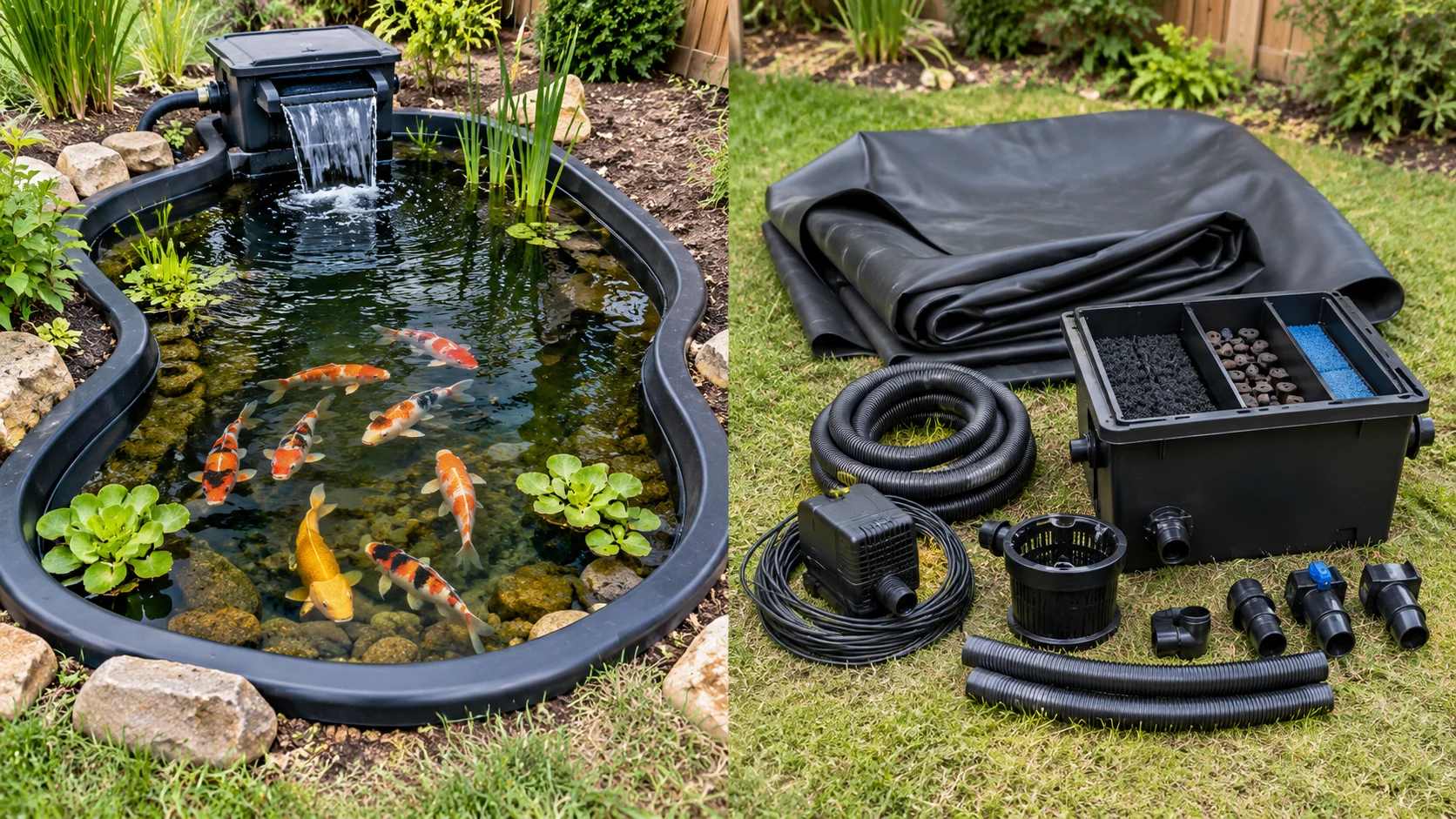
Pre-fabricated kits include everything needed for setup — liner, pump, filter, and sometimes decorative features — pre-measured and packaged as one unit. They’re the easiest entry point for beginners without landscaping experience, since there’s no guesswork about whether components are compatible with each other. The tradeoff is customization: a pre-fab kit’s fixed shape and size may not fit an oddly-shaped yard or a specific design vision as well as building from individual parts would.
Customizable Kits
Customizable kits let you select individual components — liner, filtration, pump — based on your specific pond size and design. This suits larger or more unusual projects better than a fixed pre-fab kit, and many customizable kit sellers offer design support to guide you through matching components correctly. It takes more planning upfront, but the result fits your actual space rather than a generic template.
Eco-Friendly Kits
Eco-friendly kits prioritize lower-impact materials and equipment — biodegradable liners, solar-powered pumps, and natural filtration that reduces reliance on chemical treatments. Beyond the environmental angle, natural filtration approaches often produce genuinely cleaner, more stable water long-term, since they lean on biological processes rather than masking water quality issues chemically.
Complete vs. Partial Kits
Complete kits include everything needed for installation and ongoing maintenance; partial kits provide the essential components but leave room to add or upgrade specific pieces. Complete kits remove the guesswork for beginners — a solid default choice if this is your first pond. Partial kits suit more experienced pond owners who already know which specific features (extra filtration stages, a particular pump brand) they want to add.
Sizing Your Kit Correctly
The single most important number on any kit is its GPH (gallons per hour) rating, not the label calling it a “koi pond kit.” As a general rule, size your pump to circulate your pond’s full volume roughly once every hour — a 500-gallon pond needs a pump rated at least 500 GPH, with more headroom if you’re adding a waterfall or running heavier filtration. Undersizing is the most common mistake: a kit that looks complete on the box can still leave your pond under-filtered if the GPH doesn’t actually match your pond’s volume.
Not sure how many gallons your pond holds? Use our Pond Volume Calculator to get an accurate number before comparing kits.
Two Kits Compared by Pond Size
| Kit | Flow Rate | Best For |
|---|---|---|
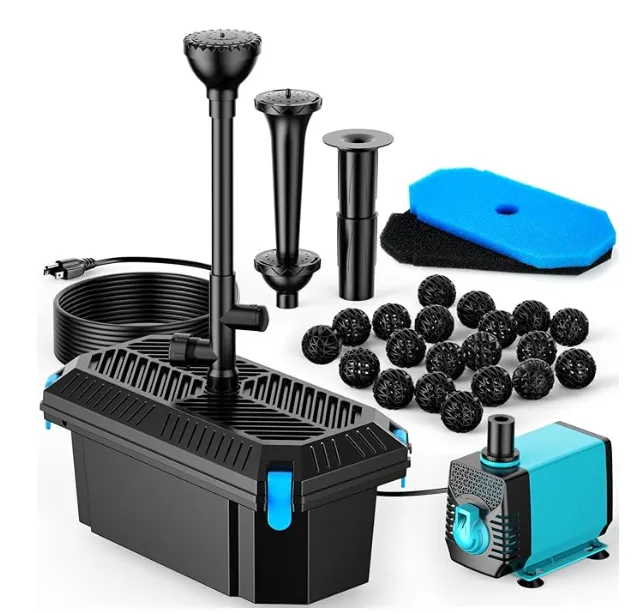
| POPOSOAP Pond Filter with Pump Fountain Kit | 660 GPH | Smaller ponds, roughly up to 500 gallons |
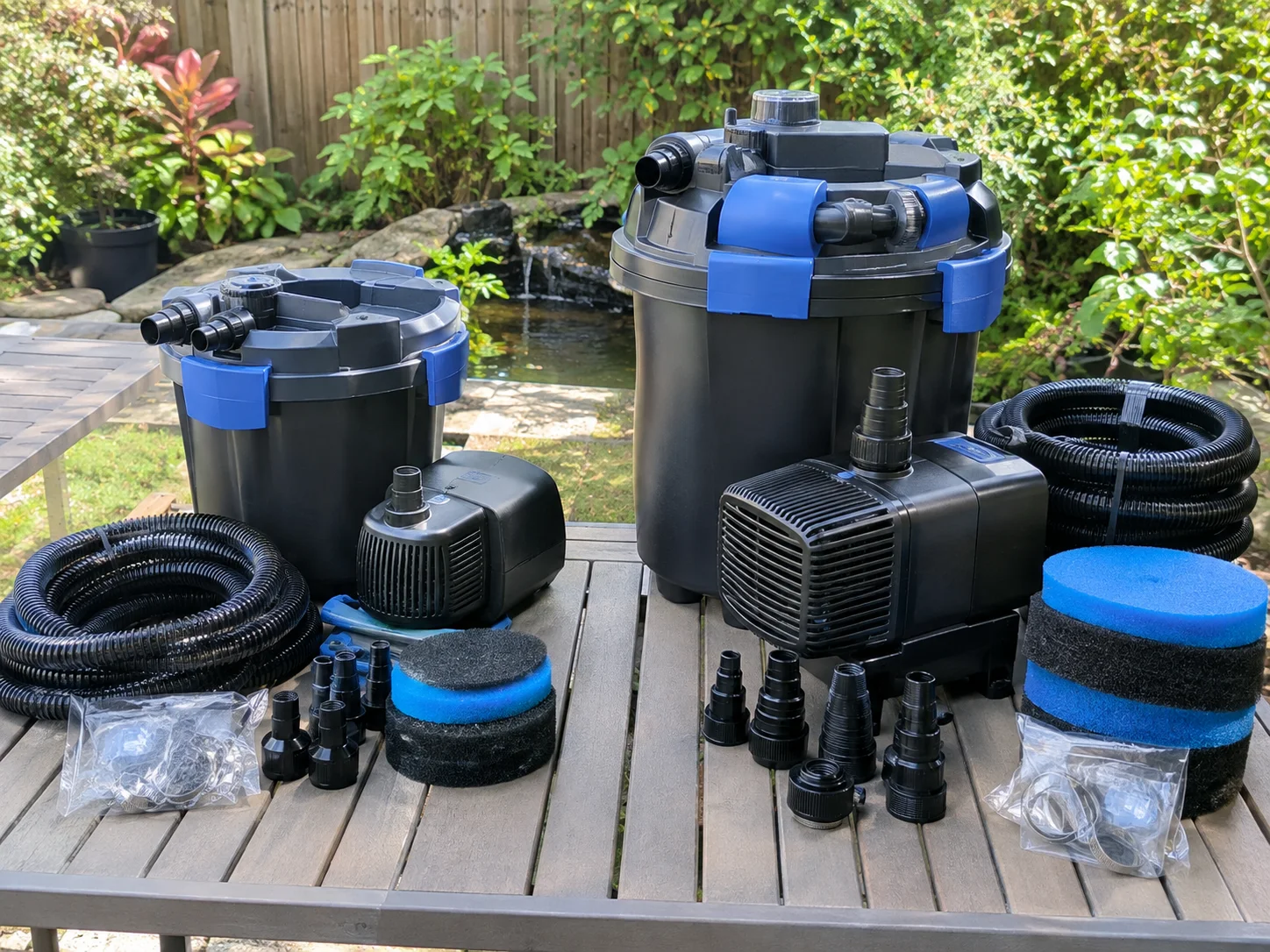
| AquaMiracle All-in-One Koi Pond Filter Kit | 850 GPH | Mid-sized ponds, roughly 500-750 gallons |
AquaMiracle All-in-One Koi Pond Filter Kit — a step up in capacity from the POPOSOAP kit above, with 4-stage filtration and 3 spray pattern options, suited to ponds outgrowing a smaller starter kit.
Benefits of DIY Installation
Cost-Effectiveness
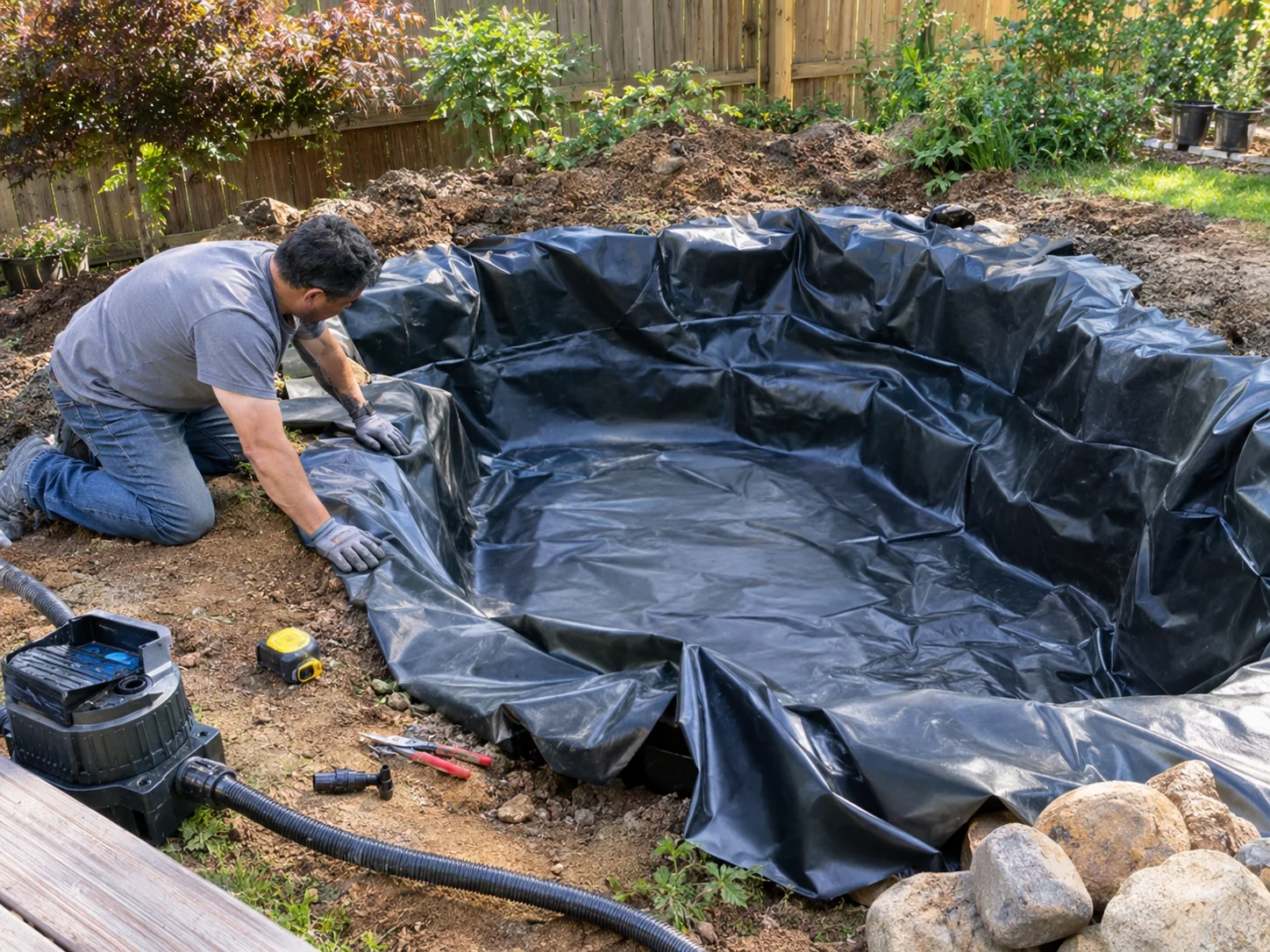
Installing a kit yourself avoids professional labor costs and markup on materials, which can add up significantly on a full pond build. Buying components as a kit (rather than piecing everything together separately) often works out cheaper too, since kit bundling typically prices below buying each part individually at retail.
Personal Satisfaction and Customization
There’s real satisfaction in building something yourself and watching it become a thriving ecosystem. A DIY approach also means every decision — pond size, materials, added features like waterfalls or lighting — is genuinely yours, rather than whatever a contractor’s default template happens to be.
Learning Experience
Installing your own kit teaches you the fundamentals of water quality management and koi care in a way that hiring it out doesn’t — and that knowledge keeps paying off well past installation day, since ongoing pond maintenance requires the same understanding of water chemistry and seasonal care.
Control Over the Environment
Installing it yourself means you understand exactly what’s in your system, which makes troubleshooting and future upgrades far more straightforward than working with an unfamiliar setup someone else installed. You can monitor water quality closely and make adjustments as your pond’s needs change over time.
Maintenance Tips for Koi Ponds
Regular Water Testing
Test pH, ammonia, nitrite, and nitrate regularly — this is how you catch problems before they become emergencies. If ammonia levels rise, adding beneficial bacteria or doing a partial water change addresses it before it stresses or harms your fish.
Seasonal Care
Spring means clearing winter debris and gradually increasing feeding as water warms. Summer requires managing algae growth and keeping oxygen levels up. Fall is when you prepare for winter — clear fallen leaves and consider a de-icer. Winter itself means significantly reduced feeding and keeping some surface water movement to prevent a full ice-over.
Feeding and Nutrition
Koi do well on a varied diet — quality pellets supplemented with fresh vegetables and occasional treats like earthworms. Adjust feeding for water temperature, since koi eat less in cooler water, and feed only what they can finish in 5-10 minutes to avoid fouling the water with uneaten food.
Filtration and Aeration
A good filtration system combines mechanical, biological, and sometimes chemical filtration to keep water clean. Aeration — via air pumps or a waterfall — keeps dissolved oxygen up and prevents stagnation, both essential regardless of which kit type you choose.
FAQs
What is the ideal size for a koi pond?
As a rule of thumb, each adult koi needs about 250 gallons of water. A larger pond provides a more stable environment and reduces the likelihood of water quality issues compared to an undersized one.
How often should I change the water in my koi pond?
Partial water changes of about 10-15% weekly or bi-weekly help maintain water quality by reducing nitrate levels and replenishing minerals, depending on your pond’s size and stocking density.
Can koi survive winter in my pond?
Yes, in a properly maintained pond. Keep some water movement so the surface doesn’t fully ice over, which can deplete oxygen — a de-icer or aerator helps maintain an open area through winter.
How do I know if my koi are healthy?
Healthy koi show bright color, active swimming, and a good appetite. Watch for lethargy, clamped fins, or unusual spots as early signs something needs attention.
Conclusion
Building a koi pond with a kit removes a lot of the guesswork from a first pond build, as long as you get the sizing right — GPH matched to actual pond volume matters more than which “kit” label is on the box. Combine the right kit with regular water testing, seasonal care, and proper feeding, and you’ve got a genuinely low-maintenance, long-lasting setup.
You may also like
- Koi Pond Equipment and Supplies
- Koi Pond Volume Calculator
- How to Build a Koi Pond
- How Much Does It Cost to Build a Koi Pond?

Passionate about fish keeping since elementary school in the 1980s, Giovanni Carlo has dedicated countless hours to collecting and breeding a diverse array of ornamental freshwater fish. From vibrant guppies and majestic koi to striking bettas and classic goldfish, he continues to explore the fascinating world of aquatics, sharing knowledge and enthusiasm with fellow fish enthusiasts.