Quick Answer
Red and white koi carry deep symbolism — red (aka) represents love, courage, and strength, while white (shiro) represents purity and peace. Together, they embody balance, like yin and yang. Worth knowing: red-and-white is literally the definition of Kohaku, the single most iconic, benchmark koi variety in the entire hobby, often called the “king of koi.” The word “koi” (鯉, carp) is also a well-known homophone of “koi” (恋, romantic love) in Japanese — not a literal translation, but a genuine, widely-referenced pun that deepens the fish’s association with love.

Photo by Quang Nguyen Vinh
Red and White Koi Fish Meaning: The Feng Shui Secret to Love & Success
Koi fish are often celebrated for their striking colors and captivating presence. Among the spectrum of hues that adorn these ornamental fish, the red and white varieties hold a significant place, symbolizing more than just their aesthetic appeal.
The Red-and-White Koi Has a Name: Kohaku
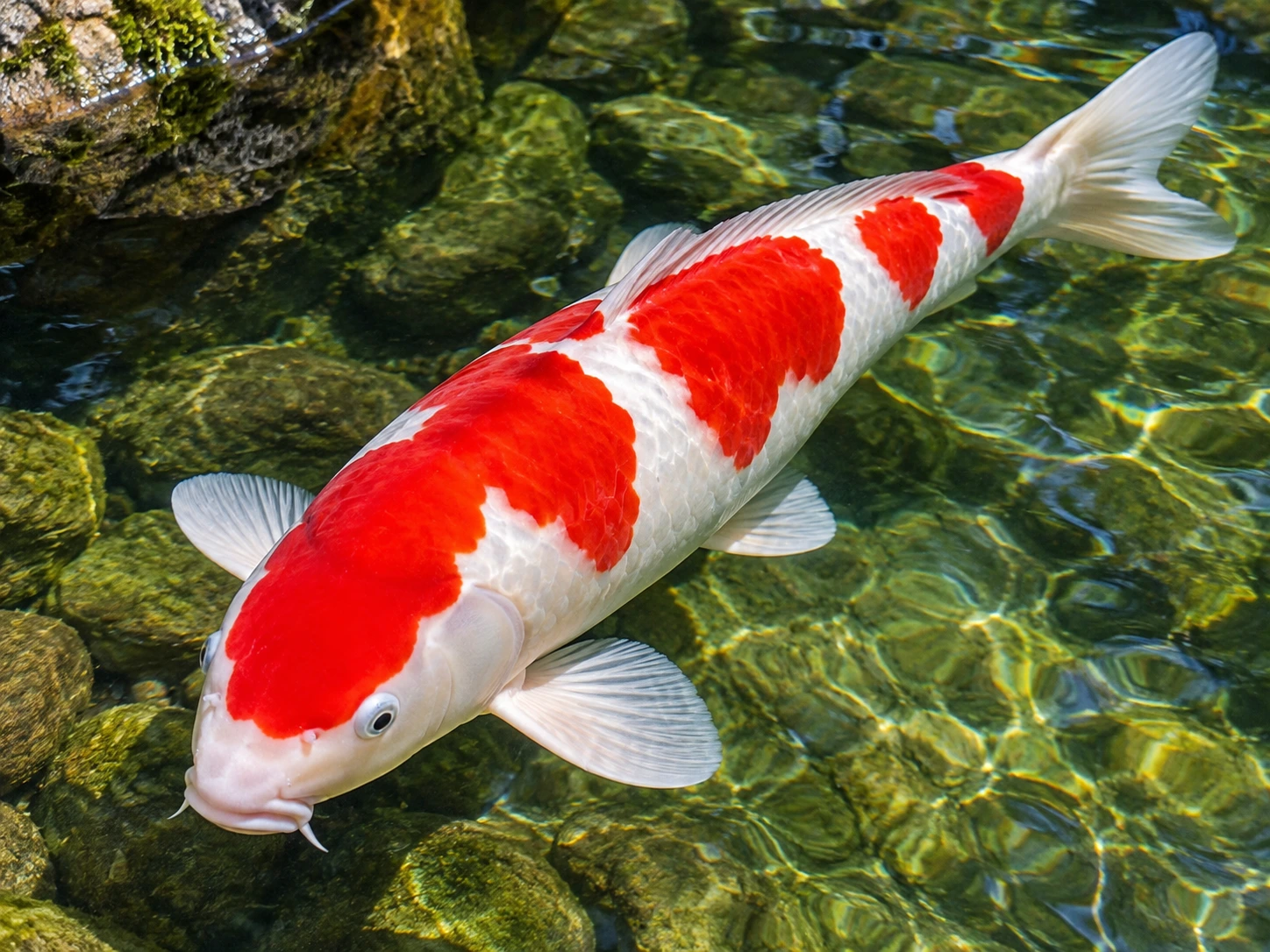
Before getting into symbolism, it’s worth knowing that a red-and-white koi isn’t just a color combination — it’s a specific, officially recognized variety called Kohaku, widely considered the single most iconic koi in the entire hobby. Kohaku is often the benchmark variety used to judge koi shows, and many hobbyists consider owning a genuinely excellent Kohaku to be the ultimate expression of koi-keeping mastery. For the full breakdown of this variety specifically, see our 30 Koi Fish Varieties guide.
Introduction to Koi Fish
Originating in Japan, koi fish (Cyprinus rubrofuscus) have been admired for centuries due to their beauty and symbolism. These fish are a variant of the common carp and are bred for their stunning colors and unique patterns. Koi represent endurance, strength, and good fortune, making them highly revered in various cultures worldwide.
The Significance of Red and White Koi Fish
Historical and Cultural Background
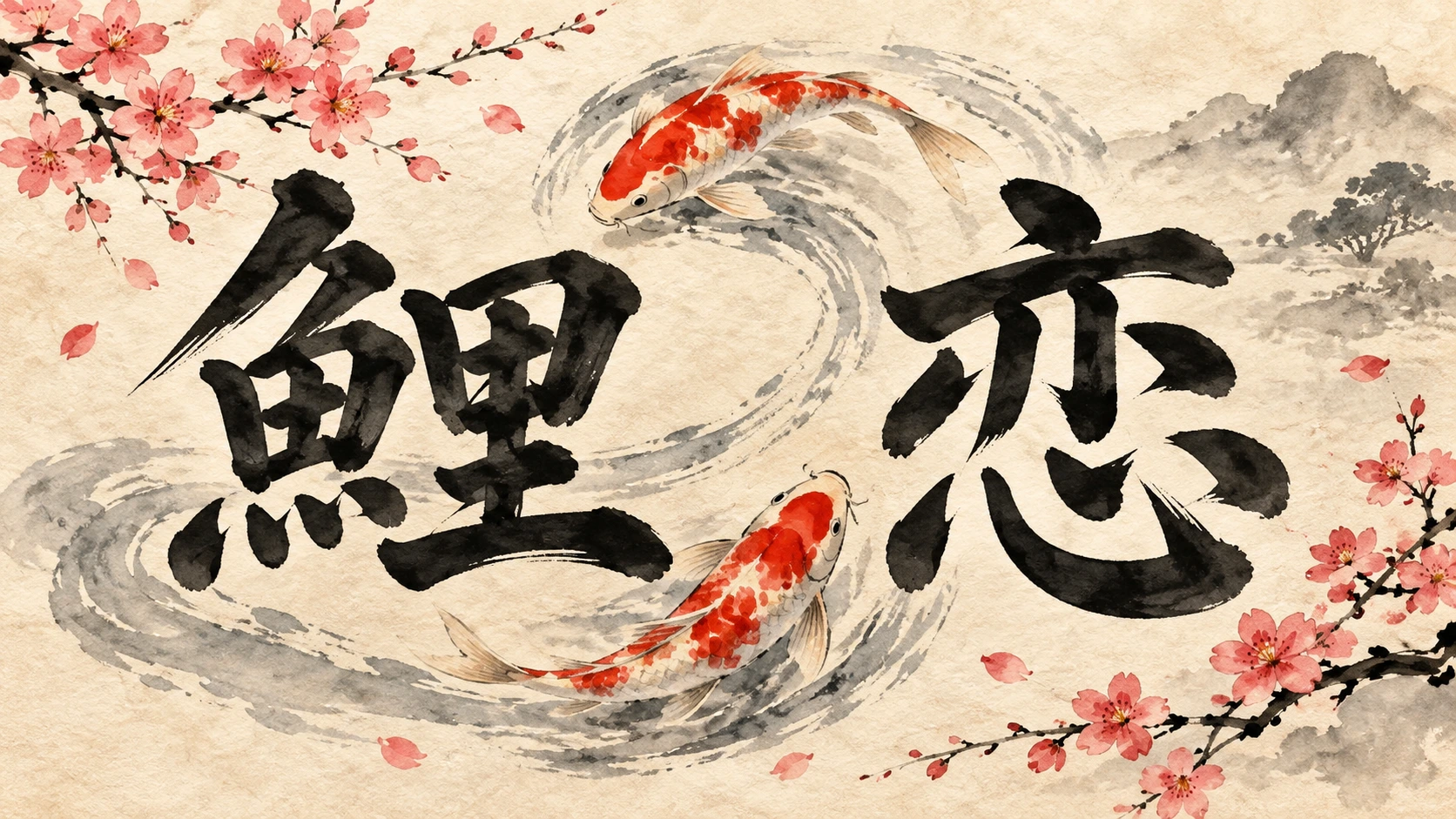
The historical roots of red and white koi fish are deeply embedded in Japanese folklore. According to legend, these colors were achieved through meticulous breeding efforts by Japanese farmers centuries ago. There’s also a genuinely interesting linguistic connection worth getting right: the word “koi” (鯉, meaning carp) is a homophone of a completely different word, “koi” (恋, meaning romantic love) — they sound identical but are written with different characters and have separate origins. This coincidence has inspired a well-known pun in Japanese art, literature, and anime, where koi fish are used as a visual symbol for budding romantic love, even though the fish itself isn’t literally named “love.”
Red Koi Fish Meaning
Red koi fish, also known as “aka” in Japanese, are often associated with strong emotions and characteristics. They symbolize love, bravery, determination, and energy. In Japanese culture, the red coloration represents courage, the ability to overcome adversity, and the pursuit of one’s goals despite obstacles.
White Koi Fish Meaning
Conversely, white koi fish, known as “shiro,” signify purity, tranquility, and a sense of peacefulness. They represent innocence, a clean slate, and the ability to navigate through life’s challenges gracefully. White koi embody a sense of calmness and purity of spirit.
Red and White Koi Fish Together
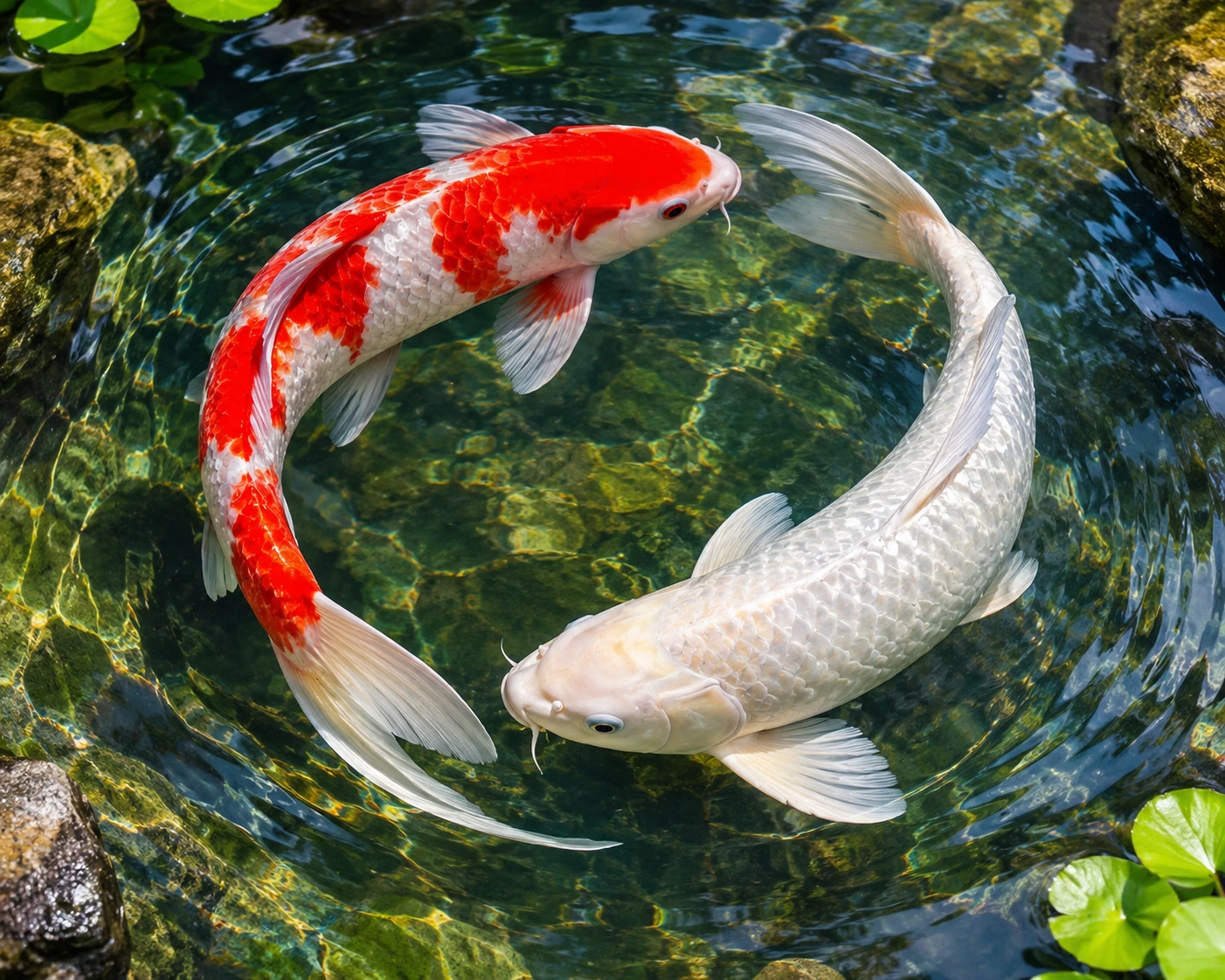
The combination of red and white koi fish holds significant symbolism in the concept of yin and yang, representing the harmony of opposing forces. They symbolize balance, unity, and the coexistence of contrasting elements. Red exemplifies strength, while white embodies purity, showcasing the balance between vigor and serenity. For the full breakdown of this specific philosophy, see our Yin Yang Koi Fish Meaning guide.
📖 Koi: A Complete Guide to their Care and Color Varieties
A genuinely great resource for learning more about Kohaku and other koi varieties beyond their symbolism.
🛒 Check Price on Amazon →Variations in Symbolism Across Cultures
While Japanese culture predominantly attributes specific meanings to red and white koi fish, other cultures interpret these colors differently. In Chinese culture, red symbolizes good luck, joy, and celebration, while white represents purity, honesty, and new beginnings. The varying interpretations across cultures showcase the diverse symbolism associated with these mesmerizing fish.
Factors Affecting Koi Fish Coloration
Several factors contribute to the vibrant coloration of red and white koi fish. Genetics play a crucial role, as certain breeds are predisposed to specific color patterns. Additionally, environmental factors, such as water quality, sunlight exposure, and diet, significantly impact their color vibrancy. Diet is a particularly significant factor — carotenoid-rich food can account for up to 40% of a koi’s overall color intensity. For the full breakdown, see our Why Do Koi Lose Color guide.
Tips for Keeping Red and White Koi Fish
To ensure the optimal health and vibrancy of red and white koi fish, certain practices should be followed:
- Provide a well-maintained pond with adequate space — roughly 250 gallons per adult koi.
- Maintain clean and properly filtered water to ensure their well-being.
- Offer a balanced diet rich in nutrients and avoid overfeeding.
- Regularly monitor their health and seek professional advice when necessary.
Conclusion
Red and white koi fish hold profound symbolism, representing a harmonious blend of emotions, virtues, and life’s dualities. Beyond the symbolism, this color combination has its own proper name — Kohaku — and genuine linguistic connection to love through a well-known pun. Their captivating appearance and rich cultural significance continue to fascinate and inspire people across the globe, serving as a reminder of balance, strength, and inner peace.
FAQs
What is a red and white koi fish called?
Kohaku — widely considered the single most iconic, benchmark koi variety in the entire hobby.
Does “koi” literally mean “love” in Japanese?
Not literally — “koi” (carp) and “koi” (romantic love) are homophones, meaning they sound identical but are different words with separate origins and characters. This coincidence inspired a well-known pun in Japanese culture.
Do red and white koi fish always maintain their vibrant colors?
Red and white koi fish can retain their vibrant hues with proper care, although some color fading may occur over time, particularly with age or diet changes.
Can the symbolism of red and white koi fish vary between regions?
Yes, interpretations may differ across cultures, leading to variations in symbolic meanings.
You may also like


Passionate about fish keeping since elementary school in the 1980s, Giovanni Carlo has dedicated countless hours to collecting and breeding a diverse array of ornamental freshwater fish. From vibrant guppies and majestic koi to striking bettas and classic goldfish, he continues to explore the fascinating world of aquatics, sharing knowledge and enthusiasm with fellow fish enthusiasts.