Quick Answer
The best koi books span four practical categories: all-in-one guides for general reference, health and disease manuals, breed/genetics books for serious show koi collectors, and pond construction guides. A physical reference book still earns its place for an outdoor, water-heavy hobby where a phone isn’t always practical to have on hand.

The internet covers a lot of koi keeping ground, but plenty of solid, practical knowledge still lives in books that haven’t been fully replicated online — and a tangible reference is genuinely useful for a hobby that involves being outdoors near water constantly. Here’s a curated list organized by what you’re actually trying to learn.
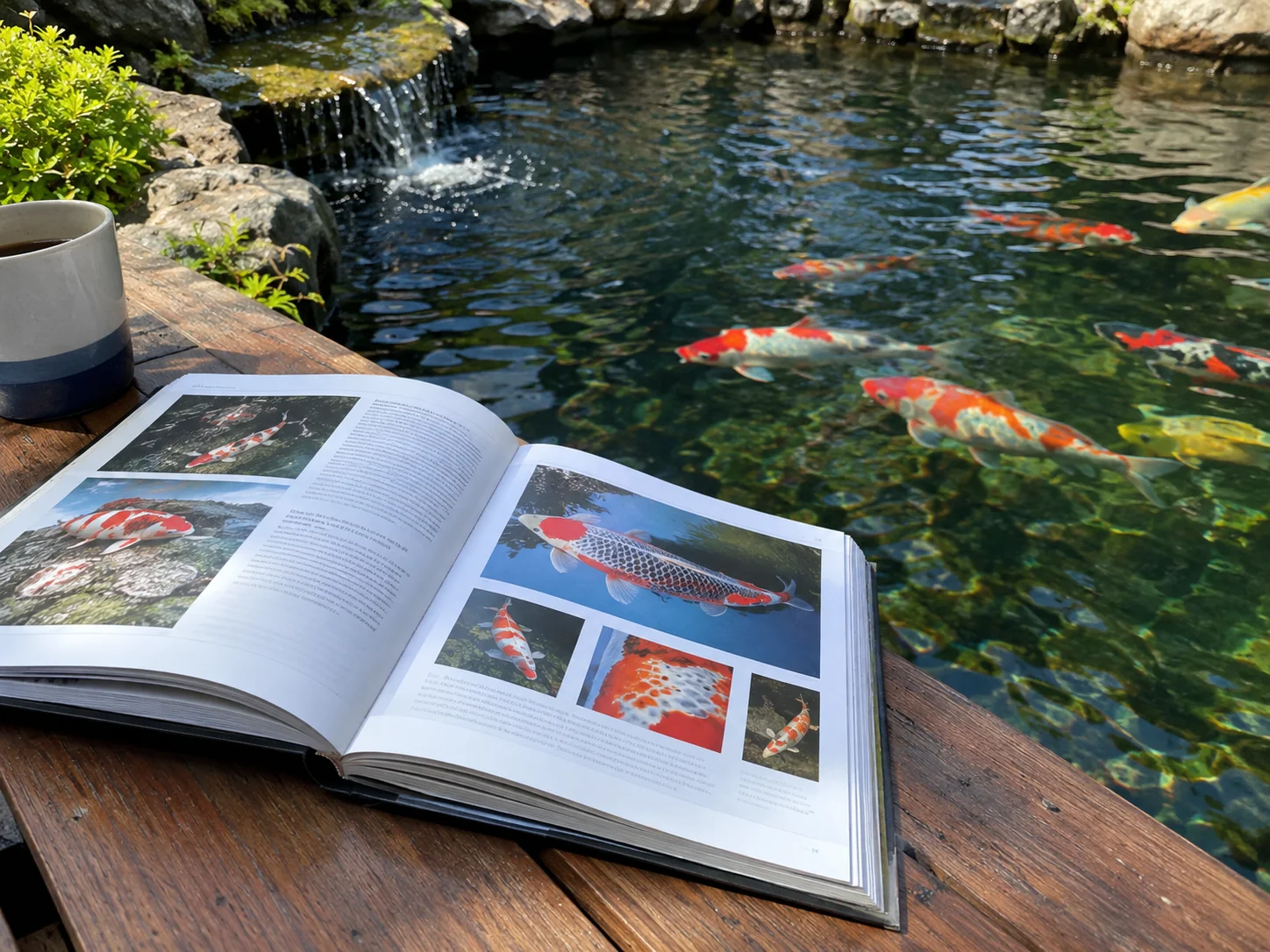
1) A-Z Koi Keeping Guides & Encyclopedias
Ideal for: Newcomers who want a comprehensive, all-in-one understanding of the hobby, and experienced keepers who want a quick-reference book covering current techniques and research.
Koi: A Complete Guide to Their Care and Color Varieties — written by a team including former magazine editors, pond construction consultants, and university lecturers, this is a strong all-in-one reference covering koi selection, pond equipment, water quality, and anatomy in an approachable way for both beginners and experienced keepers. As an all-in-one book, it doesn’t go as deep on any single topic (filtration and disease coverage especially could be more detailed) as a specialized volume would, but it’s genuinely current and covers modern breeding and show standards well. 256 pages, paperback, 2015.
Koi For Dummies by R.D. Bartlett & Patricia Bartlett — a genuinely good starting point for total beginners, covering pond and aquarium setup, buying koi, day-to-day care, and basic breeding in the accessible, friendly style the “For Dummies” series is known for. Less comprehensive than a dedicated encyclopedia, but a solid first book before moving on to more specialized titles.
2) Medical & Health-Related Koi Books
Ideal for: Anyone who wants to properly understand koi anatomy, disease, and treatment rather than relying on scattered forum advice.
Manual of Koi Health by Tony Pitham & Keith Holmes — a strong entry-level book covering fish anatomy, a health-maintenance checklist, handling technique, and the most common diseases and treatments, explained accessibly without sacrificing accuracy. It offers more of an overview than deep treatment detail, making it best as a foundation rather than an advanced reference. 160 pages, paperback, 2011.
Koi Health & Disease: Everything You Need To Know by Dr. Erik Johnson — written by a veterinarian and fish surgeon, this book assumes some existing fish-keeping knowledge and goes deep on the science: toxicity, parasites, bacterial and viral infections, and tumors, each with dedicated treatment chapters covering medicated dips, foods, antibiotics, and surgery. Black-and-white imagery only, which can make visual identification harder than color photos would, but the content itself is thorough and well-organized. 204 pages, paperback, 2014.
These two work well together rather than as alternatives to each other: start with the Manual of Koi Health for the fundamentals, then move to Koi Health & Disease once you want the deeper scientific detail behind diagnosis and treatment.
3) Koi Breeds, Classification & Genetics Books
Ideal for: Enthusiasts interested in show koi, bloodlines, and the genetics behind koi patterns and coloration.
Koi Appreciation: The First Step — written by a UK show koi judge, this book covers how to evaluate conformation, color, pattern, and bloodline quality, with a full breakdown of officially recognized show koi varieties and a glossary of Japanese judging terminology. Originally published in 2001, most of the classification content still holds up well, though some images and minor sections show their age. 126 pages, hardcover.
Inheritance of Colors and Evolution of Koi and Carp — technically a research study rather than a consumer book, this is a genuinely deep dive into carp domestication history and the genetics behind koi coloration and pattern inheritance. It’s aimed squarely at serious breeders and show koi owners with a science background, using classical and molecular research methods rather than hobbyist-level explanation. Worth seeking out specifically if you want the scientific “why” behind koi patterns, not a general classification guide. 108 pages, paperback, 2009.
4) Pond Construction & Design Books
Ideal for: Anyone in the early planning stages of building a pond who wants visual, step-by-step guidance rather than scattered online tips.
A Comprehensive Manual for Garden Ponds, Fountains, and Waterfalls — covers the full process from design inspiration through liner installation, edging, water circulation, plumbing, and planting, with strong photographs and diagrams throughout. The final chapters on ecosystem management and ongoing maintenance are lighter than dedicated volumes on those topics, but the construction chapters are genuinely thorough. 256 pages, paperback, 2011.
Frequently Asked Questions
What is the best all-around book for a koi beginner?
“Koi For Dummies” is a genuinely good entry point for total beginners, while “Koi: A Complete Guide to Their Care and Color Varieties” works well once you want a more comprehensive single reference covering equipment, water quality, and modern show standards.
Is there a good book specifically about koi diseases?
“Manual of Koi Health” is a strong entry-level option, and “Koi Health & Disease: Everything You Need To Know” by Dr. Erik Johnson goes considerably deeper into the science for readers who already have some fish-keeping background.
Are older koi books still worth reading?
Often yes, especially for classification and genetics content — koi variety standards and judging fundamentals don’t change as fast as equipment technology does. Books from the early 2000s on breed classification, like “Koi Appreciation: The First Step,” largely still hold up, even if some photos and minor sections show their age.
You may also like


Passionate about fish keeping since elementary school in the 1980s, Giovanni Carlo has dedicated countless hours to collecting and breeding a diverse array of ornamental freshwater fish. From vibrant guppies and majestic koi to striking bettas and classic goldfish, he continues to explore the fascinating world of aquatics, sharing knowledge and enthusiasm with fellow fish enthusiasts.