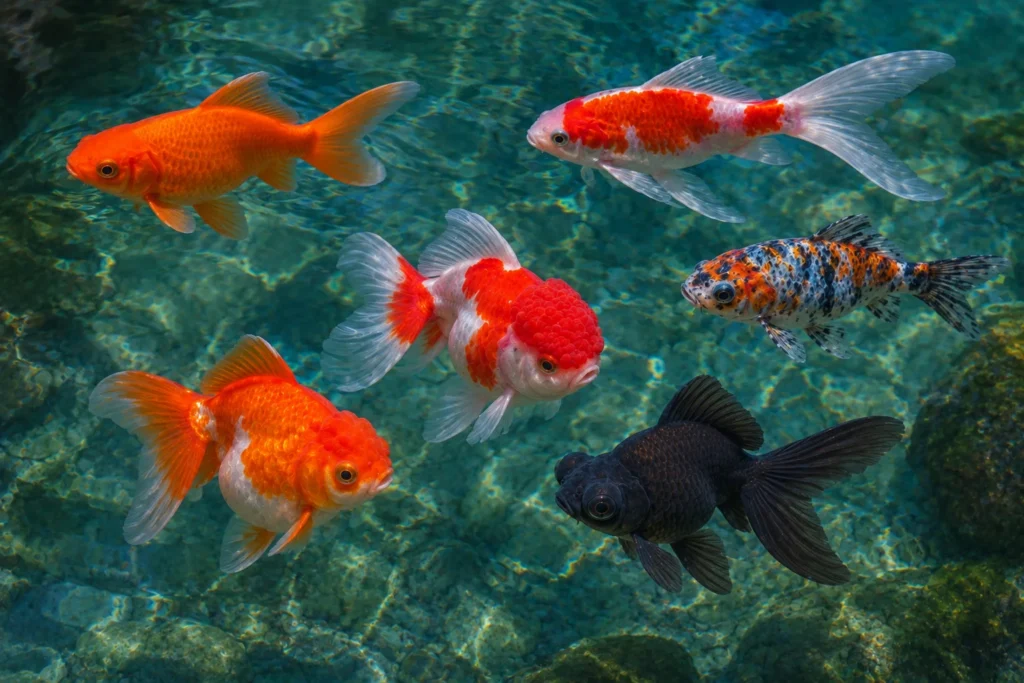
By Giovanni Carlo Bagayas | Updated: June 2026 | 16 min read
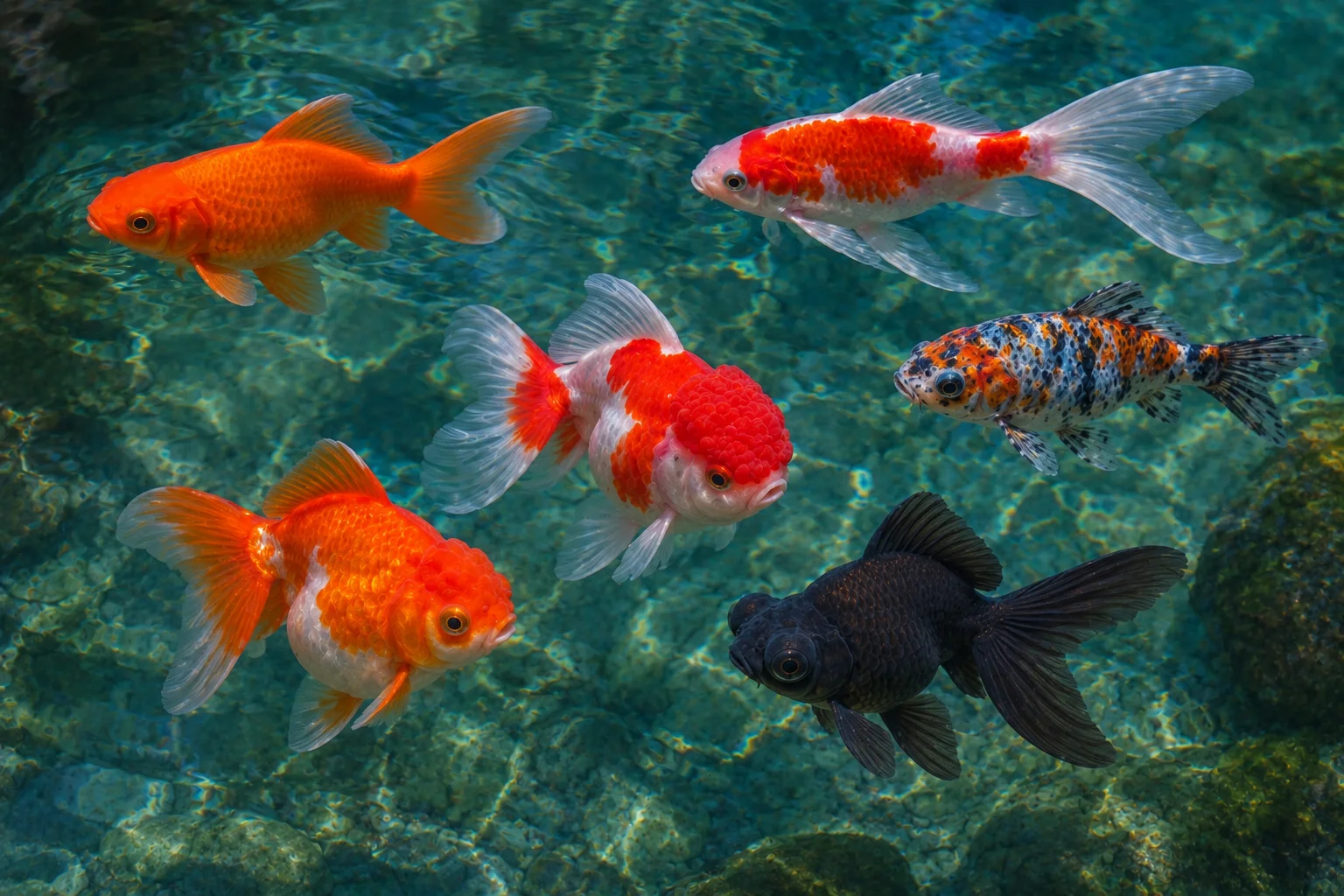
Quick Answer
There are over 125 types of goldfish — all the same species (Carassius auratus), selectively bred for different appearances over 1,000 years. They fall into two main categories: single-tail (hardy, pond-suitable — Common, Comet, Shubunkin) and fancy/double-tail (aquarium-preferred — Fantail, Oranda, Ryukin, Ranchu). Never mix single-tail and fancy goldfish — the faster singles will outcompete fancies for food. For beginners: Comet for ponds, Fantail for aquariums.
The two categories — single-tail vs fancy
Before diving into individual varieties, understanding this single distinction will save you from the most common goldfish keeping mistake. All goldfish fall into one of two groups — and the group determines everything: tank size, tank mates, pond suitability, care difficulty, and lifespan potential.
| Feature | Single-tail goldfish | Fancy goldfish |
|---|---|---|
| Tail fins | One tail fin | Double or split tail fins |
| Body shape | Streamlined — similar to wild carp | Round, egg-shaped, or humped |
| Swimming speed | Fast and active | Slow and deliberate |
| Hardiness | Very hardy — tolerates variable conditions | More delicate — needs stable conditions |
| Max size | Up to 12–16 inches | Typically 6–8 inches |
| Lifespan | 20+ years in a pond | 10–15 years in aquarium |
| Best environment | Outdoor pond or very large tank (75+ gallons) | Indoor aquarium (20–50 gallons) |
| Care level | Beginner-friendly | Beginner to intermediate |
| Examples | Common, Comet, Shubunkin, Wakin | Fantail, Oranda, Ryukin, Ranchu, Black Moor |
⚠️ The most common goldfish keeping mistake
Never mix single-tail and fancy goldfish in the same tank or pond. Single-tail goldfish are much faster swimmers and will outcompete the slower fancy varieties for food at every feeding. The fancy goldfish will gradually starve even if food appears available. Keep your singles together and your fancies together as separate groups — always.
From 40+ years of fish keeping
I have kept goldfish since the 1980s alongside my koi. The single-tail vs fancy distinction is the first thing I tell every new goldfish keeper. I have seen people buy a beautiful Oranda, put it in a pond with Comets, and wonder why it looks thin and listless three months later. The answer is always the same — it’s being outcompeted for food. Once you understand this distinction, goldfish keeping becomes dramatically simpler.
Quick identification table — 20 goldfish varieties at a glance
| Variety | Type | Key identifier | Size | Best for | Care level |
|---|---|---|---|---|---|
| Common Goldfish | Single-tail | Classic orange/gold, streamlined body, single tail | 12–14″ | Pond | ⭐ Beginner |
| Comet Goldfish | Single-tail | Long deeply forked tail; very active swimmer | 12–14″ | Pond | ⭐ Beginner |
| Shubunkin | Single-tail | Calico (nacreous) scales — blue, red, black patches; single tail | 10–12″ | Pond | ⭐ Beginner |
| Wakin | Single-tail (double-tail variant) | Elongated body like Common but with double tail | 10–12″ | Pond / large tank | ⭐ Beginner |
| Fantail | Fancy | Egg-shaped body, fan-shaped double tail, high dorsal fin | 6–8″ | Aquarium / pond | ⭐ Beginner fancy |
| Oranda | Fancy | Fleshy wen (head growth/cap) that develops from age 1–2 | 8–12″ | Aquarium | ⭐⭐ Intermediate |
| Ryukin | Fancy | Prominent dorsal hump behind head; deep body; long flowing tail | 6–8″ | Aquarium | ⭐ Beginner fancy |
| Ranchu | Fancy | Egg-shaped body, NO dorsal fin, curved back, tucked head | 6–8″ | Aquarium | ⭐⭐ Intermediate |
| Lionhead | Fancy | Raspberry-like wen covering entire head; NO dorsal fin | 5–7″ | Aquarium | ⭐⭐ Intermediate |
| Black Moor | Fancy | All-black velvety color; telescope (protruding) eyes | 6–8″ | Aquarium | ⭐ Beginner fancy |
| Telescope Eye | Fancy | Dramatically protruding eyes on stalks; various colors | 6–8″ | Aquarium (no sharp decor) | ⭐⭐ Intermediate |
| Bubble Eye | Fancy | Fluid-filled sacs under eyes; no dorsal fin; fragile sacs | 3–5″ | Species-only tank | ⭐⭐⭐ Advanced |
| Celestial Eye | Fancy | Eyes permanently pointed upward; no dorsal fin | 4–6″ | Species-only tank | ⭐⭐⭐ Advanced |
| Pearlscale | Fancy | Round ball-like body; dome-shaped scales resembling pearls | 4–6″ | Aquarium | ⭐⭐ Intermediate |
| Veiltail | Fancy | Extremely long, flowing, undivided tail fins that hang like a veil | 6–8″ | Aquarium (no fin nippers) | ⭐⭐ Intermediate |
| Pompom | Fancy | Bunchy fleshy growths on nostrils resembling pom-poms | 4–6″ | Aquarium | ⭐⭐ Intermediate |
| Tosakin | Fancy | Unique curled tail that spreads horizontally — only visible from above | 6–8″ | Shallow display tank | ⭐⭐⭐ Advanced |
| Butterfly Telescope | Fancy | Telescope eyes + butterfly-spread tail visible from above | 6–8″ | Aquarium | ⭐⭐ Intermediate |
| Sarasa Comet | Single-tail | Red and white Comet — same as Comet but with distinct color pattern | 12–14″ | Pond | ⭐ Beginner |
| Lionchu | Fancy | Lionhead × Ranchu cross — wen on head, no dorsal fin, compact body | 5–7″ | Aquarium | ⭐⭐ Intermediate |
Single-tail goldfish varieties — the pond types
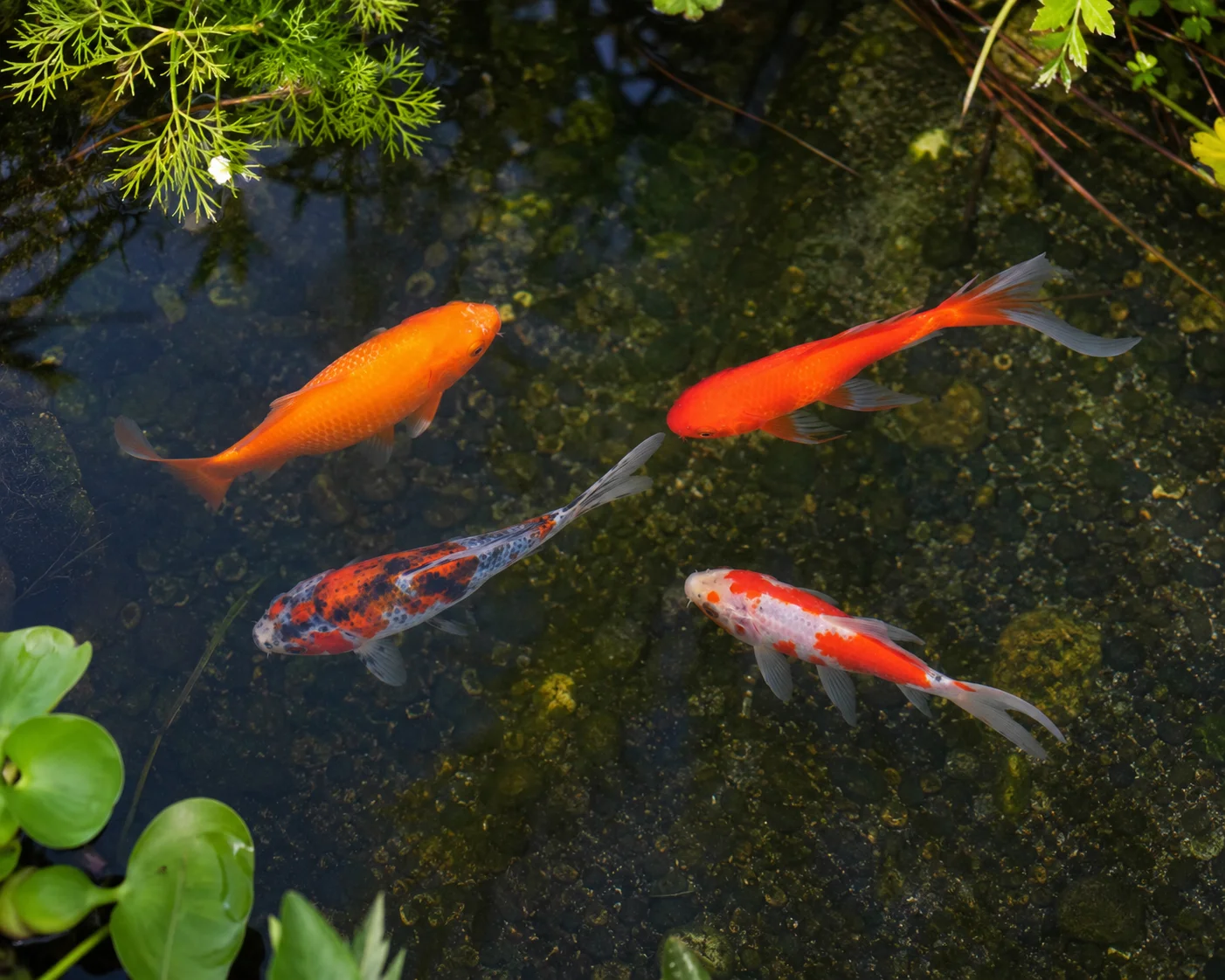
1. Common Goldfish
The original goldfish — the variety from which all others were bred. Simple streamlined body, typically orange or gold with a single tail. Extremely hardy and adaptable. Can survive in a wide range of water conditions that would stress more delicate varieties. Given space in a large pond, Common Goldfish grow impressively large and can live 20+ years. They are the best starter goldfish for outdoor ponds.
2. Comet Goldfish
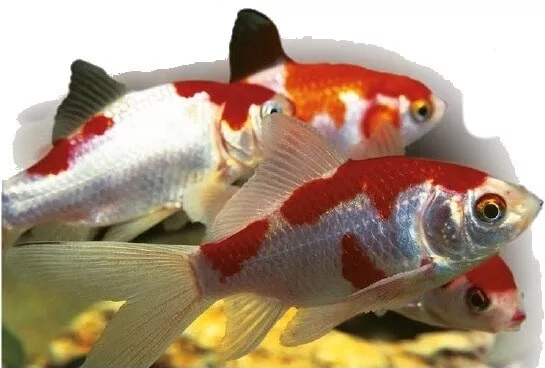
The most popular pond goldfish in the United States, developed in the US from Common Goldfish in the 1880s. Distinguished by its longer, more deeply forked tail and more active, energetic swimming style. Comets are excellent pond fish — fast, hardy, colorful, and social. The Sarasa Comet variant adds a bold red-and-white pattern to the classic Comet body.
3. Shubunkin
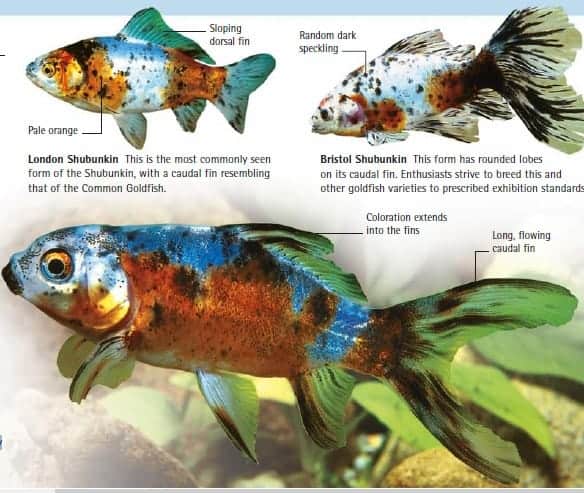
Often called the “calico goldfish,” Shubunkin are distinguished by their nacreous (pearly) scales that show a mosaic of blue, red, orange, black, and white. The blue coloration — rare in goldfish — is one of their most appealing features. There are three Shubunkin varieties: London (streamlined, most common), Bristol (slightly more developed tail), and American (longer fins). All are excellent pond fish. Related: Complete Shubunkin goldfish guide
4. Wakin
A Japanese variety that represents a bridge between single-tail and fancy goldfish — they have the elongated body of a single-tail but carry a double tail. Hardy enough for ponds, more interesting looking than a Common, and a good “starter fancy” for keepers who want something between. Typically red and white. Rare outside Japan but available from specialist breeders.
Fancy goldfish varieties — the aquarium types
5. Fantail Goldfish
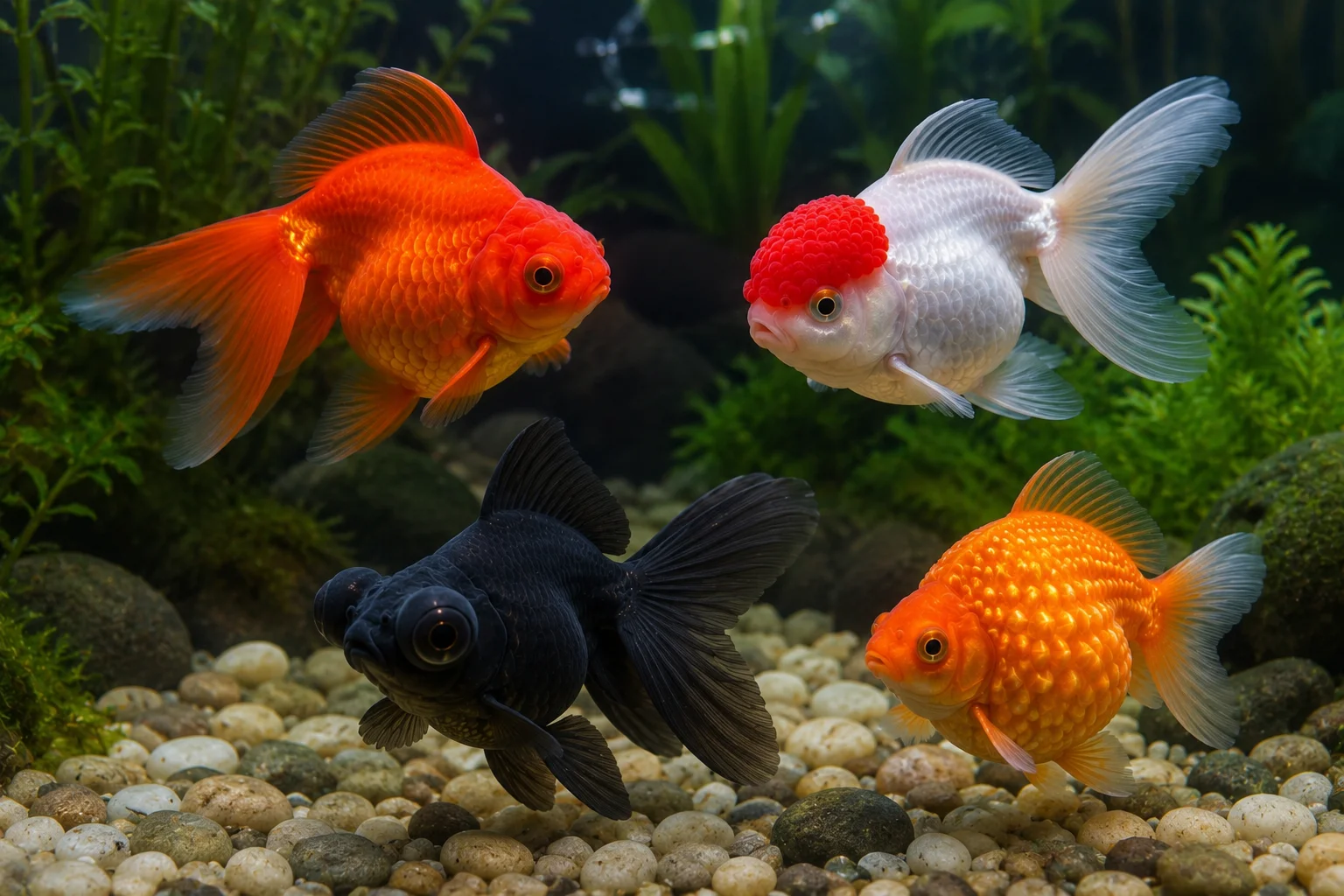
The gateway fancy goldfish — the most beginner-friendly double-tailed variety. Classic egg-shaped body, flowing double tail that fans outward, high dorsal fin. Available in orange, red, white, calico, and black. Fantails are the hardiest of the fancy varieties and can tolerate a wider range of conditions. They are the recommended first fancy goldfish for anyone new to the hobby.
6. Oranda Goldfish
One of the most popular fancy goldfish worldwide. Identified by its distinctive wen — a fleshy, raspberry-like growth that develops on the top and sides of the head starting at around 1 year of age. The wen can grow to cover the entire head in mature fish. Orandas come in dozens of color variations — the Red Cap Oranda (white body, red wen only) is among the most striking. Related: Complete Oranda goldfish guide
7. Ryukin Goldfish
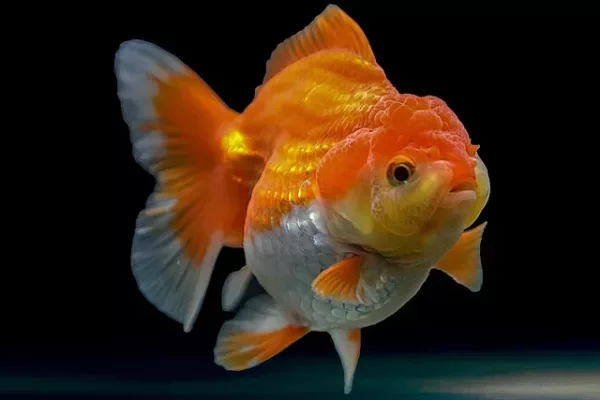
Identifiable by their distinctive dorsal hump behind the head — a sharply elevated back that gives them an almost bullet-like profile from above. Deep, full body with flowing double tail fins. Ryukins are strong swimmers for a fancy variety and can coexist with other robust fancies. Available in red, white, calico, and red-and-white. Related: Complete Ryukin goldfish guide

8. Ranchu
Considered by Japanese goldfish enthusiasts to be the “king of goldfish.” Egg-shaped body with no dorsal fin — a smooth back curves down toward the tail in an arch. The head tucks forward giving a hunched appearance. Ranchu are slow, deliberate swimmers that require careful attention to water quality and feeding. They are typically kept in shallow, wide tanks that allow their full form to be appreciated from above — the traditional Japanese viewing style.

9. Lionhead Goldfish
The precursor to the Ranchu, with a similar egg-shaped body and no dorsal fin, but with a fuller, more developed wen that wraps completely around the head giving a lion’s mane appearance. Lionheads are slow, deliberate swimmers that need tank mates of similar speed and temperament. The wen can grow large enough to affect vision and gill function — monitor carefully in mature fish. Related: Complete Lionhead goldfish guide
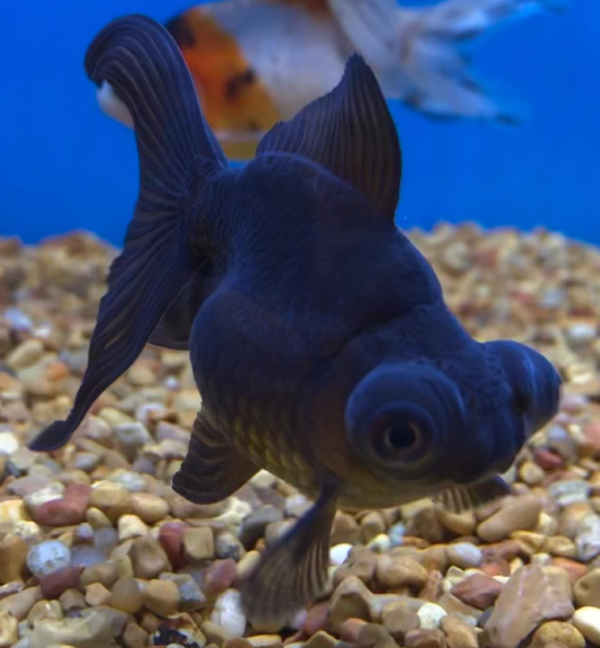
10. Black Moor
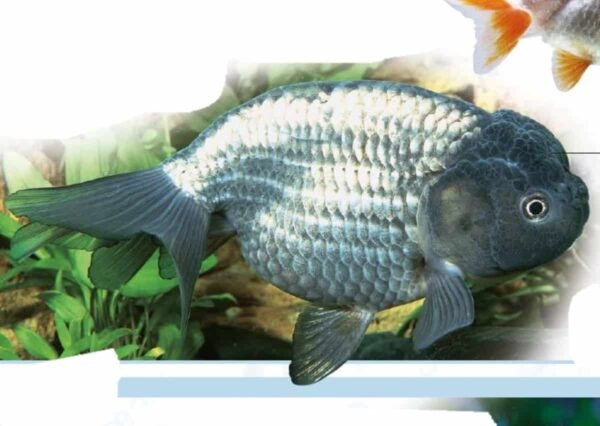
A beloved beginner fancy variety distinguished by its uniform velvety black coloration and telescope (protruding) eyes. The black color is not completely stable — some Black Moors develop gold or bronze patches as they age, and color can change with water temperature. Despite their telescope eyes, Black Moors are relatively robust for a fancy variety and are a good choice for those wanting to try an eye-variety goldfish for the first time.

11. Telescope Eye Goldfish
Available in many colors (unlike the Black Moor which is only black), Telescope Eye goldfish share the characteristic dramatically protruding eyes on elongated stalks. The eyes can extend up to 3/4 inch beyond the head in mature fish. Because of their eye vulnerability, Telescope varieties require aquariums with no sharp decorations and should only be kept with other slow, peaceful fancy varieties.
12. Bubble Eye Goldfish
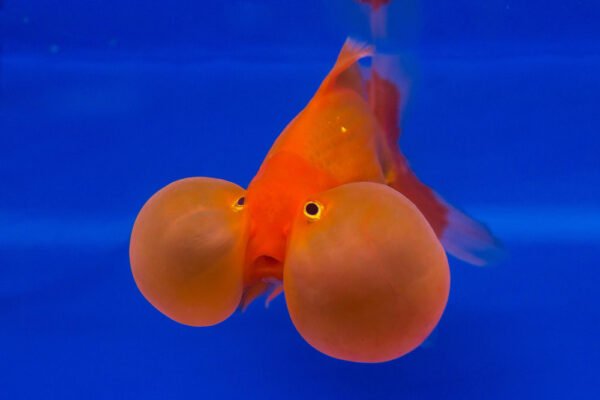
One of the most unusual fish in the hobby — Bubble Eye goldfish have two large, fluid-filled sacs beneath their eyes that wobble as they swim. The sacs are fragile and can easily be punctured by sharp objects or aggressive tank mates. Bubble Eyes have no dorsal fin and are very poor swimmers. They should only be kept in species-specific tanks with smooth decorations and gentle filtration. Fascinating to experienced keepers but not suitable for beginners.
13. Pearlscale Goldfish
Recognizable by their almost perfectly spherical body and their domed, pearl-like scales — each scale has a raised white center that creates a textured appearance unlike any other goldfish. Pearlscales are small and slow, needing calm water without strong currents. Their very round body makes them prone to swim bladder issues if overfed.

Pond vs aquarium — which types go where
| Environment | Best varieties | Avoid | Why |
|---|---|---|---|
| Outdoor pond ⭐ | Common, Comet, Sarasa Comet, Shubunkin, Wakin, Fantail (hardier fancies) | Bubble Eye, Celestial Eye, Telescope, Pearlscale, Lionhead, Ranchu | Delicate varieties cannot compete for food, are vulnerable to predators, and struggle in variable outdoor temperatures |
| Indoor aquarium (20–50 gal) | Fantail, Oranda, Ryukin, Black Moor, Pearlscale, Lionhead, Ranchu, Veiltail | Common, Comet, Shubunkin (will outgrow quickly; become unhappy in small spaces) | Single-tail varieties grow too large and are too active for standard aquarium sizes |
| Shallow display tank (species-only) | Ranchu, Tosakin, Bubble Eye, Celestial Eye | All other varieties | These varieties are best appreciated from above and need calm, still water conditions without competition |
Related: Can goldfish and koi live together?
Care requirements by goldfish type
| Parameter | Single-tail goldfish | Fancy goldfish |
|---|---|---|
| Minimum tank size | 55–75 gallons for one; pond preferred | 20–30 gallons for one; +10 gallons per additional fish |
| Water temperature | 50–75°F (10–24°C); cold-tolerant | 65–75°F (18–24°C); prefer more stable temperature |
| pH | 6.5–8.0 | 7.0–8.0 (less tolerant of swings) |
| Filtration | Strong filtration; can handle current | Strong filtration but gentle flow — strong currents stress slow-swimming fancies |
| Water changes | 25–30% weekly | 25–30% weekly — non-negotiable for fancy health |
| Diet | High-quality pellets; less picky about food type | Sinking pellets preferred (fancies are bottom feeders); avoid overfeeding — swim bladder issues common |
| Substrate | Gravel or bare bottom | Smooth gravel or bare bottom — no sharp edges that can injure belly or fins |
Best goldfish for beginners
| Setup | Best first choice | Why | Avoid as first fish |
|---|---|---|---|
| Outdoor pond | Comet or Shubunkin | Extremely hardy, tolerates variable conditions, active and colorful, long-lived in a pond | Any fancy variety — too delicate for outdoor conditions and predator exposure |
| Indoor aquarium (30+ gal) | Fantail | Most forgiving fancy variety; classic appearance; tolerates slightly imperfect conditions better than other fancies | Bubble Eye, Celestial Eye — too fragile and specialized for a first fish |
| Indoor aquarium (20 gal) | Black Moor | Hardy for an eye-variety, striking appearance, peaceful, widely available | Common or Comet — will immediately outgrow a 20-gallon tank |
| Koi pond (mixed) | Comet or Sarasa Comet | Fast enough to compete with koi for food; hardy enough to survive outdoor conditions; adds color contrast to the pond | Any fancy variety — koi will outcompete them for food |
Can you mix different types of goldfish?
Yes — with one critical rule: keep single-tails with single-tails and fancies with fancies. Within those groups, mixing is generally fine with these guidelines:
- Single-tail varieties together: Common, Comet, Shubunkin, Sarasa, and Wakin can all coexist in the same pond. Give them enough space — they are active and need room.
- Fancy varieties together: Fantail, Oranda, Ryukin, Ranchu, Lionhead, Black Moor can generally live together provided they have enough space and none are too aggressive at feeding time. Monitor feeding carefully.
- Eye varieties need special consideration: Bubble Eye and Celestial Eye goldfish should ideally be kept only with each other or with very slow, peaceful varieties — their eyes are too vulnerable for even gentle fin-nipping from other fancies.
- Goldfish with koi: Comets and Shubunkins can coexist with koi in a large pond — they are fast enough to compete for food. Fancy goldfish should never be kept with koi.
Rare and unusual goldfish varieties
| Variety | What makes it rare | Where to find |
|---|---|---|
| Tosakin | Unique curled, spread tail best seen from above; nearly went extinct in the 1945 Kochi earthquake; revived by dedicated Japanese breeders | Japanese specialist breeders; rare in the West |
| Jikin | Specific “rokurin” color pattern — only fins, lips, and gill covers are red; body must be white; extremely difficult to breed to standard | Japan only; virtually impossible to source outside |
| Izumo Nankin | Specific body proportions, triangular head from above, no dorsal fin; considered a cultural treasure of Shimane Prefecture, Japan | Southwest Japan only; considered a national heritage variety |
| Tamasaba | Ryukin body with single tail — the combination is extremely unusual in fancy goldfish; produces stronger swimmers than standard Ryukin | Specialist importers; rare outside Japan |
| Crown Pearlscale (Hamanishiki) | Pearlscale with added fluid-filled growth on top of head; combines two unique features; fragile and difficult to breed | Specialist fancy goldfish breeders |
Frequently asked questions
How many types of goldfish are there?
Over 125 recognized varieties worldwide, all belonging to the species Carassius auratus. They fall into two main categories: single-tail (hardy, pond-suitable) and fancy/double-tail (aquarium-preferred). Most hobbyists encounter around 20–30 commonly available types.
What is the difference between single-tail and fancy goldfish?
Single-tail goldfish have streamlined bodies and one tail fin — hardy, fast, and pond-suitable. Fancy goldfish have round bodies, double tails, and special features — slower, more delicate, better for aquariums. Never mix the two types: singles will outcompete fancies for food every time.
What is the best type of goldfish for beginners?
For ponds: Comet or Shubunkin — extremely hardy and colorful. For aquariums: Fantail — the most forgiving fancy variety. Avoid Bubble Eye, Celestial Eye, and Ranchu as first fish — they need more specialized care.
What is the most popular type of goldfish?
The Common Goldfish is most widespread globally. Among fancy varieties, the Oranda is most popular for its distinctive wen. The Fantail is the most popular beginner fancy. The Comet is the most popular pond goldfish in the US.
Can different types of goldfish live together?
Yes — within their category. Single-tail varieties can live together; fancy varieties can live together. Never mix single-tail and fancy goldfish — the faster singles will outcompete the slower fancies for food. Bubble Eye and Celestial Eye are best in species-only tanks.
What is the rarest type of goldfish?
The Tosakin, Jikin, Izumo Nankin, and Tamasaba are among the rarest goldfish — all virtually impossible to source outside Japan where they are considered cultural heritage varieties. The Crown Pearlscale (Hamanishiki) is the rarest widely-bred fancy variety.
How long do goldfish live?
Single-tail goldfish live 20+ years in a well-maintained pond. Fancy goldfish live 10–15 years in a good aquarium. The record is Tish, a Common Goldfish from the UK who lived 43 years. Water quality is the single most important factor in goldfish longevity.
What is the largest type of goldfish?
Common Goldfish and Comets grow the largest — up to 12–16 inches in ponds. Shubunkin and Wakin reach 10–12 inches. Most fancy varieties reach 6–8 inches. Goldfish in small tanks stay small due to stunting — a sign of poor conditions, not their natural size limit.
Explore individual goldfish variety guides
- Oranda goldfish — the most popular fancy goldfish complete guide
- Ryukin goldfish — complete care, varieties and tank guide
- Lionhead goldfish — complete guide to the lion’s mane variety
- Shubunkin goldfish — complete care and habitat guide
- How to breed goldfish — complete step-by-step guide
- Koi fish varieties — complete guide to 30 koi types
- Butterfly koi — how they compare to fancy goldfish
- Best food for goldfish and koi — complete feeding guide
Giovanni Carlo Bagayas
Founder, Giobel Koi Center · Fish keeper since the 1980s · Labangan, Zamboanga del Sur, Philippines
Giovanni has kept goldfish alongside koi since the 1980s — from Common Goldfish and Comets in outdoor ponds to Orandas and Ryukin in aquariums. His goldfish experience spans four decades of observing how different varieties thrive or struggle in different environments, and what separates beginner-friendly varieties from those that require specialist care.

Passionate about fish keeping since elementary school in the 1980s, Giovanni Carlo has dedicated countless hours to collecting and breeding a diverse array of ornamental freshwater fish. From vibrant guppies and majestic koi to striking bettas and classic goldfish, he continues to explore the fascinating world of aquatics, sharing knowledge and enthusiasm with fellow fish enthusiasts.