By Giovanni Carlo Bagayas | Updated: June 2026 | 15 min read
Quick Answer
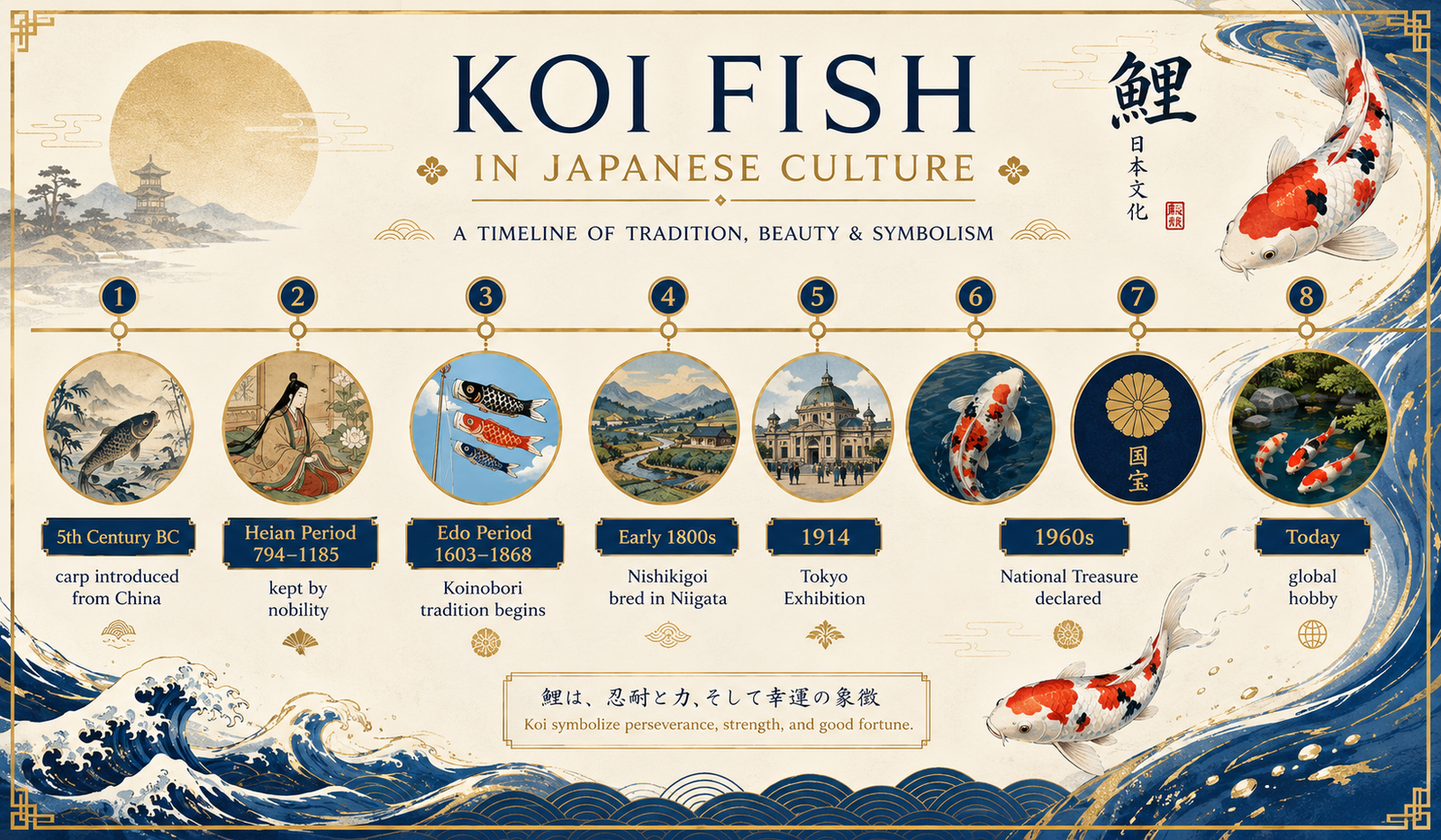
In Japanese culture, koi fish (Nishikigoi — 錦鯉) represent perseverance, strength, courage, good fortune, longevity, and national identity. The word “koi” also means love in Japanese. The central legend — a koi leaping the Dragon Gate waterfall to become a dragon — is a metaphor for perseverance and transformation that runs through every aspect of Japanese koi culture. Nishikigoi were declared a living national treasure of Japan in the 1960s. They originated in Niigata Prefecture in the 1820s and remain Japan’s most prestigious export ornamental fish today.
What koi fish represent in Japanese culture
| Symbolic meaning | Japanese concept | Cultural expression |
|---|---|---|
| Perseverance | Nintai (忍耐) | Swimming upstream — the defining koi metaphor. Koi facing powerful currents without giving up. |
| Strength and courage | Yūki (勇気) | The koi’s calm, unwavering confrontation of obstacles — admired by samurai as a warrior virtue |
| Transformation | Henkaku (変革) | Dragon Gate legend — the koi that achieves the impossible is rewarded with transformation into a dragon |
| Good fortune | Kōun (幸運) | Koi ponds in homes, businesses, and temple gardens as attractors of positive energy and luck |
| Love | Koi (恋) | The word ‘koi’ means both carp and love — pairs of koi represent romantic harmony |
| Longevity | Jōju (長寿) | Koi living 25–35 years (and the legendary Hanako at 226) make them natural symbols of long life |
| Family and children | Kodomo (子供) | Koinobori on Children’s Day — parents wishing their children the koi’s strength and determination |
| National identity | Kokka (国家) | Nishikigoi declared a living national treasure in the 1960s — living art embodying Japanese aesthetic values |
From 40+ years of koi keeping
I have kept koi since the 1980s — and the more deeply I have understood their cultural significance in Japan, the more I have understood why these fish command the respect they do. A great Nishikigoi from a top Niigata breeder is not a fish. It is a piece of living art that embodies 200 years of human craft, a cultural philosophy of perseverance, and an aesthetic standard that no painting can replicate because it moves, grows, and changes with time. That is why people pay millions of dollars for a single fish. And that is why koi keepers around the world feel something that goes beyond a hobby — they feel connected to something ancient and profound.
History — how Nishikigoi were created in Niigata
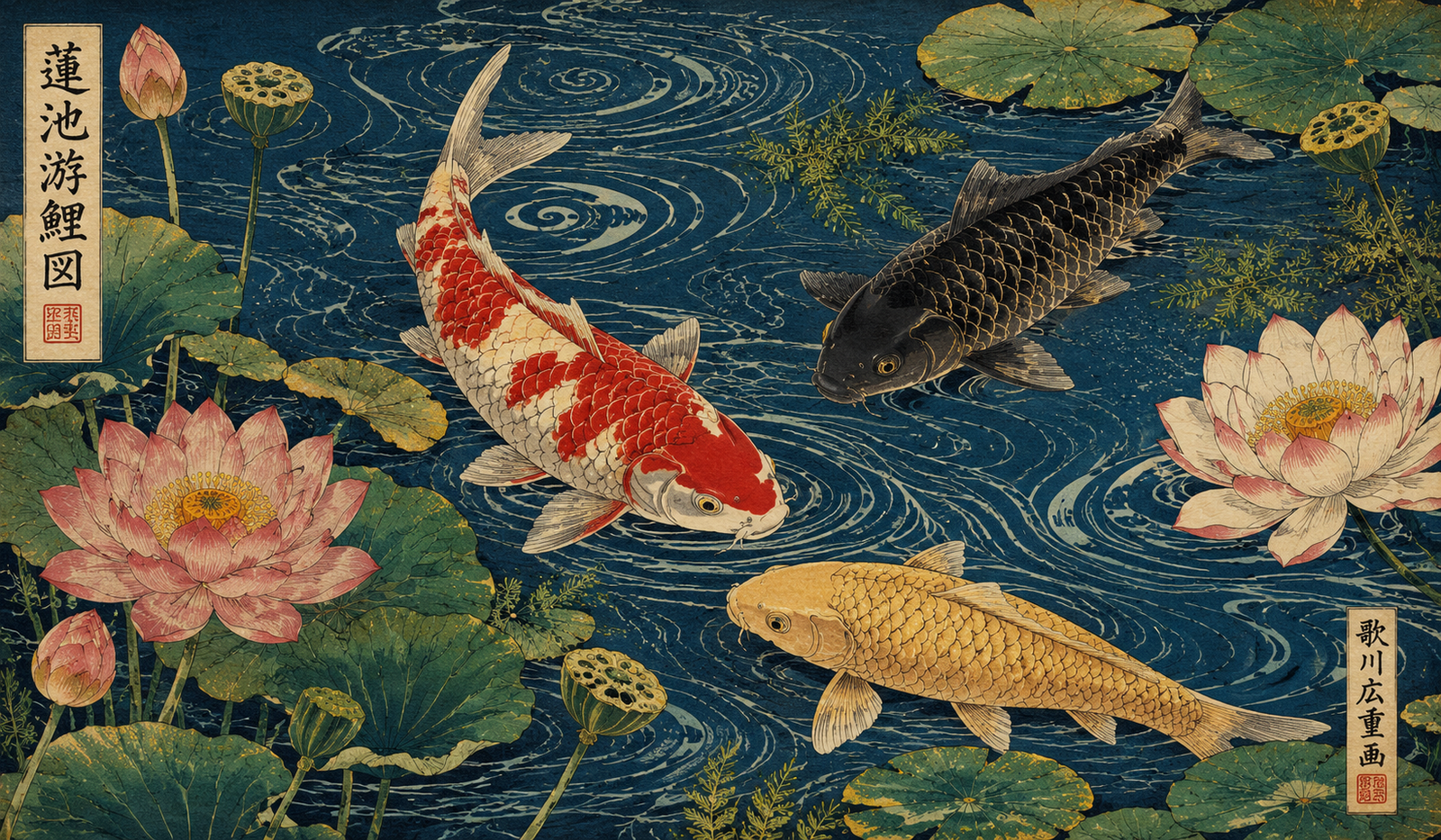
The story of koi in Japanese culture begins not with art or philosophy — but with survival. In the Niigata Prefecture on Japan’s northern coast, rice farmers in the early 1800s kept common black carp (Magoi) in their paddies as a winter protein source. The region’s harsh winters and heavy snowfall made seafood delivery unreliable, and pond-raised carp were an essential food reserve.
Around 1820, farmers in the Yamakoshi village of Niigata noticed something unusual — some of their carp had developed patches of color: red, white, and yellow. Rather than dismiss these mutations, curious farmers began selectively breeding the colored fish. Over decades of careful selection, the color patterns became more vivid, more complex, and more beautiful.
| Era | Development |
|---|---|
| 1st century AD | Common carp (Magoi) introduced to Japan from China; raised as food in Niigata rice paddies |
| Early 1800s | Color mutations discovered in Yamakoshi carp ponds; farmers begin selective breeding for color |
| Meiji era (1868–1912) | Formal Nishikigoi breeding programs established; German carp (Doitsu) introduced to add new traits; first named varieties emerge (Kohaku, Asagi) |
| 1914 | Nishikigoi displayed at the Tokyo Taishō Exposition — captures national attention for the first time |
| 1960s | Nishikigoi declared a living national treasure of Japan; first international exports begin |
| Post-WWII | Japan’s cultural and economic opening leads to global koi exports; koi ponds spread to Western gardens and public spaces worldwide |
| Today | 80–125 Nishikigoi varieties; Japan exports ¥4.8 billion annually; champion koi sell for millions; Niigata remains the world’s premier koi region |
The Dragon Gate legend — the story behind all koi symbolism
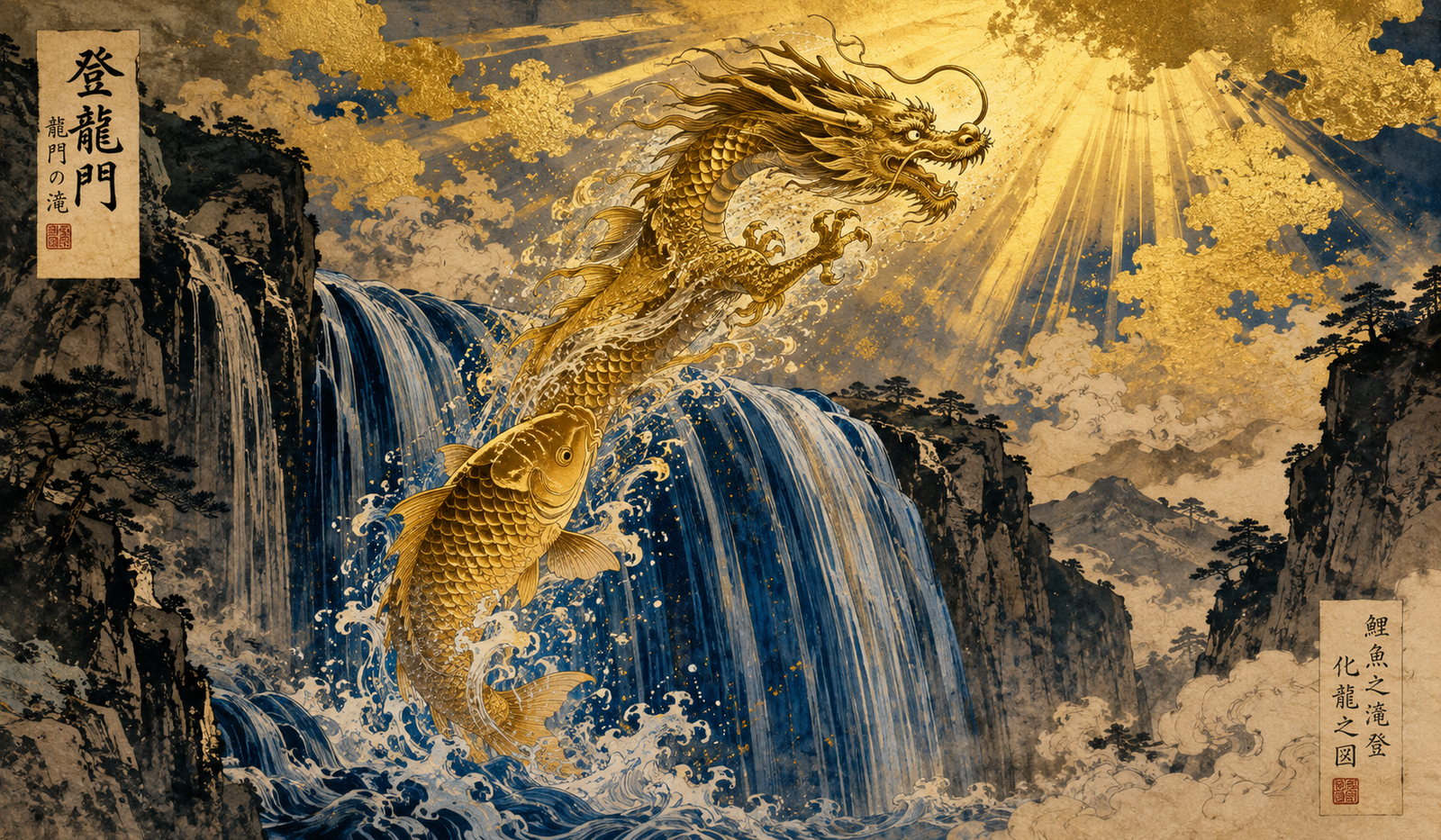
Every symbolic meaning attached to koi fish in Japanese culture flows from a single ancient story — the Legend of the Dragon Gate (Tōryūmon — 登竜門).
The legend
A great school of golden koi swam together up the Yellow River in China, against powerful currents and relentless rapids. Word had spread among the fish that at the end of the river stood the Dragon Gate — an enormous waterfall. Any koi that successfully leaped over the Dragon Gate would be transformed by the gods into a dragon — the most powerful and auspicious creature in East Asian mythology.
Most koi failed. The currents were too powerful, the waterfall too high, and demon spirits who dwelt at the base mocked those who attempted the climb. Many turned back. But one koi — exhausted, battered, but unwavering — kept leaping. After one hundred years of persistent effort, it finally crested the Dragon Gate waterfall. The gods, moved by its extraordinary perseverance, transformed the koi into a magnificent golden dragon.
The legend in Japan
The Dragon Gate legend originated in China but found its most enduring cultural home in Japan. The Japanese adopted it completely during the Edo period — embedding it into Children’s Day traditions (koinobori), samurai culture, Buddhist philosophy, and eventually into the practice of Nishikigoi breeding itself. The Japanese phrase Tōryūmon — literally “Dragon Gate” — is still used in modern Japanese today to describe a difficult but life-changing gateway to success. Passing a prestigious university entrance exam, landing a major promotion, or overcoming a defining personal challenge may all be described as “passing through the Tōryūmon.”
What the legend teaches
- The goal matters less than the journey: The koi did not turn back when others did. Its hundred-year persistence is the story — not just the transformation at the end.
- Obstacles are not reasons to stop: The current, the waterfall, the mocking demons — none of these are reasons to abandon the attempt. They are the attempt.
- Transformation follows perseverance: The koi does not start as a dragon. It becomes one. The lesson is that greatness is achieved, not inherited.
Related: Complete guide to koi fish meaning and symbolism
Koinobori — koi fish on Children’s Day
The most visible expression of koi symbolism in modern Japanese life happens every year on May 5th — Children’s Day (Kodomo no Hi — こどもの日). Across Japan, families fly colorful carp-shaped wind streamers called koinobori (鯉のぼり) from tall poles outside their homes.
| Koinobori streamer | Color | Represents |
|---|---|---|
| Largest streamer (top) | Black (Magoi) | Father of the family |
| Second streamer | Red or pink (Higoi) | Mother of the family |
| Smaller streamers | Blue, green, orange — various | Each child in the family (one per child) |
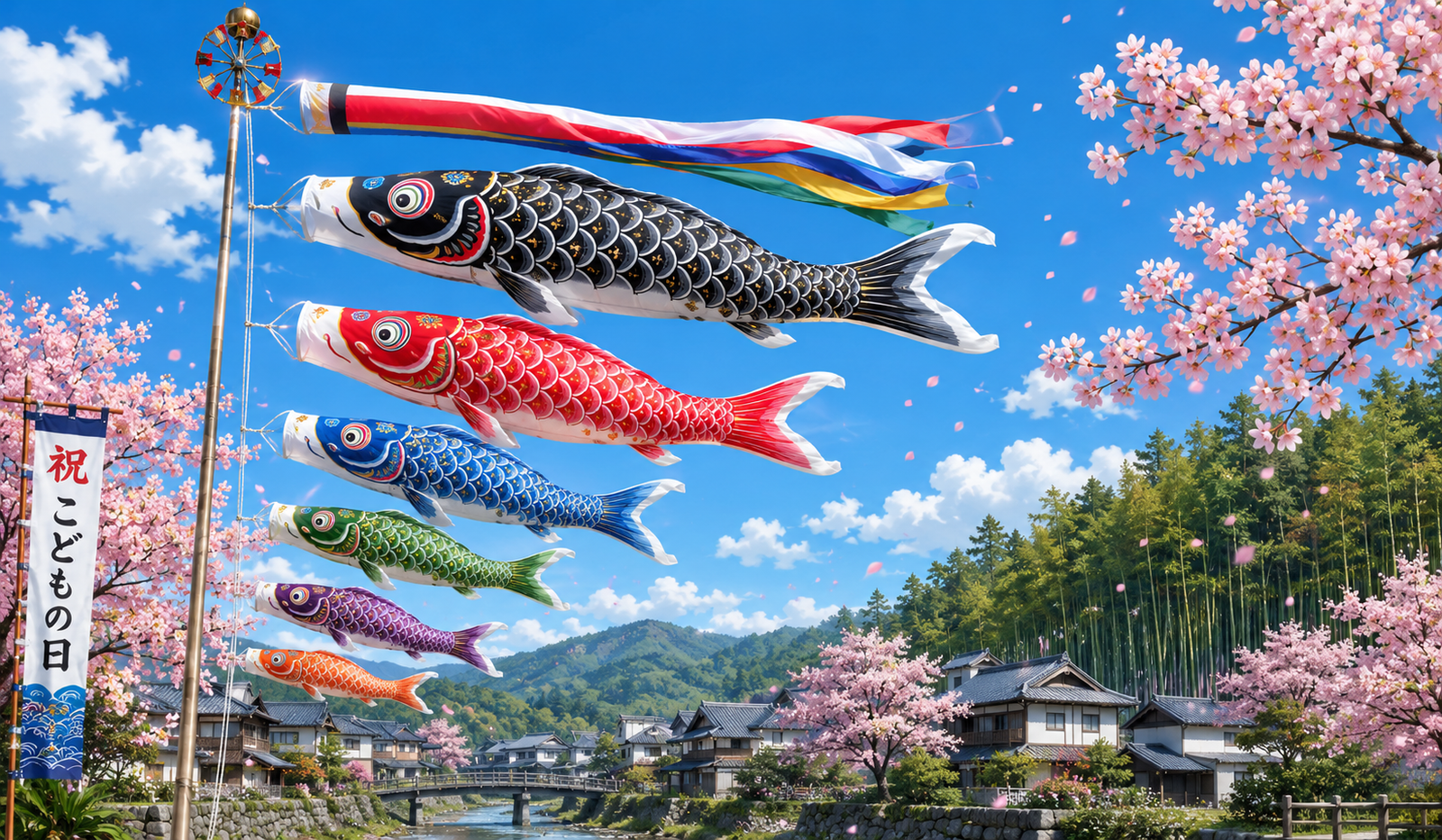
The tradition originated during the Edo period among samurai families who raised carp streamers for their sons — invoking the koi’s qualities of perseverance and courage. When Children’s Day was established as a national holiday in 1948, the koinobori tradition was formalized and extended to celebrate all children. The streamers’ fluttering in the wind is intended to resemble koi swimming upstream — the visual metaphor is the wish itself: may my child have the koi’s determination to swim against life’s currents and one day leap their own Dragon Gate.
Beyond koinobori, koi also appear in the Gion Festival of Kyoto — Japan’s most famous matsuri — as the Koi Yama float, depicting the Dragon Gate legend in elaborate traditional decoration.
Koi fish and the samurai
Of all the cultural associations between koi and Japanese society, none runs deeper than the connection with the samurai warrior class. The samurai identified profoundly with three specific qualities they saw embodied in koi:
- Fudoshin (不動心) — Immovable mind: A koi swimming upstream does not panic or flail. It moves calmly, powerfully, and purposefully against the current — exactly the mental composure a samurai warrior was trained to maintain in battle.
- Facing death with dignity: There is a famous Japanese saying: when a koi is placed on the cutting board, it lies completely still without thrashing or crying out — accepting its fate with quiet dignity. Samurai warriors were expected to face death with the same composure. This quality made the koi a supreme samurai symbol.
- Perseverance toward a goal: The Dragon Gate legend — the koi that keeps leaping no matter how many times it fails — embodied the bushido virtue of never abandoning one’s path.
Samurai families traditionally stocked koi in their estate ponds as living reminders of their code. Koi imagery appeared on samurai armor, clan banners, and family crests (kamon). The practice of tattooing koi — which would later become central to irezumi (traditional Japanese tattooing) — has roots in this samurai-koi cultural connection.
Nishikigoi — Japan’s living national treasure
In the 1960s, the Japanese government officially designated Nishikigoi as a living national treasure — acknowledging what the culture had known for generations: these are not decorative fish but living works of art that embody Japanese values and aesthetic philosophy.
The word Nishikigoi (錦鯉) itself reveals this elevation — it translates as “brocaded carp,” comparing the fish’s color patterns to nishiki — the finest, most intricate woven silk in Japan. To call a fish “brocaded” is to place it in the same category as the most revered Japanese textile art.
| Nishikigoi today — key facts | Detail |
|---|---|
| Status | Living national treasure of Japan (designated 1960s) |
| Primary breeding region | Ojiya, Yamakoshi — Niigata Prefecture |
| Annual export value | ¥4.8 billion (approximately $32 million USD) |
| Top export destinations | Hong Kong, USA, China, Germany, Netherlands, Indonesia |
| Number of varieties | 80–125 officially recognized varieties |
| Major show events | All Japan Nishikigoi Show (ZNA); Kokugyo no Saiten (Festival of Koi) |
| Record sale price | $2.2 million — S Legend Kohaku, 2018 |
Related: Most expensive koi fish ever sold — the world records
What does “koi” mean in Japanese?
The Japanese language gives koi fish an additional layer of symbolic power through linguistic coincidence — or perhaps not coincidence at all:
| Japanese word | Kanji | Meaning |
|---|---|---|
| Koi (fish) | 鯉 | Carp — the fish itself |
| Koi (love) | 恋 | Romantic love or longing — especially the early stage of falling in love |
| Nishikigoi | 錦鯉 | Brocaded carp — ornamental koi fish, comparing patterns to fine woven silk |
| Tōryūmon | 登竜門 | Dragon Gate — idiom for a life-changing gateway to success; derived from the koi legend |
The fact that koi (鯉) and love (恋) share the same pronunciation in Japanese makes pairs of koi a natural symbol of romantic love and marital harmony — a meaning layered on top of all the strength and perseverance associations. A red and white koi pair swimming together is one of the most recognizable symbols of love in Japanese decorative art.
Koi color meanings in Japanese culture
| Koi color | Japanese cultural meaning | Variety example |
|---|---|---|
| Red / Hi | Love, passion, strength, motherly love | Kohaku, Hi Utsuri, Benigoi |
| White / Shiro | Purity, new beginnings, success, transformation | Kohaku (white base), Shiro Utsuri |
| Black / Sumi | Overcoming adversity; perseverance through darkness | Showa, Karasu, Kumonryu |
| Gold / Kin | Wealth, prosperity, business success, fulfillment | Yamabuki Ogon, Kin Showa |
| Blue / Ai | Peace, tranquility, serenity, the son of a family | Asagi, Shusui |
| Platinum / Gin | Fulfillment of wealth; success in business | Platinum Ogon, Gin Rin varieties |
| Red and white combined | Love and harmony — the most auspicious combination in Japanese culture | Kohaku — the most revered Nishikigoi variety |
Related: Complete koi fish color meanings guide
Koi in Japanese art and tattooing
Koi fish are among the most enduring motifs in the entire history of Japanese art — appearing across every major artistic tradition the culture has produced:
Traditional woodblock prints (Ukiyo-e)
Masters of the ukiyo-e tradition including Hiroshige and Hokusai depicted koi swimming powerfully upstream or leaping waterfalls — images that went far beyond decoration to express the Japanese philosophical ideal of perseverance. These prints were collected by samurai, merchants, and eventually by Western collectors who brought them to Europe in the 19th century, directly influencing Impressionism.
Traditional Japanese tattooing (Irezumi)
Koi swimming upstream — often depicted with crashing waves, water splashes, and cherry blossoms — is one of the most requested designs in traditional irezumi. The direction of the koi carries meaning: a koi swimming upstream represents the ongoing struggle against adversity; a koi swimming downstream suggests that the challenge has been overcome. Color adds further layers — a red koi in irezumi often represents love and courage; a black koi represents successfully surviving hardship. Related: Koi fish tattoo meaning — complete guide to direction, color, and placement
Ceramics, lacquerware, and textiles
Koi appear as auspicious decorative elements on Imari porcelain, Kutani ware, and traditional Japanese lacquerware. On textiles, koi patterns (often called “koi no taki-nobori” — koi climbing the waterfall) appear on kimonos, obi sashes, and furoshiki (wrapping cloths) as symbols of the wearer’s aspirations and determination.
Koi in Japanese garden design
The koi pond (koiike — 鯉池) is a central element of traditional Japanese garden design — present in virtually every major temple garden, shrine garden, and estate garden in Japan. The koi pond is not merely decorative — it carries specific philosophical intent:
- Representing life’s flow: Koi moving through water represent the flow of time and the passage of life — the garden becomes a living meditation on impermanence (mono no aware).
- Attracting positive energy: In Japanese feng shui principles, koi ponds near the entrance of a home or business attract wealth, good fortune, and positive chi.
- Sacred associations: Koi are considered messengers of the gods in Shinto tradition — their presence in shrine ponds elevates the spiritual atmosphere of the space. Many famous Shinto shrines across Japan maintain koi ponds as sacred features.
- Contemplation and mindfulness: Watching koi move through a garden pond is considered a meditative practice in Japanese culture — the fish’s calm, purposeful movement invites the observer into stillness.
Related: Lucky number of koi fish in a pond — Feng Shui guide
Frequently asked questions
What do koi fish represent in Japanese culture?
Perseverance, strength, courage, love, good fortune, longevity, and national identity. Nishikigoi were declared a living national treasure of Japan in the 1960s. The word “koi” also means love in Japanese, adding a romantic dimension to their symbolism.
What is the Dragon Gate legend of koi fish?
A school of koi swam up the Yellow River to reach the Dragon Gate waterfall. Most failed. One koi persevered for 100 years and finally crested the waterfall — and was transformed into a dragon by the gods. The Japanese phrase Tōryūmon (Dragon Gate) is still used today to mean a life-changing gateway to success.
What is Koinobori and why are koi flown on Children’s Day?
Koinobori are colorful carp-shaped wind streamers flown on May 5th (Children’s Day). Each streamer represents a family member — black for father, red for mother, smaller ones for each child. The tradition invokes the Dragon Gate legend — parents wishing their children the koi’s perseverance and courage to overcome life’s obstacles.
Where did Nishikigoi originate in Japan?
Niigata Prefecture — specifically Yamakoshi village — in the early 1820s. Rice farmers noticed color mutations in their common black carp and began selective breeding. Niigata remains the world’s most prestigious Nishikigoi production region today.
Are koi fish a national treasure of Japan?
Yes — Nishikigoi were declared a living national treasure of Japan in the 1960s. Japan exports ¥4.8 billion of Nishikigoi annually. Champion koi sell for hundreds of thousands to millions of dollars at international shows.
What is the connection between koi fish and the samurai?
Samurai warriors identified with koi’s calm, unwavering persistence against strong currents — a living embodiment of fudoshin (immovable mind). There is a famous saying: a koi placed on a cutting board lies still without thrashing — accepting its fate with the dignity of a samurai. Samurai families flew koinobori for their sons and stocked estate ponds with koi as warrior reminders.
What does koi fish mean in Japanese?
Koi (鯉) means carp — the fish. Koi (恋) also means love in Japanese — the same pronunciation but different kanji. Nishikigoi (錦鯉) means “brocaded carp” — comparing the fish’s patterns to fine woven silk. Tōryūmon (登竜門) means Dragon Gate — still used as an idiom for a gateway to success.
How are koi fish used in Japanese art?
Koi appear in woodblock prints (ukiyo-e) swimming upstream, in traditional tattooing (irezumi) as symbols of perseverance, in ceramics and lacquerware as auspicious decorative elements, and in textiles including kimonos and obi sashes. They are one of the most enduring motifs across all Japanese artistic traditions.
Related koi culture and meaning guides
- Koi fish meaning — complete symbolism and color guide
- Koi fish tattoo meaning — direction, color and placement
- Koi fish in dreams — what it means to dream of koi
- Most expensive koi fish — Japan’s champion Nishikigoi
- Lucky number of koi in a pond — Feng Shui guide
- How long do koi fish live — lifespan guide
- Showa koi — the boldest Gosanke variety
- All koi fish varieties — complete identification guide
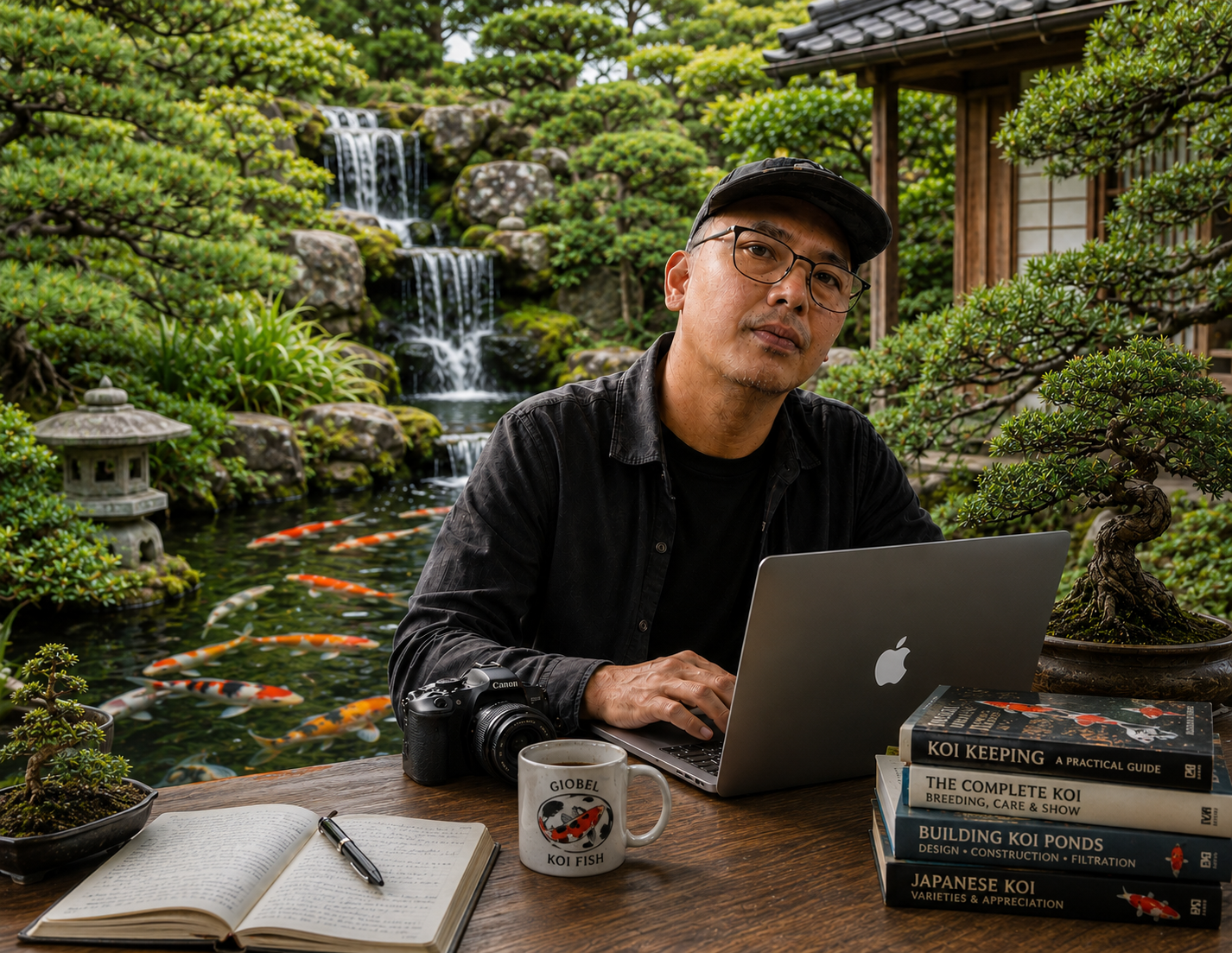
Giovanni Carlo Bagayas
Founder, Giobel Koi Center · Nishikigoi specialist since the 1980s · Labangan, Zamboanga del Sur, Philippines
Giovanni has kept Nishikigoi since the 1980s — a practice that has deepened his understanding of why Japanese culture elevates these fish far beyond the ornamental. His four decades of direct experience with koi gives him a practitioner’s perspective on the cultural values embedded in Nishikigoi breeding: the patience, the aesthetics, and the philosophy of perseverance that connects every serious koi keeper to the Japanese tradition.

Passionate about fish keeping since elementary school in the 1980s, Giovanni Carlo has dedicated countless hours to collecting and breeding a diverse array of ornamental freshwater fish. From vibrant guppies and majestic koi to striking bettas and classic goldfish, he continues to explore the fascinating world of aquatics, sharing knowledge and enthusiasm with fellow fish enthusiasts.