9 Koi Fish Meaning: Symbolism, Feng Shui & Paintings — Complete Guide
By Giovanni Carlo · Koi keeper & founder, Giobel Koi Center · Updated June 8, 2026
Quick Answer
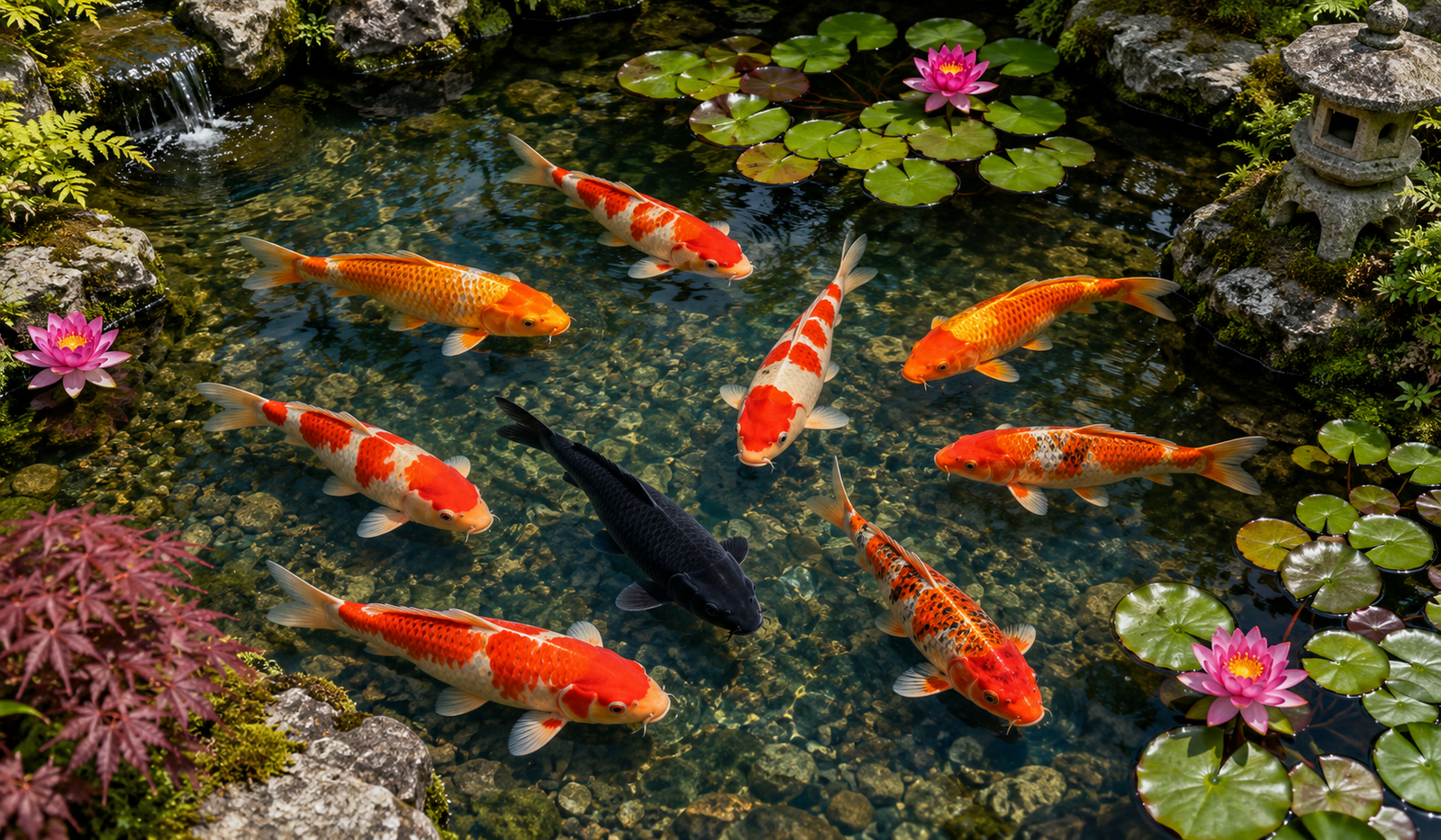
Nine koi fish represent completeness, eternal prosperity, and enduring good fortune — the most auspicious koi fish number in both Chinese and Japanese culture. The classic setup is 8 red or gold koi + 1 black koi: the bright fish attract wealth and positive chi, while the black koi absorbs negative energy. Whether kept in a pond or displayed as a painting, 9 koi is the gold standard feng shui wealth symbol.
In This Guide
- Why 9 Is the Luckiest Number for Koi Fish
- What 9 Koi Fish Represent: The 9 Virtues
- The 8 + 1 Formula: Why This Color Combination Works
- Koi Fish Colors and Their Meanings
- The Dragon Gate Legend: Why Koi Are Symbols of Transformation
- 9 Koi Fish Painting: Meaning & What to Look For
- Where to Hang a 9 Koi Fish Painting (Room by Room)
- Where NOT to Place a 9 Koi Painting
- Live Koi Pond vs. Painting: Which Is Better?
- Frequently Asked Questions
Why 9 Is the Luckiest Number for Koi Fish
Of all the numbers associated with koi fish, nine stands alone as the most universally auspicious — and this isn’t a coincidence. Both Chinese and Japanese cultures arrived at the same conclusion independently, rooted in language, numerology, and centuries of tradition.
In Chinese, the word for nine (jiǔ, 九) is a near-homophone for the word meaning “long-lasting” or “eternity.” In Japanese, nine (ku) carries the same phonetic link to longevity and permanence. Nine is also the highest single-digit number — the pinnacle of attainment before the cycle begins again — making it a universal symbol of completeness and the fullness of achievement.
In feng shui numerology, nine represents the final and highest stage: not just having wealth, but sustaining it across generations. This is why a pond or painting of nine koi fish is considered the ultimate wealth symbol — it doesn’t just attract good fortune, it locks it in permanently.
Cultural Note
In the Chinese Imperial system, nine was the emperor’s number — representing heaven, divine authority, and the highest earthly power. The Forbidden City in Beijing was built with 9,999 rooms to honor this symbolism. Displaying nine koi fish invokes this same energy of supreme, lasting authority and wealth.
What 9 Koi Fish Represent: The Nine Virtues
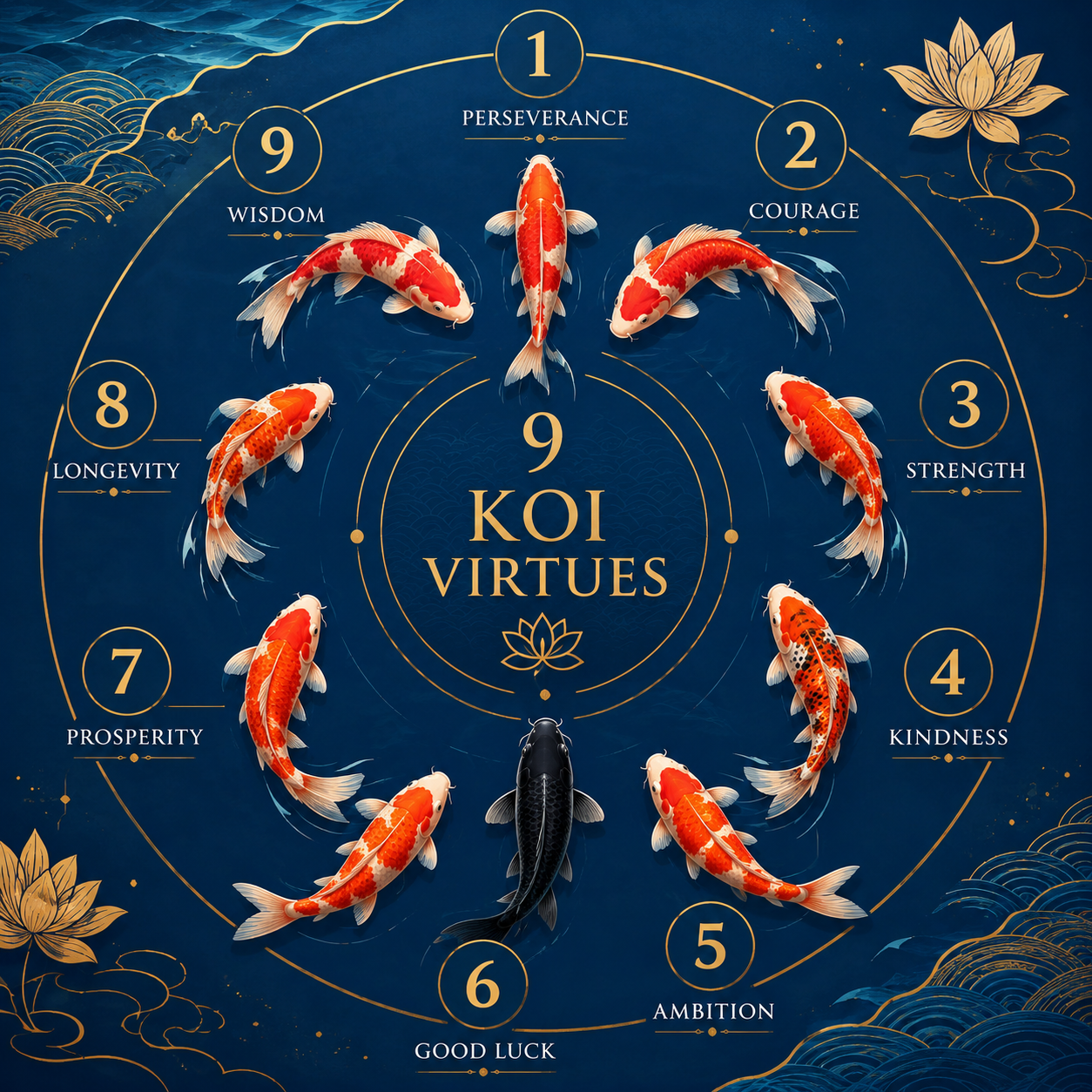
Nine koi fish swimming together don’t just represent prosperity in the abstract — in traditional symbolism, each individual fish embodies one of nine specific virtues. Together they form a complete picture of a life well lived: successful, protected, courageous, and at peace.
| Koi # | Virtue | What It Means for You |
|---|---|---|
| 1st | Perseverance | The strength to keep going through setbacks |
| 2nd | Courage | The boldness to take risks and face challenges |
| 3rd | Strength | Physical vitality and inner resilience |
| 4th | Kindness | Generosity that creates good karma and attracts good people |
| 5th | Ambition | The drive to pursue goals and grow beyond current limits |
| 6th | Good Luck | Fortune that arrives naturally when the other virtues are in place |
| 7th | Prosperity | Wealth, abundance, and financial security |
| 8th | Longevity | Long life, good health, and enduring fortune |
| 9th | Wisdom | The insight to use all the other virtues well |
The 8 + 1 Formula: Why This Color Combination Works
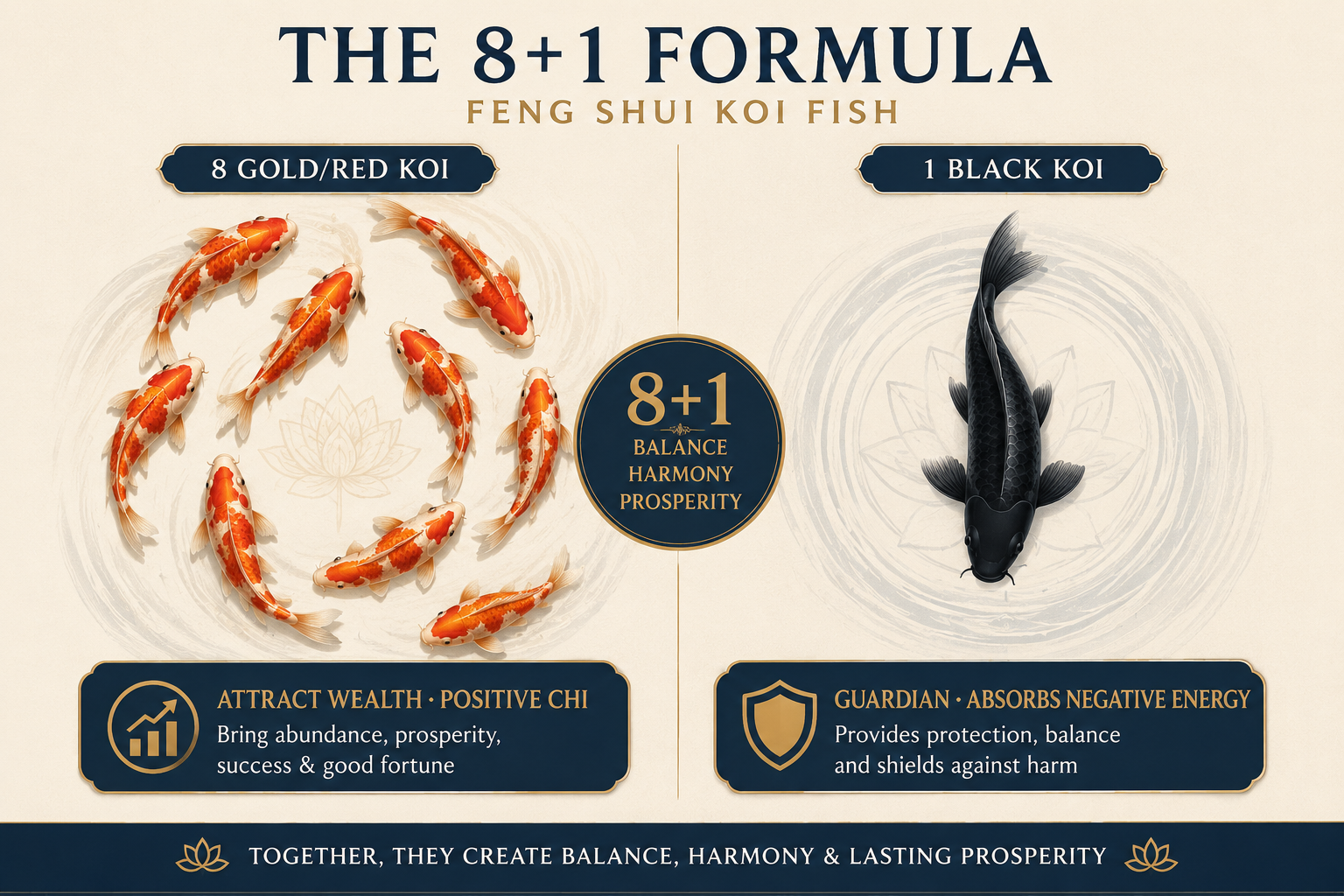
The most widely recommended feng shui configuration for nine koi is not simply “nine fish of any color.” It is a precise formula that feng shui practitioners have refined over centuries: 8 brightly colored koi (red or gold) + 1 black koi.
Here is the logic behind each element:
The 8 Bright Koi
Eight is the greatest wealth number in Chinese culture — the word bā sounds like “prosper.” Eight bright koi (red or gold) act as active attractors, drawing positive chi, wealth, and good fortune into your space. They are the engine of the arrangement.
The 1 Black Koi
The black koi serves as a guardian — absorbing sha chi (negative energy, bad luck, misfortune) before it can reach the household. It doesn’t attract negativity; it neutralizes it. Without this guardian, the wealth attracted by the eight bright fish has no protection.
Together, the 8 + 1 creates a self-sustaining feng shui system: the bright koi continuously attract abundance, while the black koi ensures that abundance is never diminished by outside forces. This is why feng shui masters often call it the most complete and balanced koi arrangement possible.
Koi Fish Colors and Their Meanings
Choosing the right colors for your nine koi is not merely aesthetic — in feng shui, each color carries a specific energetic intention. Here is what each koi color means and how to choose based on your goals:
| Color | Meaning | Best For |
|---|---|---|
| 🟡 Gold / Ogon | Wealth, financial success, prosperity | Business owners, wealth attraction |
| 🔴 Red / Benigoi | Love, passion, relationships, success | Couples, family harmony, vitality |
| ⚫ Black / Karasu | Protection, absorbs negative energy | Guardian fish — always include one |
| ⚪ White / Shiro Muji | Purity, spiritual growth, fresh starts | New beginnings, clarity, spiritual practice |
| 🔵 Blue / Asagi | Calm, peace, mental clarity | Stress relief, meditation spaces |
| 🥈 Silver / Platinum Ogon | Career achievement, professional growth | Career advancement, office spaces |
| 🟠 Orange / Kohaku-toned | Happiness, optimism, social luck | Socializing, family gatherings, joy |
For a nine-fish arrangement focused on maximum wealth: choose 5 gold Ogon, 3 red Kohaku, and 1 black Karasu. For a balanced life arrangement: mix gold, red, white, blue, silver, and one black. The black koi is always non-negotiable — it is the protector of everything else.
For a full deep-dive into koi color symbolism, see: The Meaning Behind Koi Fish Colors.
The Dragon Gate Legend: Why Koi Are Universal Symbols of Transformation
To understand why nine koi fish carry such enormous symbolic weight, you need to understand the legend at the heart of koi symbolism: the Dragon Gate.
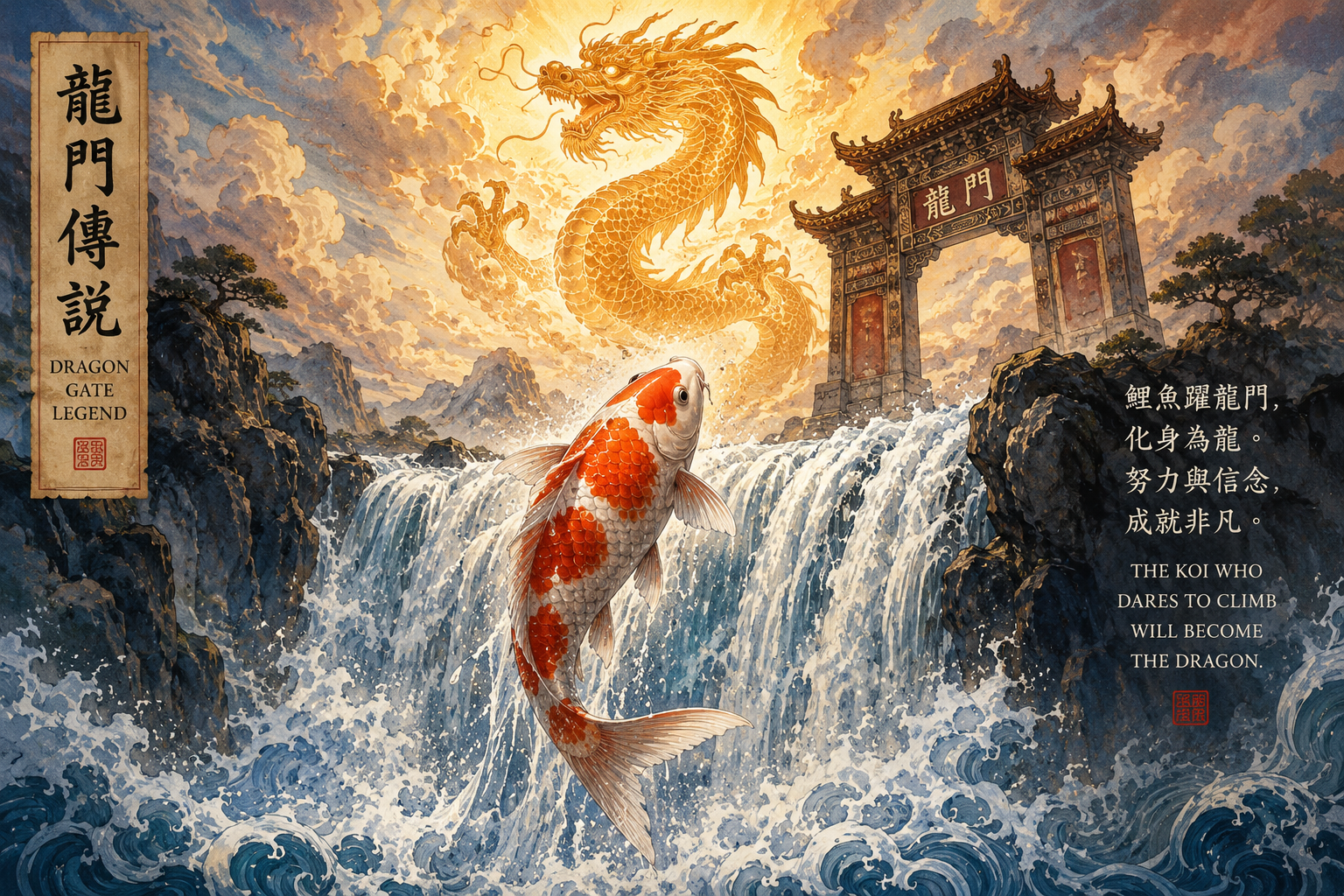
According to ancient Chinese mythology, a great school of koi fish once attempted to swim up the Yellow River — against the current, against the waterfalls, against every obstacle nature could place before them. Most turned back. But a small number persevered.
At the end of the river stood the Dragon Gate — a legendary waterfall of impossible height. The fish that had survived the long journey gathered beneath it. One by one, they attempted to leap the falls. They failed. They tried again. The gods, watching from above, were moved by the koi’s determination. When one koi finally cleared the Dragon Gate, the heavens transformed it — not back into a fish, but into a mighty dragon.
Why This Matters for the Number 9
The Dragon Gate legend is about completion — the full journey from ordinary to extraordinary, from beginning to ultimate transformation. Nine koi together represent that completed journey: nine stages of perseverance, nine virtues mastered, nine forms of fortune achieved. It is the final number before the cycle begins again at one — a symbol of having arrived.
This is why nine koi in a painting are often shown in vigorous, upward swimming motion — they are the koi approaching the Dragon Gate, full of energy and purpose. Stagnant fish in artwork are considered symbolically inert; dynamic, forward-moving fish carry the active energy of transformation.
To learn more about this legend: Koi Dragon Legend: The Full Story.
9 Koi Fish Painting: Meaning & What to Look For
A painting of nine koi fish is one of the most popular feng shui art choices for homes and offices worldwide — and for good reason. It carries the full symbolic weight of nine koi without requiring a pond, making it accessible to anyone regardless of space or budget.
But not every nine-koi painting is equal. Here is what to look for and what to avoid when choosing feng shui koi artwork:
| Feature | ✅ Ideal (Auspicious) | ❌ Avoid |
|---|---|---|
| Fish motion | Vigorous, active, swimming forward | Stagnant, floating, stationary fish |
| Swimming direction | Fish facing into the room / toward viewer | Fish swimming toward a wall or exit |
| Color combo | 8 red/gold + 1 black; or rich multicolor | Dull, faded, or monotone colors |
| Water element | Clear, flowing water with movement | Murky, dark, or stagnant-looking water |
| Composition | Circular or upward movement of fish | Fish swimming downward or scattered |
| Count | Exactly 9 koi visible and clearly countable | Ambiguous count or decorative filler fish |
Pro Tip from a Koi Keeper
A nine koi painting is said to bring “wealth from nine directions” — the idea being that prosperity arrives not from one source, but from every direction simultaneously. Choose artwork where the fish appear to swim in from multiple angles, creating a sense of abundance converging on your space. Hand-painted or high-quality reproductions carry more energetic presence than mass-printed posters.
Where to Hang a 9 Koi Fish Painting: Room by Room Guide
Placement is as important as the painting itself. In feng shui, the location of artwork determines which life area it energizes. Here is exactly where to hang a nine koi painting for each specific goal:
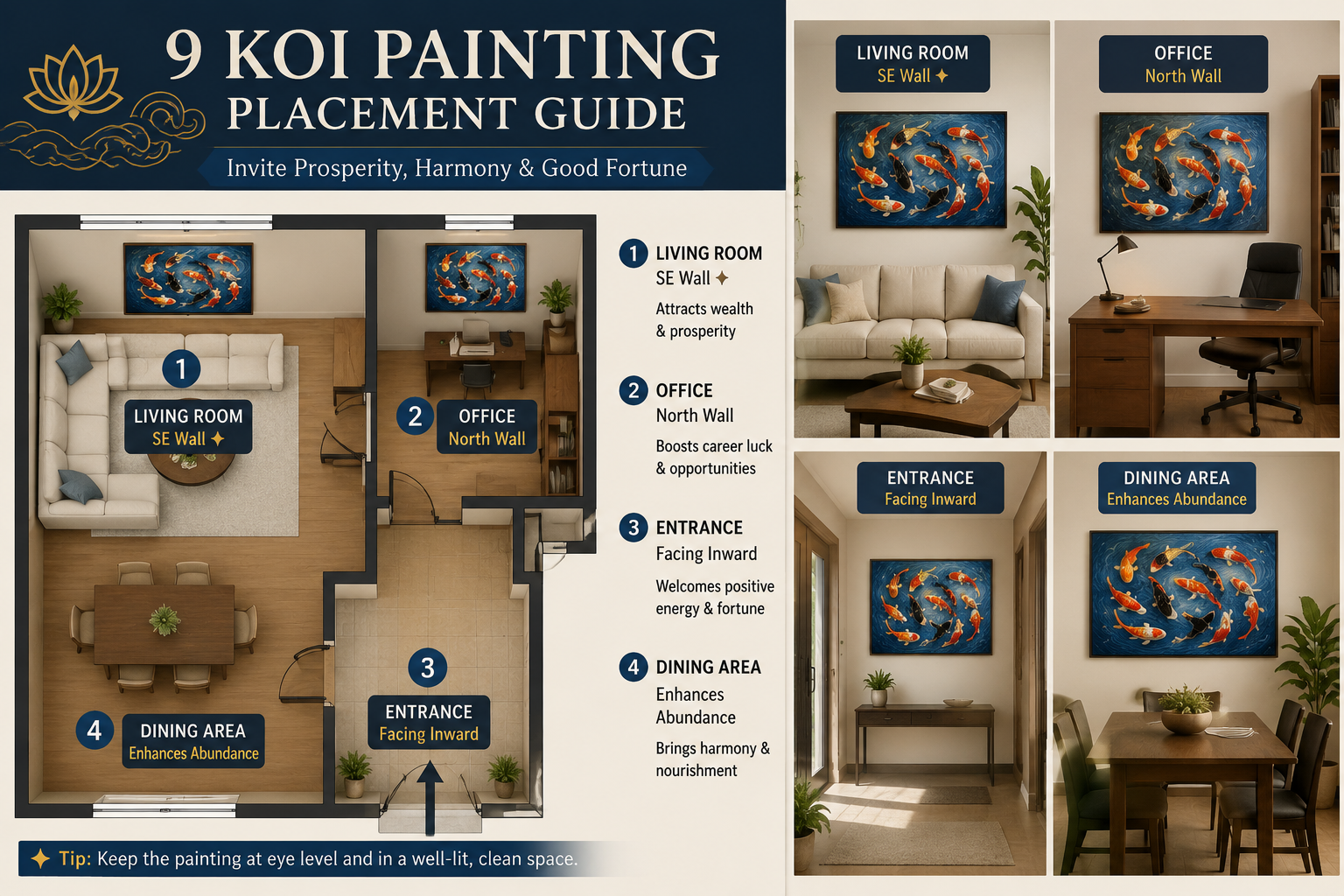
Living Room — Southeast Wall (Wealth Sector)
The southeast wall of your living room is the wealth sector in traditional feng shui. Hanging a nine koi painting here activates financial energy for the entire household. Position it where it is clearly visible from the main seating area — ideally facing inward toward the center of the room, not toward a window or door. This is the single most powerful placement for wealth attraction.
Office or Study — North Wall (Career Sector)
The north sector governs career, professional opportunities, and ambition. Hanging nine koi on the north wall of your office — or directly behind your desk chair — creates a “mountain of support” that energetically backs your decisions and authority. This placement is especially effective for those seeking promotion, growing a business, or launching a new professional venture.
Main Entrance / Foyer — Facing Inward
Placing nine koi near the main entrance — on a wall that faces inward, so the fish appear to swim into the home — is a classic feng shui wealth remedy. This position ensures that prosperity enters every time someone walks through the door. Ensure the fish are not swimming toward the entrance (which would push wealth out); they must face inward.
Dining Area — Above or Near the Table
The dining table is a traditional abundance symbol — it is where a family gathers to share the fruits of their work. Hanging nine koi nearby amplifies this energy, symbolizing that there will always be enough: enough food, enough wealth, enough good fortune to share with everyone at the table.
Bedroom — Southeast or East Wall (If Used)
The bedroom is primarily a yin (resting) space, and strong water energy from koi art can occasionally be too active for sleep. However, if you choose to use it in a bedroom, place it on the southeast wall for wealth, or behind the headboard for relationship harmony. A smaller, calmer painting works better in bedrooms than a large, energetically charged piece.
| Room / Location | Best Wall / Direction | Life Area Activated |
|---|---|---|
| Living room ✦ | Southeast wall | Wealth & abundance |
| Office / study | North wall / behind desk | Career & opportunity |
| Entrance / foyer | Facing inward from door | General wealth inflow |
| Dining area | Near or above the table | Family abundance & nourishment |
| Hallway | Vertical painting, fish facing inward | Draws prosperity through the home |
| Bedroom (optional) | Southeast or behind headboard | Relationship harmony, wealth |
Where NOT to Place a 9 Koi Fish Painting
Just as important as knowing where to hang a nine koi painting is knowing where to avoid placing it. These locations are considered to neutralize, drain, or conflict with the positive energy of koi symbolism:
- Bathroom: Running water here symbolizes wealth being literally “flushed away.” Keep all feng shui wealth symbols out of bathrooms entirely.
- Kitchen: Fire energy in the kitchen conflicts with the water energy of koi. The two elements in opposition can create symbolic disharmony.
- Facing the exit or toward a window: Fish appearing to swim toward an exit push wealth out of the home rather than in. Always position fish to face inward.
- Dark, cluttered, or low-energy spaces: A koi painting in a dim corridor or a cluttered storage area is symbolically inert — positive chi cannot move freely in blocked or dark spaces.
- Directly on the floor or very low: Water element art placed at floor level is considered inauspicious. Hang at eye level or above.
Live Koi Pond vs. Painting: Which Is Better?
This is one of the most common questions among feng shui enthusiasts. The honest answer from both traditional practitioners and experienced koi keepers: live koi in a well-maintained pond are considered more powerful — but a high-quality painting is an excellent and widely accepted alternative.
| Live Koi Pond | 9 Koi Painting | |
|---|---|---|
| Feng shui power | ⭐⭐⭐⭐⭐ Highest | ⭐⭐⭐⭐ Very high |
| Space required | Large outdoor area | Any room, any size |
| Maintenance | High — water, filtration, feeding | None |
| Cost | High (pond + fish + equipment) | Varies widely |
| Risk | Fish can become ill or die | None |
| Karmic connection | Strong — stewardship of living creatures | Symbolic — still meaningful |
Traditional feng shui holds that caring for living koi creates a karmic bond of stewardship — you are responsible for these creatures, and their flourishing reflects and reinforces the flourishing of your own fortune. A sick or neglected pond is considered symbolically disastrous. If you choose live koi, maintain them well. If you cannot, a high-quality painting is a fully valid and widely practiced alternative.
To explore live koi options: Lucky Number of Koi Fish in a Pond — Full Feng Shui Guide.
Related Reading on Giobel Koi Center
Frequently Asked Questions
What is the meaning of 9 koi fish?
What does a 9 koi fish painting mean in feng shui?
Where should I hang a 9 koi fish painting?
What color should 9 koi fish be?
Why is the number 9 lucky in Chinese and Japanese culture?
What do the 9 koi fish virtues represent?
Can I use a 9 koi fish painting instead of live fish?
What is the Dragon Gate legend of koi fish?
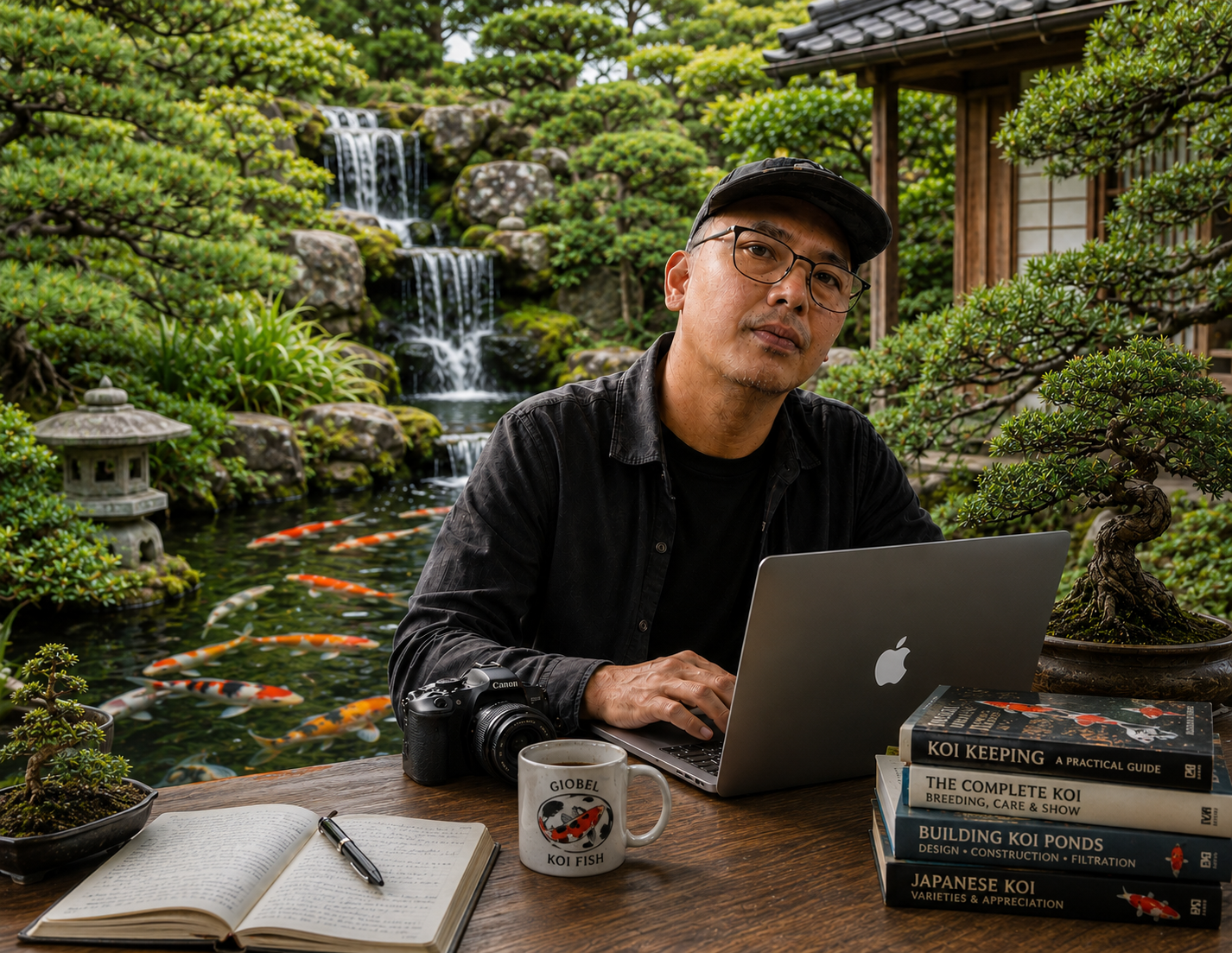
Giovanni Carlo
Koi keeper & founder, Giobel Koi Center · Labangan, Zamboanga del Sur
Giovanni has been keeping koi since the 1980s and runs one of the Philippines’ most widely read koi fish resources. He writes from hands-on experience breeding, raising, and selling Japanese koi on his farm in Mindanao, combining decades of practical knowledge with deep study of koi symbolism and feng shui.

Passionate about fish keeping since elementary school in the 1980s, Giovanni Carlo has dedicated countless hours to collecting and breeding a diverse array of ornamental freshwater fish. From vibrant guppies and majestic koi to striking bettas and classic goldfish, he continues to explore the fascinating world of aquatics, sharing knowledge and enthusiasm with fellow fish enthusiasts.