Koi Pond Water Quality: The Complete Guide to pH, Ammonia, Nitrite and Nitrate
By Giovanni Carlo Bagayas | Published: June 2026 | 15 min read
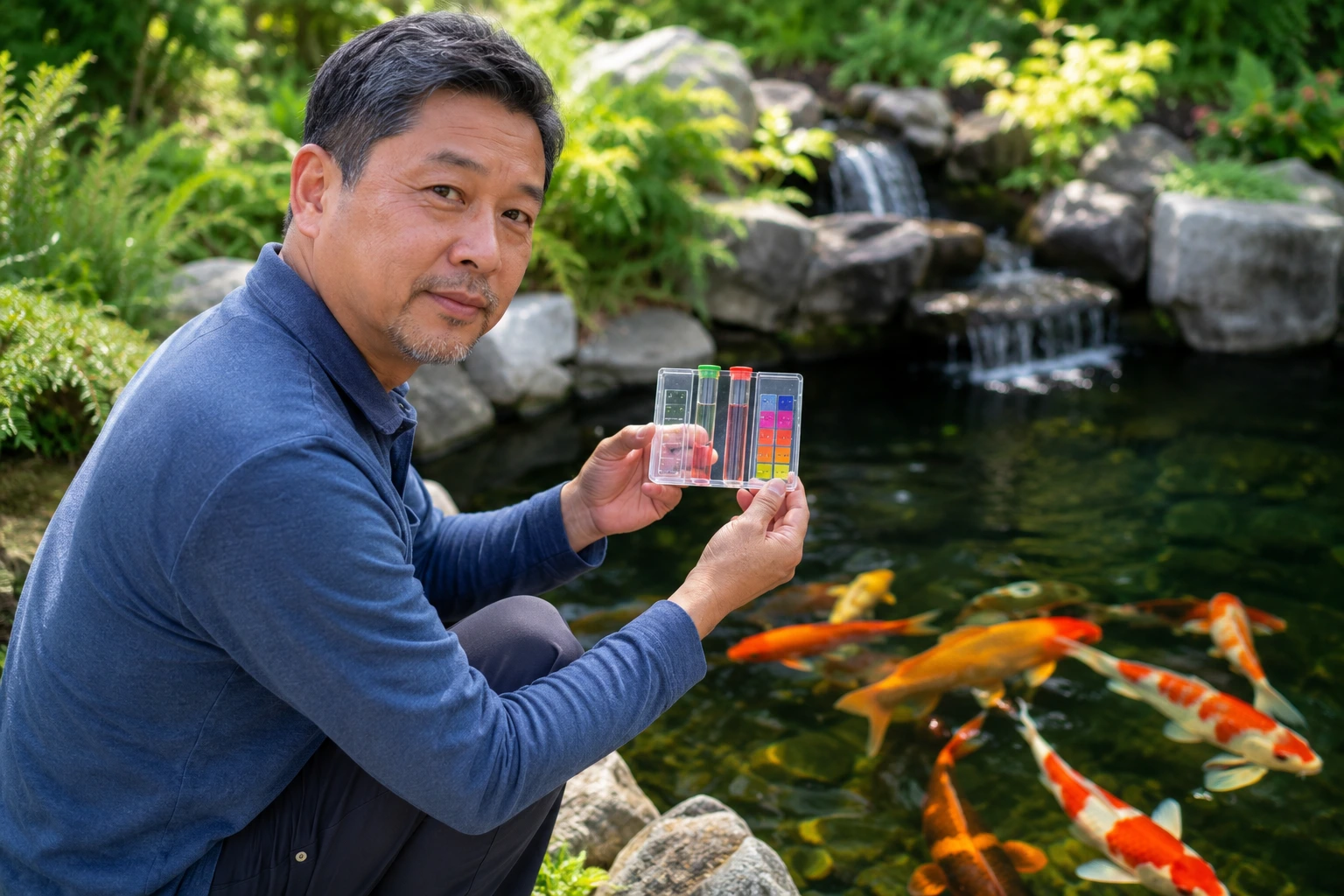
Quick Answer
The ideal koi pond water parameters are: pH 7.0–8.5, ammonia 0 ppm, nitrite 0 ppm, nitrate below 40 ppm, KH 100–200 ppm, dissolved oxygen above 6 mg/L, and temperature 59–77°F (15–25°C). Water quality is the single biggest factor in koi health, color vibrancy, and lifespan. Most koi deaths trace back to poor water — not disease.
Why water quality is the foundation of koi health
In over 40 years of keeping koi — starting in the 1980s here in the Philippines — I have seen one pattern repeat itself more than any other: koi that get sick almost always live in ponds with compromised water chemistry. The fish was not the problem. The water was.
Koi are constantly bathed in their environment. Unlike terrestrial animals that can move away from a toxic environment, a koi cannot leave its pond. Every gill cycle pulls water directly through the fish’s blood supply. This means every ammonia spike, every pH crash, every oxygen dip hits the fish’s immune system immediately and continuously.
Good water quality does not just prevent disease — it directly determines how vibrant your koi’s colors are, how fast they grow, how long they live, and how much they interact with you. A koi in perfect water is alert, colorful, and surfaces eagerly for food. A koi in stressed water is pale, lethargic, and hides near the bottom.
From experience
The most common question I receive from new koi keepers is “why is my koi sick?” In most cases, before we even discuss disease, I ask: “When did you last test your water, and what were the readings?” The answer is almost always that they have not tested recently — or have never tested at all. Test kits cost less than a single sick koi treatment. Buy one before you buy fish.
Complete water parameter reference table
Use this table as your master reference. Bookmark it or print it and keep it near your pond.
| Parameter | Ideal range | Danger zone | Effect on koi |
|---|---|---|---|
| pH | 7.0 – 8.5 | <6.5 or >9.5 | Stress, immune suppression, mucus damage, death at extremes |
| Ammonia (NH₃/NH₄⁺) | 0 ppm | >0.25 ppm | Gill damage, hemorrhaging, death above 2 ppm |
| Nitrite (NO₂) | 0 ppm | >0.25 ppm | Brown blood disease, suffocation even in oxygenated water |
| Nitrate (NO₃) | <40 ppm | >80 ppm chronic | Chronic immune suppression, stunted growth, algae blooms |
| KH (carbonate hardness) | 100 – 200 ppm (6–11 dKH) | <60 ppm | pH instability, overnight pH crashes, acute stress |
| GH (general hardness) | 100 – 250 ppm | <60 ppm | Osmotic stress, poor scale quality, reproductive failure |
| Dissolved oxygen (DO) | >6 mg/L (8+ ideal) | <4 mg/L | Surface gasping, suffocation, bacterial infection risk rises |
| Temperature | 59°F – 77°F (15°C – 25°C) | >86°F or <35°F | Immune collapse at extremes, metabolism disruption |
| Chlorine / Chloramine | 0 ppm | Any detectable level | Gill destruction, kills beneficial bacteria, rapid death |
| Salinity | 0.1% – 0.3% (therapeutic) | >0.5% long-term | Beneficial at low levels for osmoregulation and parasite control |
The nitrogen cycle in a koi pond
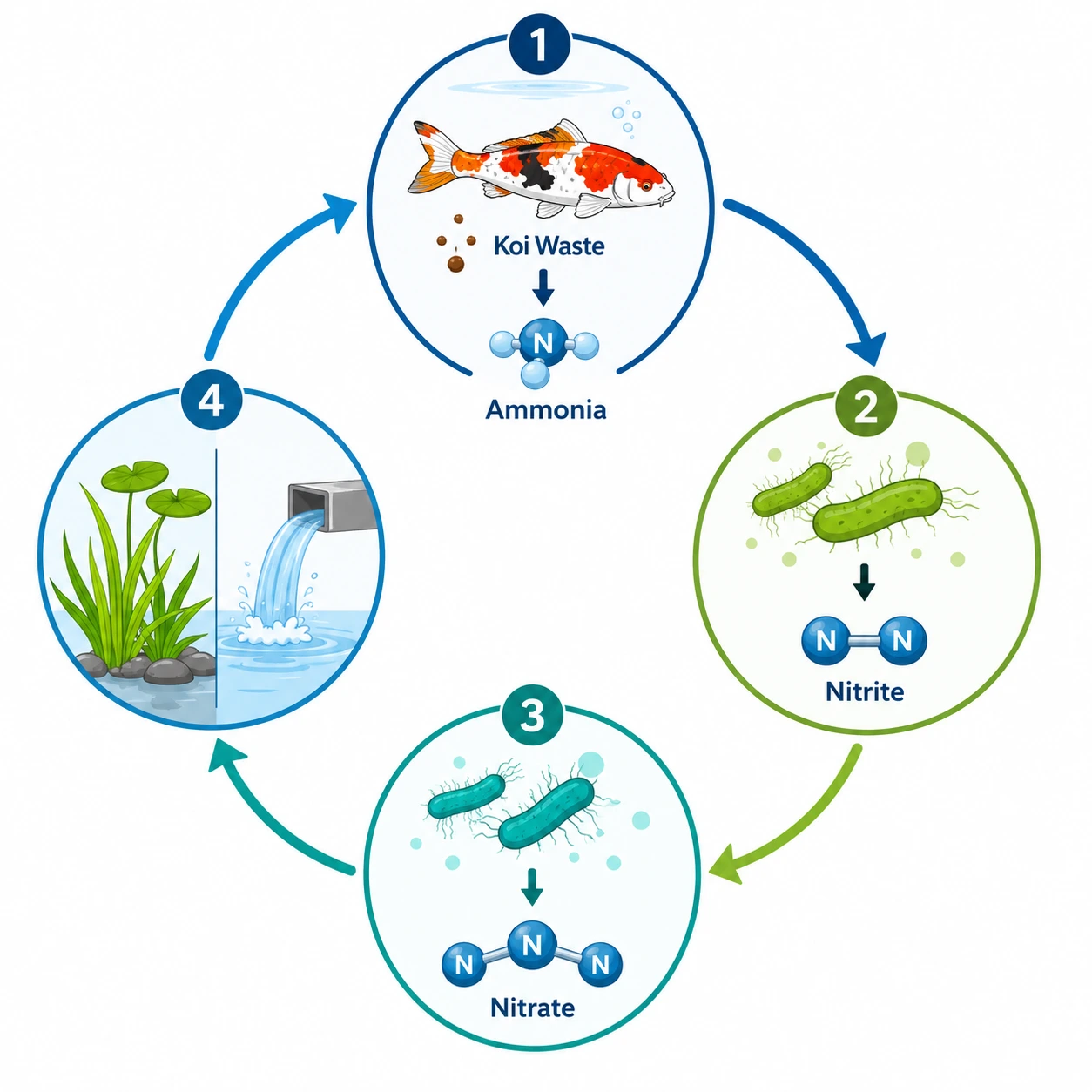
The nitrogen cycle is the single most important biological process in your pond. Understanding it is not optional — it is the difference between a thriving pond and a cycle of sick and dying fish.
Here is how it works, step by step:
- Koi produce ammonia — through gill excretion (the primary route), urine, and decomposing waste and uneaten food.
- Nitrosomonas bacteria convert ammonia → nitrite — these bacteria colonize your biological filter media, pond walls, and substrate. This conversion is fast but produces nitrite, which is also highly toxic.
- Nitrobacter bacteria convert nitrite → nitrate — a second bacterial colony handles this conversion. Nitrate is far less toxic and accumulates slowly.
- Nitrate is removed — through partial water changes (primary method), uptake by aquatic plants, and denitrification in deep anaerobic zones.
A pond that has completed this cycle — where both beneficial bacteria colonies are fully established — is called a cycled pond. It will consistently read 0 ppm ammonia and 0 ppm nitrite regardless of fish load (within reason). A new pond takes 4–8 weeks to fully cycle. During this period, ammonia and nitrite spikes are normal and must be managed with partial water changes and reduced feeding.
Critical warning — new pond syndrome
Never add koi to a brand-new pond without cycling it first. “New pond syndrome” — ammonia and nitrite toxicity from an uncycled filter — is the number one cause of koi death among new pond owners. Either cycle fishlessly (with ammonia dosing) for 4–6 weeks before adding fish, or add fish very gradually with daily water testing and partial water changes until the cycle stabilizes.
pH — what it is, why it matters, and how to adjust it
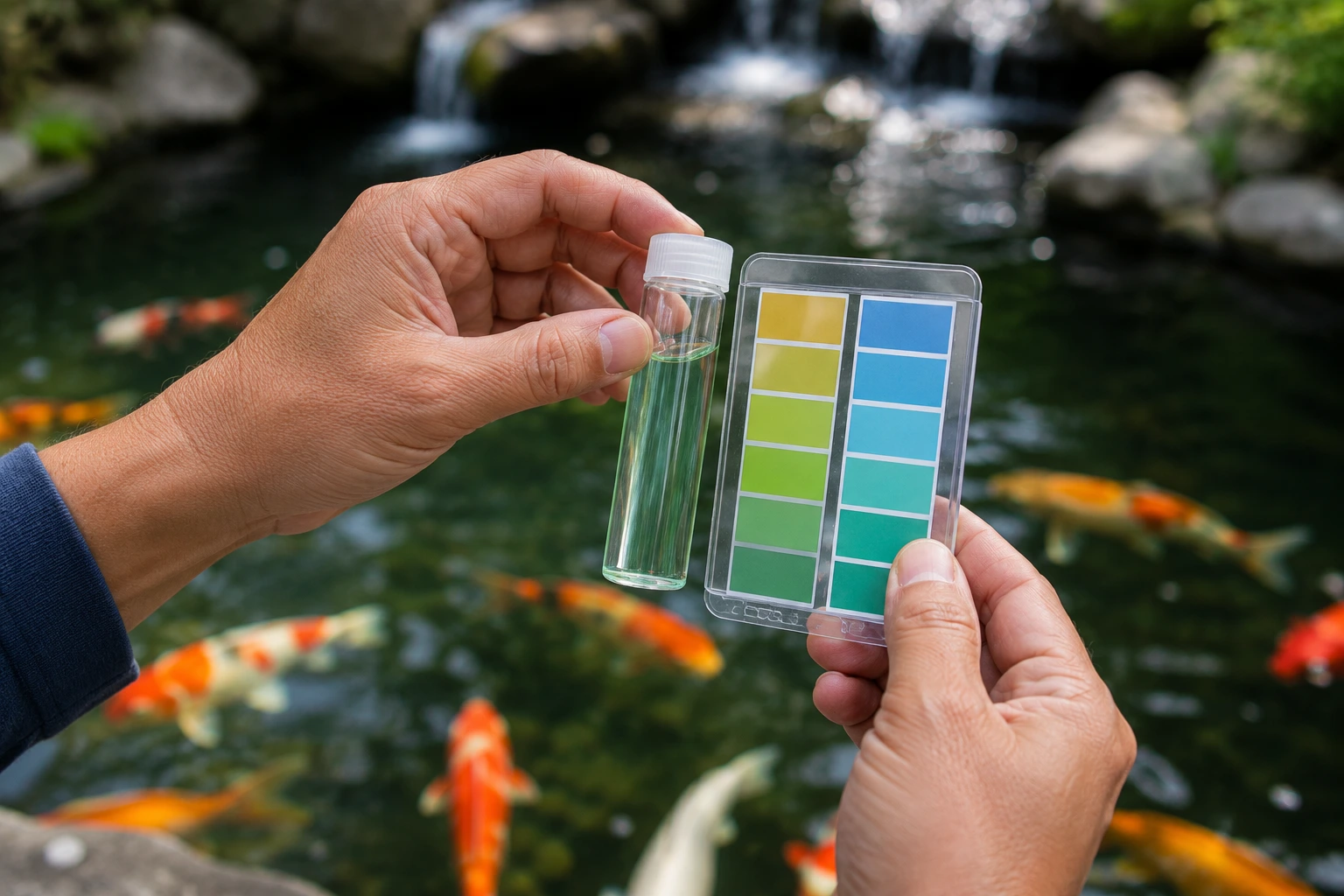
pH measures how acidic or alkaline your pond water is on a scale of 0–14. A pH of 7.0 is neutral. Below 7.0 is acidic; above 7.0 is alkaline. For koi, the ideal range is 7.0 to 8.5.
Why pH swings are dangerous
pH is not just a number — it also controls how toxic ammonia actually is to your fish. At low pH, most ammonia exists in the ionized (NH₄⁺) form, which is relatively harmless. At high pH (above 8.0), ammonia shifts toward the un-ionized (NH₃) form, which is highly toxic. This means the same total ammonia reading of 1.0 ppm is far more dangerous at pH 8.5 than at pH 7.0.
pH also swings significantly throughout the day in planted ponds. Aquatic plants and algae consume CO₂ during photosynthesis (raising pH) and release CO₂ at night (lowering pH). In a heavily planted or algae-rich pond, pH can swing from 7.0 at dawn to 9.5 by late afternoon — a range lethal to koi. This is why testing pH both morning and evening during summer is important.
How to raise pH (too acidic)
| Method | Dose | Notes |
|---|---|---|
| Sodium bicarbonate (baking soda) | 1 tsp per 100 gal | Safest method; raises both pH and KH. Add gradually, never all at once. |
| Crushed coral / oyster shell in filter | 1–2 kg per 1,000 gal | Slow-release buffer. Excellent for long-term pH stability. |
| Partial water change with higher-pH tap water | 25% change | Check tap water pH first. Dechlorinate before adding. |
How to lower pH (too alkaline)
| Method | Notes |
|---|---|
| Peat moss in filter or pond | Natural, slow-acting. Also softens water and adds tannins. |
| Reduce algae (shade pond, reduce nutrients) | Algae photosynthesis is the most common cause of high afternoon pH. |
| Increase aeration / surface agitation | Releases CO₂, which naturally lowers pH. Safe and effective. |
| Partial water change with lower-pH source water | Most reliable method if source water is naturally lower. |
KH (carbonate hardness) — the buffer that protects your pH
KH is often the most overlooked water parameter, yet it is one of the most critical. KH — carbonate hardness, also called alkalinity — measures the concentration of carbonate and bicarbonate ions in your water. These ions act as a buffer, absorbing pH swings and preventing the sudden crashes that kill koi overnight.
Think of KH as a cushion. The higher your KH, the more stable your pH will be regardless of biological activity. When KH drops below 60 ppm, that cushion disappears and pH becomes dangerously volatile.
| KH level | Status | Risk |
|---|---|---|
| < 60 ppm (3.4 dKH) | Critically low | pH crash risk — can drop 2+ points overnight |
| 60 – 100 ppm | Low | Moderate pH instability, especially in warm weather |
| 100 – 200 ppm | Ideal | Stable pH, safe buffering capacity |
| > 300 ppm | High | Generally safe but can cause slight alkalinity issues |
To raise KH safely: dissolve sodium bicarbonate (baking soda) in a bucket of pond water, then pour slowly around the pond edges. Use 1 teaspoon per 100 gallons to raise KH by approximately 17 ppm. Never add more than one dose per 24 hours — abrupt KH changes can themselves stress koi.
Recommended product
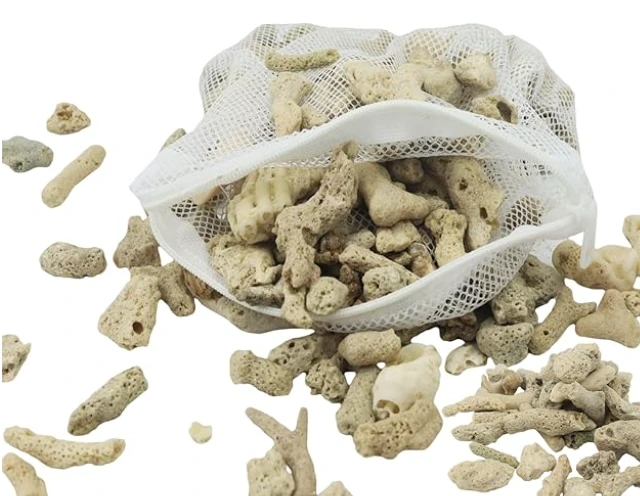
Crushed Coral for Pond Filters — 500g with Mesh Bag
Place in your filter or a mesh bag in your pond for slow-release KH buffering. Naturally raises and stabilizes pH without sudden spikes. Reusable and long-lasting — ideal for ponds with chronically low KH.
View on Amazon ↗Disclosure: As an Amazon Associate, Giobel Koi Center earns from qualifying purchases at no extra cost to you.
Ammonia — the silent killer
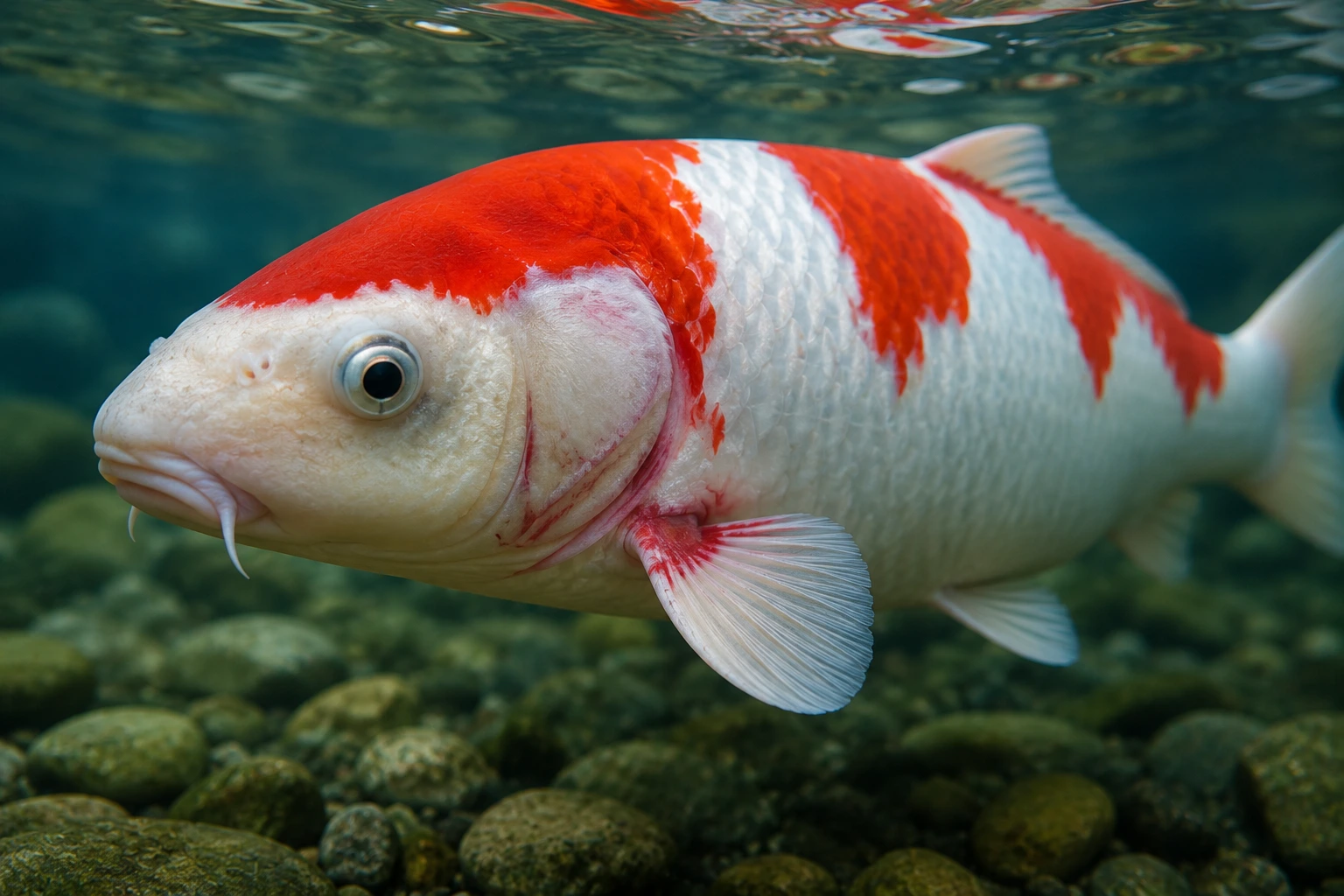
Ammonia is the most immediately dangerous water quality parameter for koi. It is produced continuously — every koi in your pond excretes ammonia through its gills with every breath. In a healthy, cycled pond, beneficial bacteria convert it to nitrite and then nitrate fast enough to keep ammonia at 0 ppm. When that system breaks down, ammonia accumulates and begins damaging your fish within hours.
Ammonia toxicity levels
| Ammonia level | Effect on koi | Action required |
|---|---|---|
| 0 ppm | Safe | No action needed |
| 0.25 ppm | Gill irritation begins | 25% water change, reduce feeding |
| 0.5 ppm | Visible stress, immune suppression | 30% water change immediately, stop feeding |
| 1.0 ppm | Gasping, clamped fins, hemorrhaging | 50% water change, ammonia detoxifier, investigate filter |
| 2.0 ppm+ | Acute toxicity, deaths likely | Emergency 50%+ water changes, aerate aggressively |
Common causes of ammonia spikes
- Overfeeding — uneaten food decomposes and releases ammonia. The 5-minute rule: remove any uneaten food after 5 minutes.
- Overstocking — too many koi for your pond volume and filter capacity.
- New pond / uncycled filter — no beneficial bacteria yet to process waste.
- Filter cleaning — scrubbing your biological filter media with tap water destroys the bacteria colony. Rinse only with pond water.
- Dead fish — a decomposing fish in a large pond can spike ammonia significantly. Always count your fish daily.
- Medication — many koi treatments kill beneficial bacteria. Always do extra water changes after medicating.
- Cold snap — beneficial bacteria die off when water drops suddenly below 50°F (10°C), causing temporary ammonia spikes in autumn.
Recommended product
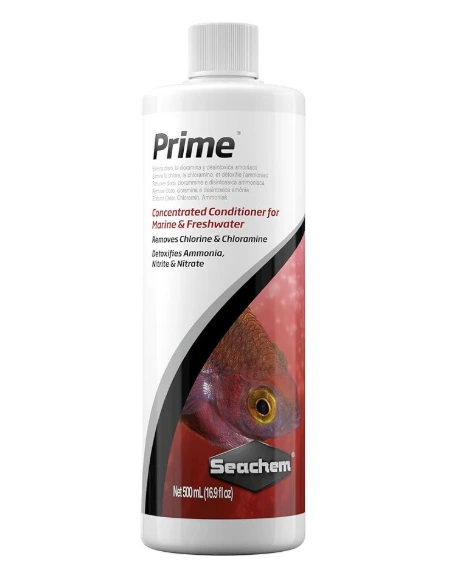
Seachem Prime — 500 ml Conditioner & Ammonia Detoxifier
The gold standard emergency detoxifier for koi ponds. Instantly removes chlorine and chloramine, and detoxifies ammonia and nitrite for 48 hours — giving your biological filter time to catch up during a spike.
View on Amazon ↗Disclosure: As an Amazon Associate, Giobel Koi Center earns from qualifying purchases at no extra cost to you.
Nitrite — brown blood disease
Nitrite (NO₂) is the intermediate product of the nitrogen cycle — produced when Nitrosomonas bacteria convert ammonia. Like ammonia, it should read 0 ppm in an established pond. Even low levels cause a condition called methemoglobinemia — commonly called “brown blood disease” — where nitrite binds to hemoglobin in the koi’s blood and prevents it from carrying oxygen. A koi in nitrite-toxic water can literally suffocate even in well-aerated water.
Symptoms of nitrite poisoning in koi
- Rapid gill movement even in aerated water
- Brown or chocolate-colored gills (blood is brown, not red)
- Lethargy, lying on the pond bottom
- Loss of appetite
- Fish gather near waterfall or aeration (seeking oxygen)
Emergency nitrite treatment
Salt (sodium chloride) is the fastest emergency treatment for nitrite toxicity. Chloride ions compete with nitrite for absorption at the gill membrane — dramatically reducing how much nitrite enters the bloodstream. Add non-iodized salt at 0.1% (1 kg per 1,000 liters / 264 gallons) as an emergency measure, followed by a 30% water change. Do not use iodized table salt — iodine is toxic to koi and beneficial bacteria.
Recommended product
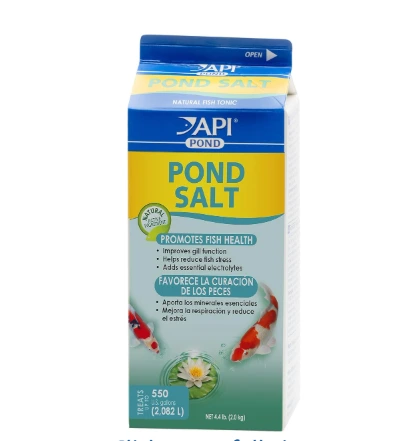
API Pond Salt — 4.4 lb Container
Made from evaporated sea water. Add at 0.1% (1 kg per 1,000 L) as an emergency nitrite treatment — chloride ions block nitrite absorption at the gill membrane. Also improves electrolyte balance and respiration year-round.
View on Amazon ↗Disclosure: As an Amazon Associate, Giobel Koi Center earns from qualifying purchases at no extra cost to you.
Nitrate — the chronic low-level toxin
Nitrate (NO₃) is the final product of the nitrogen cycle and is far less toxic than ammonia or nitrite. However, “less toxic” does not mean safe at any level. Chronic elevated nitrate — above 80 ppm over weeks and months — suppresses the koi immune system, causes stunted growth, reduces color vibrancy, and makes fish more vulnerable to bacterial and parasitic infections.
The key difference from ammonia and nitrite is that nitrate accumulates slowly. A well-stocked pond without water changes can gain 20–40 ppm of nitrate per week. Nitrate is managed primarily through:
- Regular partial water changes — 25% weekly is the standard recommendation. This dilutes nitrate before it builds up.
- Aquatic plants — water hyacinth, water lettuce, hornwort, and anacharis absorb nitrate directly as a nitrogen fertilizer. A well-planted pond can dramatically reduce water change frequency.
- Reduce feeding — less food input means less nitrogen entering the system.
- Do not overstock — more fish = more waste = faster nitrate accumulation.
Tip from the pond
In my Philippine pond, I use water hyacinth as a floating plant section on one end. It grows so aggressively in tropical heat that I harvest it weekly — and my nitrate readings have stayed below 20 ppm for years with only fortnightly water changes. Water hyacinth is arguably the most effective natural nitrate remover available to pond keepers.
Dissolved oxygen — most critical in summer
Koi breathe oxygen dissolved in water, not atmospheric oxygen directly. Dissolved oxygen (DO) levels must stay above 6 mg/L at all times, with 8 mg/L or above being ideal for active, well-fed koi.
The critical fact about dissolved oxygen is its relationship with temperature: warm water holds far less oxygen than cold water. At 59°F (15°C), water can hold about 10 mg/L of DO. At 86°F (30°C) — common in tropical ponds — maximum saturation drops to around 7 mg/L. Factor in the oxygen consumption of koi, algae, and beneficial bacteria at those warm temperatures, and a pond can approach dangerous DO levels by mid-afternoon on a hot, still day.
Signs of low dissolved oxygen
- Koi gasping at the water surface, especially in the morning
- Fish crowding near waterfall, aerator, or any water movement
- Sluggish behavior and reduced appetite
- All fish affected simultaneously (unlike disease, which usually spreads gradually)
How to increase dissolved oxygen
- Run a waterfall, fountain, or venturi jet — surface agitation is the most effective oxygenator
- Add an air pump with air stones, especially at night
- Reduce feeding during heat waves — uneaten food and fish metabolism both consume oxygen
- Shade the pond during peak summer heat to lower water temperature
- Control algae — algae produces oxygen by day but consumes it at night
Recommended product
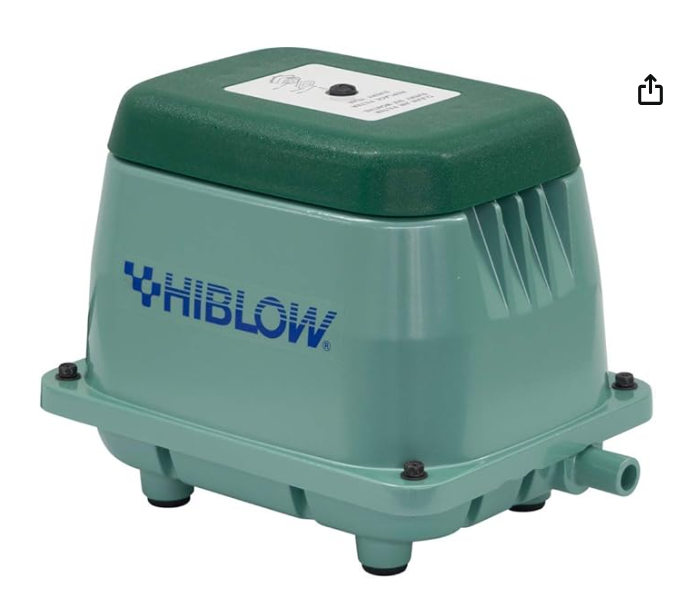
HIBLOW HP-80 Pond Aerator & Linear Air Pump
The #1 selling pond aerator in the USA. Quiet, energy-efficient, and oil-free. Aerates ponds up to ½ acre, promotes healthy dissolved oxygen levels, and circulates water to distribute temperature evenly. Rebuildable for long-term value.
View on Amazon ↗Disclosure: As an Amazon Associate, Giobel Koi Center earns from qualifying purchases at no extra cost to you.
Temperature — how it affects every other parameter
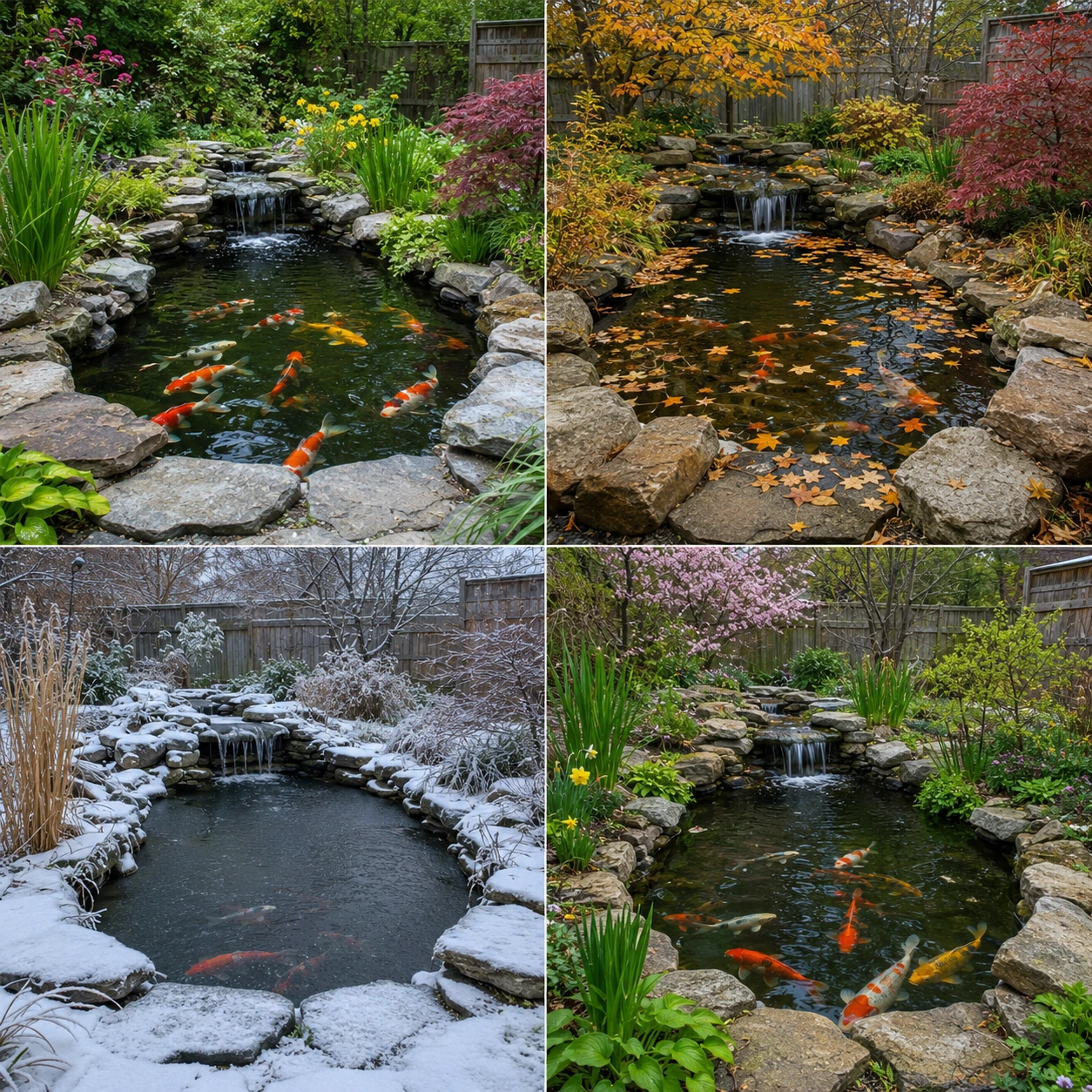
Water temperature is not just a comfort variable — it directly controls koi metabolism, immune function, beneficial bacteria activity, dissolved oxygen capacity, and the toxicity of ammonia. Everything in the pond is temperature-dependent.
| Temperature | Koi behavior | Feeding | Key concern |
|---|---|---|---|
| Below 50°F (10°C) | Torpor, near stationary | Stop all feeding | Beneficial bacteria also dormant — water changes only if ammonia detected |
| 50–59°F (10–15°C) | Slow, occasional movement | Wheat germ only, once daily | Digestive system barely active — high-protein food causes internal rot |
| 59–68°F (15–20°C) | Active, feeding normally | Wheat germ + standard pellets, 2×/day | Immunity improving; good time to treat diseases if needed |
| 68–77°F (20–25°C) | Peak activity, breeding behavior | High-protein + color enhancer, 3–4×/day | Ideal range. Monitor DO and ammonia during peak feeding. |
| 77–86°F (25–30°C) | Active but stressed | Reduce portions, 2–3×/day | DO drops significantly — add extra aeration |
| Above 86°F (30°C) | Severe stress | Minimal or stop feeding | Oxygen emergency risk. Shade pond, run all aeration. |
Recommended product
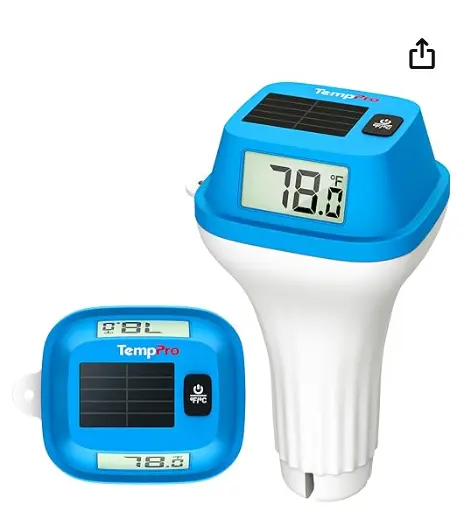
TempPro Solar Floating Pond Thermometer
Solar-powered floating thermometer accurate to ±0.9°F. Updates every 5 seconds with dual LCD displays readable from a distance. IPX8 waterproof, UV-resistant, no batteries needed — perfect for monitoring koi pond temperature year-round.
View on Amazon ↗Disclosure: As an Amazon Associate, Giobel Koi Center earns from qualifying purchases at no extra cost to you.
Water testing schedule and recommended test kits
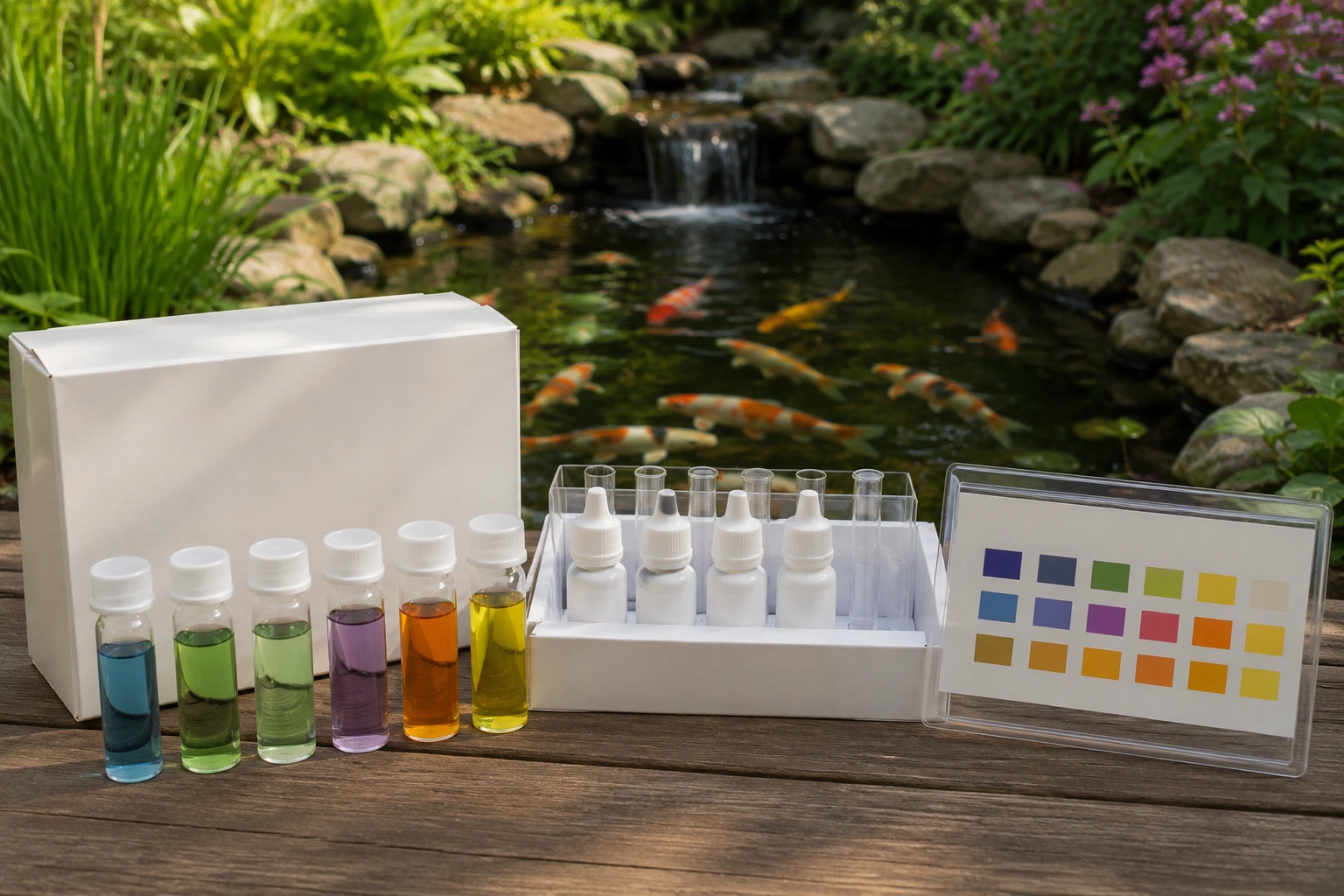
Recommended testing schedule
| Situation | Parameters to test | Frequency |
|---|---|---|
| New or cycling pond | Ammonia, nitrite, pH | Daily |
| Established pond, spring–autumn | Ammonia, nitrite, nitrate, pH | Weekly |
| Established pond, hot weather | pH (morning + evening), DO if possible | Daily |
| After adding new fish | Ammonia, nitrite | Daily for 2 weeks |
| After disease treatment | Ammonia, nitrite, pH | Daily until stable |
| Winter (koi inactive) | Ammonia, pH | Monthly |
| Routine maintenance | Full panel including KH, GH | Monthly |
Test strips vs liquid test kits
Test strips are convenient but notoriously inaccurate — they regularly give false “safe” readings on ammonia and nitrite. For koi ponds, always use liquid reagent test kits. The API Freshwater Master Test Kit covers ammonia, nitrite, nitrate, and pH and costs less than a single koi treatment. For KH and GH, a separate KH/GH test kit or a complete pond kit is needed.
Recommended product
API 5-IN-1 Test Strips — 100 Count
Fast, easy weekly water monitoring for pH, nitrite, nitrate, carbonate hardness, and general hardness. Dip and read in seconds — essential for catching problems before they harm your koi.
View on Amazon ↗Disclosure: As an Amazon Associate, Giobel Koi Center earns from qualifying purchases at no extra cost to you.
Emergency fixes — what to do right now
If your koi are gasping at the surface right now
- Run every air stone and aerator you have immediately.
- Start a 25–30% water change with dechlorinated water.
- Stop all feeding.
- Test ammonia, nitrite, and pH.
- If ammonia >0.5 ppm — add ammonia detoxifier (Seachem Prime or equivalent) as a bridge while doing water changes.
- If nitrite >0.25 ppm — add non-iodized salt at 1 kg per 1,000 liters (0.1%).
- If pH <6.5 — add baking soda at 1 tsp per 100 gallons, dissolved in pond water, poured slowly.
| Problem detected | Immediate action | Follow-up |
|---|---|---|
| Ammonia >0.25 ppm | 25–50% water change, stop feeding | Check filter function, reduce stocking |
| Nitrite >0.25 ppm | 30% water change + salt at 0.1% | Test daily until 0; check filter bacteria |
| Nitrate >80 ppm | 25% water change | Weekly changes until below 40 ppm; add plants |
| pH below 6.5 | Baking soda at 1 tsp/100 gal slowly | Test KH; add crushed coral to filter |
| pH above 9.5 | Increase aeration; partial water change | Control algae; add shade netting |
| Koi gasping at surface | Run all aeration immediately | Test DO, pH, ammonia; reduce feeding |
| Chlorine in tap water added | Add dechlorinator (Seachem Prime) immediately | Always treat tap water before adding to pond |
Frequently asked questions about koi pond water quality
What is the ideal pH for a koi pond?
The ideal pH is 7.0–8.5. Koi prefer slightly alkaline water. Below 6.5 causes chronic stress and color fading; above 9.5 is acutely toxic. Test both morning and evening in summer as pH can swing over 1.0 point in a single day.
What ammonia level is safe for koi?
Zero. Ammonia should always read 0 ppm in an established pond. Even 0.25 ppm begins gill damage. At 2.0 ppm koi can die within hours. Perform an immediate 25–30% water change if any ammonia is detected.
What causes high ammonia in a koi pond?
The most common causes are: overfeeding, overstocking, a new or crashed biological filter, a dead fish decomposing in the pond, or a cold snap killing beneficial bacteria. Check all five before adjusting anything else.
How often should I test my koi pond water?
Weekly during the active season. Daily during cycling, hot weather, new fish introductions, or after disease treatment. Monthly in winter when koi are inactive.
What is the nitrogen cycle in a koi pond?
Koi excrete ammonia → Nitrosomonas bacteria convert it to nitrite → Nitrobacter bacteria convert nitrite to nitrate → nitrate is removed via water changes and plants. A fully cycled pond maintains 0 ppm ammonia and 0 ppm nitrite continuously.
What is KH and why does it matter for koi?
KH is carbonate hardness — it buffers pH and prevents crashes. Ideal KH is 100–200 ppm. Below 60 ppm, pH can crash 2+ points overnight and kill your entire pond. Raise KH safely with baking soda: 1 tsp per 100 gallons raises KH by ~17 ppm.
How do I lower nitrates in my koi pond?
Perform 25% weekly water changes, add fast-growing floating plants (water hyacinth is the most effective), reduce feeding, and avoid overstocking. Keep nitrates below 40 ppm for optimal koi health.
Why is dissolved oxygen important for koi?
Koi breathe dissolved oxygen through their gills. Minimum 6 mg/L is needed, with 8+ mg/L ideal. Hot water holds significantly less oxygen — at 86°F a pond holds roughly half the DO of the same pond at 50°F. Koi gasping at the surface is an oxygen emergency: run all aeration immediately.
Related koi care guides
Giovanni Carlo Bagayas
Founder, Giobel Koi Center · Koi keeper since the 1980s · Labangan, Zamboanga del Sur, Philippines
Giovanni has been keeping and breeding ornamental koi since the 1980s — over 40 years of hands-on pond experience covering water chemistry, disease management, breeding, and pond design in a tropical climate. He founded Giobel Koi Center to share practical, firsthand koi knowledge with enthusiasts worldwide.

Passionate about fish keeping since elementary school in the 1980s, Giovanni Carlo has dedicated countless hours to collecting and breeding a diverse array of ornamental freshwater fish. From vibrant guppies and majestic koi to striking bettas and classic goldfish, he continues to explore the fascinating world of aquatics, sharing knowledge and enthusiasm with fellow fish enthusiasts.