Koi Fish Diseases: Symptoms, Identification & Treatment Guide
By Giovanni Carlo · Koi keeper & founder, Giobel Koi Center · Updated June 9, 2026

Quick Answer
The most common koi diseases are white spot (Ich), dropsy, anchor worm, fish lice (Argulus), gill flukes, ulcers, fin rot, and fungus. Most are caused or worsened by poor water quality — fix the water first in every case. The fastest way to identify a disease: look up what you see — use the symptom-first diagnosis table below. Isolate any sick fish immediately to prevent spread.
Act Now If You See These Signs
Isolate any fish showing: raised pinecone scales (dropsy), white cottony patches (fungus/columnaris), visible parasites, open bleeding sores, or any fish floating sideways or gasping at the surface. Test water immediately — ammonia and nitrite must be 0 ppm. Most diseases progress rapidly in warm water. Speed is critical.
In This Guide
- Symptom-First Diagnosis Chart
- White Spot / Ich
- Dropsy (Pinecone Disease)
- Anchor Worm
- Fish Lice (Argulus)
- Gill Flukes & Skin Flukes
- Swollen Gill Disease
- Ulcers & Aeromonas
- Fin Rot
- Fungus
- Koi Herpesvirus (KHV) — The Most Dangerous
- Columnaris (Mouth Rot / Saddleback)
- All Diseases — Treatment Quick Reference
- Prevention: The 5 Pillars of Koi Health
- Quarantine Tank Setup
- Frequently Asked Questions
Symptom-First Diagnosis Chart
Start here. Find what you can see, and match it to the disease. Use at least 2 matching symptoms for confident identification.
| What You See | Most Likely Disease | Urgency | Jump to |
|---|---|---|---|
| White salt-like spots on body/fins, rubbing | White Spot (Ich) | High | → White Spot |
| Swollen body, scales raised like a pine cone | Dropsy | Critical | → Dropsy |
| Visible thread-like worms emerging from skin | Anchor Worm | Moderate | → Anchor Worm |
| Flat disc-like specks on body, fish flashing | Fish Lice (Argulus) | Moderate–High | → Fish Lice |
| Gasping, excess mucus, flashing, red gills | Gill Flukes | High | → Flukes |
| Gill plates protruding / swollen, labored breathing | Swollen Gill Disease | High | → Swollen Gills |
| Open red sores / craters on body | Ulcers / Aeromonas | High | → Ulcers |
| Fins frayed, edges white or red, disintegrating | Fin Rot | Moderate | → Fin Rot |
| White/grey cottony patches on skin, fins, or mouth | Fungus | Moderate–High | → Fungus |
| Rapid mass deaths, gill necrosis, sunken eyes | KHV — Emergency | CRITICAL | → KHV |
| White patches on mouth/head area, saddle-shaped lesion | Columnaris | High | → Columnaris |
1. White Spot / Ich (Ichthyophthirius multifiliis)
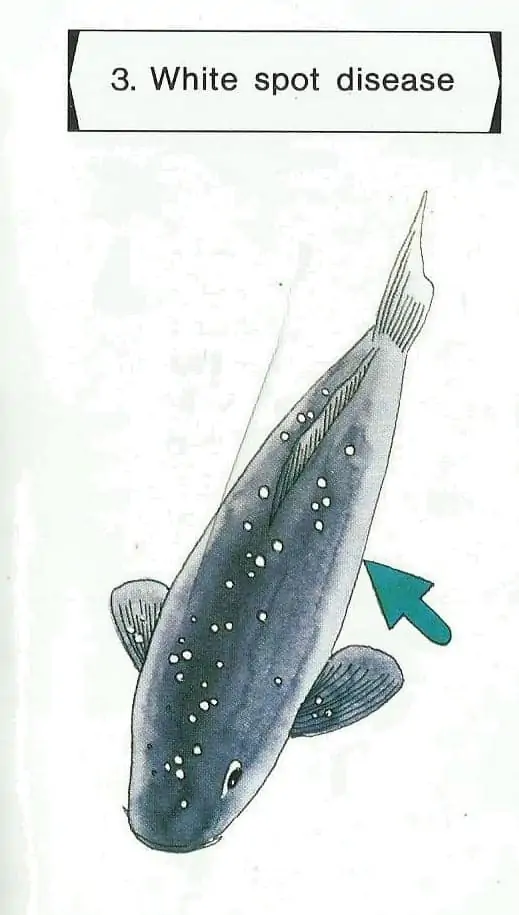

Symptoms: Small white salt-like dots covering the body, fins, and gills. Fish flash (rub against surfaces), breathe rapidly, appear lethargic. In heavy infestations, gills are covered and fish gasp at the surface.
Cause: The protozoan parasite Ichthyophthirius multifiliis. The parasite burrows under the fish’s mucus layer to feed, creating the characteristic white cyst. After maturing, it drops off and divides into up to 1,000 free-swimming offspring (tomites) that seek new hosts.
Treatment:
- Raise water temperature to 25–27°C (77–81°F) — this accelerates the parasite’s life cycle and makes the free-swimming stage (the only vulnerable stage) appear sooner
- Treat pond with a white spot medication — formalin/malachite green combination or a commercial Ich treatment
- Remove activated carbon from filters before treating — carbon removes medication
- Continue treatment for a full 10–14 days — the cyst stage on the fish is immune to treatment; only the free-swimming stage can be killed
- A salt dip (0.3% salt solution for 5 minutes) can provide symptomatic relief
Prevention: Quarantine all new fish for 4 weeks before adding to the main pond. Maintain good water quality — stressed fish are far more susceptible.
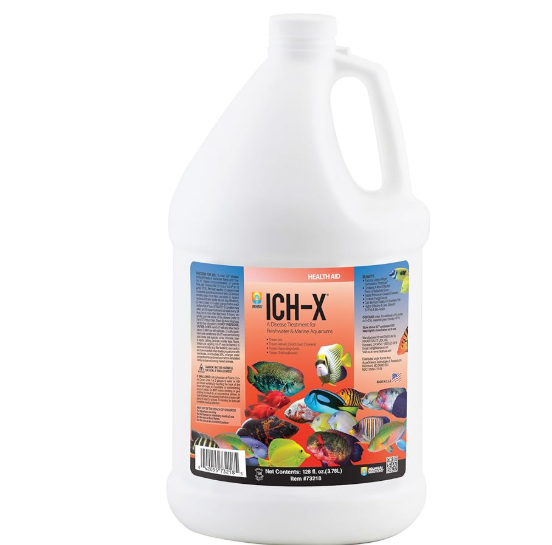
Hikari Ich-X — Ich Treatment (1 Gallon)
Hikari Aquarium Solutions · Formalin-based Ich treatment
Professional-grade white spot (Ich) treatment for koi ponds. Effective against Ichthyophthirius multifiliis and other external protozoan parasites. 1-gallon size treats large pond volumes. Remove activated carbon before use and treat for the full 10–14 day cycle.
View on Amazon →As an Amazon Associate I earn from qualifying purchases. Price unaffected.
2. Dropsy (Pinecone Disease / Edema)

Symptoms: Severely swollen abdomen; scales raised and protruding outward in the distinctive pinecone pattern (visible from above); protruding eyes (exophthalmia); lethargy; complete loss of appetite; pale or stringy feces.
Cause: Kidney failure — most commonly from bacterial infection by Aeromonas hydrophila or Pseudomonas species. The kidneys fail to excrete water, which accumulates in the body causing the swelling. The bacteria are present in virtually all ponds but only become pathogenic when a fish is immunocompromised by stress, poor water quality, or injury.
Treatment:
- Isolate the fish immediately to a clean quarantine tank
- Add aquarium salt at 0.3% concentration (3g per litre) — helps reduce osmotic stress and fluid retention
- Add Epsom salt (1 teaspoon per 5 gallons) to draw fluid from body tissue
- Treat with antibiotics — metronidazole (mixed into food for internal delivery) or kanamycin
- Correct any water quality issues in the main pond
- Be honest about prognosis — once pinecone scaling is fully established, survival is unlikely. Consider euthanasia when the fish is clearly suffering with no response to treatment after 3–5 days
See our full guide: Bloated Koi Fish: Complete Diagnosis & Treatment Guide.
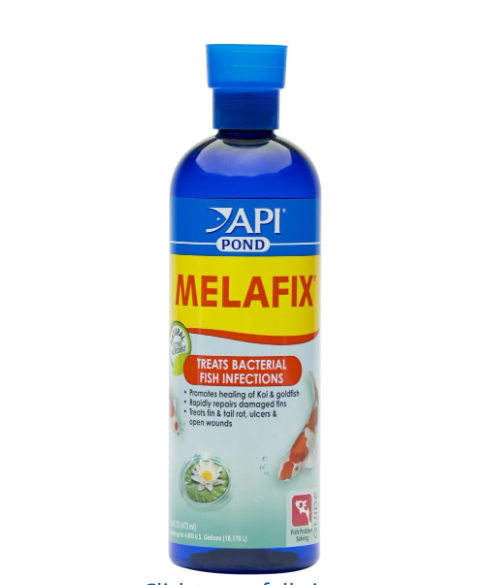
API Pond Melafix — Antibacterial Treatment (16 oz)
API · Natural tea tree extract · Safe for plants & beneficial bacteria
First-line antibacterial for ulcers, fin rot, open wounds, anchor worm removal sites, and early-stage bacterial infections. Dose daily for 7 days. Remove carbon and turn off UV before use.
View on Amazon →As an Amazon Associate I earn from qualifying purchases. Price unaffected.
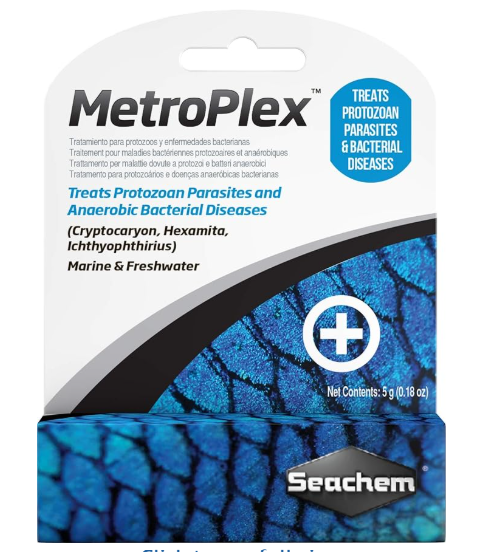
Seachem MetroPlex (Metronidazole) — Internal Bacterial Treatment
Seachem · For marine & freshwater fish · Granule powder
The most recommended antibiotic for dropsy, internal Aeromonas infections, and ulcers. Mix into food for best internal delivery. Use in quarantine tank only. Follow label dosing carefully.
View on Amazon →As an Amazon Associate I earn from qualifying purchases. Price unaffected.
3. Anchor Worm (Lernaea)
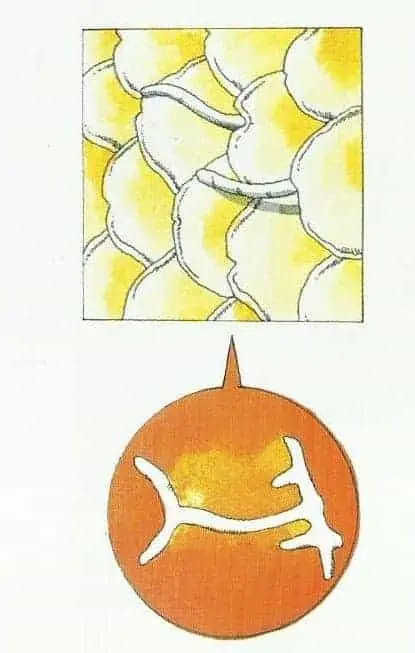
Symptoms: Thread-like worms (15–20mm) visible protruding from the fish’s body — most commonly around the base of fins, behind the head, and along the flanks. The attachment site is inflamed and red. Fish flash and rub vigorously. In heavy infestations, fish become lethargic and refuse food.
Cause: Lernaea is a copepod parasite. The female burrows her anchor-shaped head into the fish’s muscle tissue and remains embedded for life, with her egg sacs visibly trailing outside. The male is free-swimming and dies after mating. Larvae are introduced through new fish, plants, or contaminated water.
Treatment:
- Manual removal: Use fine-tipped tweezers to grasp the worm as close to the attachment site as possible and pull straight out with a smooth, steady motion. Do not twist — the anchor head must come out intact, not break off under the skin
- Immediately treat the wound site with diluted povidone-iodine or topical antiseptic to prevent bacterial infection at the entry point
- Treat the pond with Dimilin (diflubenzuron) or a Lernaea-specific treatment to kill larvae and prevent reinfestation
- Check all pond fish — where there is one anchor worm, there are usually more
- Treat with API Melafix or similar antibacterial for wound healing after removal
4. Fish Lice (Argulus)


Symptoms: Flat, oval, disc-shaped parasites (5–8mm) visible on the fish’s skin — translucent brown or greenish, sometimes appearing as spots of algae. Fish flash intensely and repeatedly, scratching against rocks and pond walls. Red circular wounds at feeding sites. In heavy infestations, fish become weak and highly stressed.
Cause: Argulus species are crustacean ectoparasites that use a suction disc to attach to the fish and a piercing stylet to feed on blood and tissue fluid. They are mobile — an adult Argulus can detach and reattach to different fish in the same pond, spreading rapidly. They inject a toxin that prevents blood clotting at the feeding site.
Why Argulus is particularly dangerous: Beyond direct damage, Argulus acts as a vector for other diseases — the puncture wounds from feeding provide entry points for bacterial and viral pathogens. KHV (Koi Herpesvirus) has been associated with Argulus transmission.
Treatment:
- Manual removal with tweezers for individual lice on isolated fish
- Treat the entire pond with potassium permanganate (1–2 ppm bath) or a commercial Argulus treatment (Parazin P, Dimilin)
- Potassium permanganate kills adult lice but not eggs — a second treatment in 2 weeks is required to kill newly hatched lice
- Treat feeding wounds with topical antiseptic to prevent secondary bacterial infection
5. Gill Flukes & Skin Flukes (Dactylogyrus / Gyrodactylus)
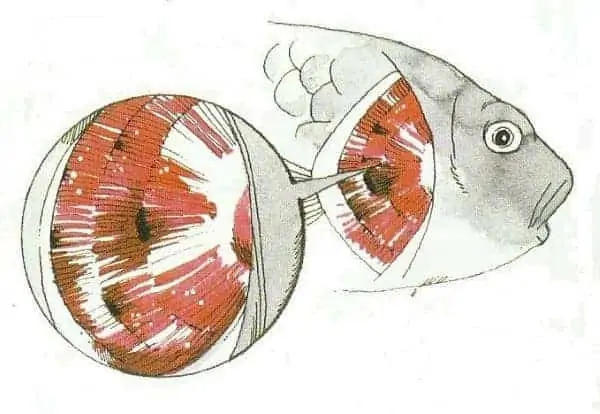
Symptoms: Fish gasp at the surface or at the waterfall inlet; excess mucus production; flashing behavior; pale or red-streaked gills when examined; clamped fins; lethargy. Symptoms are caused by the flukes’ hooked attachment mechanism damaging gill tissue, impairing oxygen absorption.
Cause: Dactylogyrus (gill flukes) and Gyrodactylus (skin flukes) are flatworm parasites. They are microscopic — typically 0.2–0.8mm — and can only be definitively identified under a microscope using a gill or skin scrape. They are extremely common and are present at low levels in virtually all koi ponds without causing disease. Problems arise when fish are stressed, water quality is poor, or new infected fish are introduced without quarantine.
Treatment:
- Praziquantel is the most effective treatment — available as PraziPro (liquid) or as medicated food. It is highly effective against both gill and skin flukes and is safe for biological filter bacteria
- Treat the entire pond — flukes spread from fish to fish and treating only isolated fish will fail
- Repeat treatment after 5–7 days to catch any eggs that hatched after the first treatment
- A potassium permanganate dip (10 ppm for 10 minutes) can provide rapid relief for severely affected fish while pond treatment takes effect
- Improve water quality and oxygenation — flukes reproduce much faster in warm, oxygen-poor water
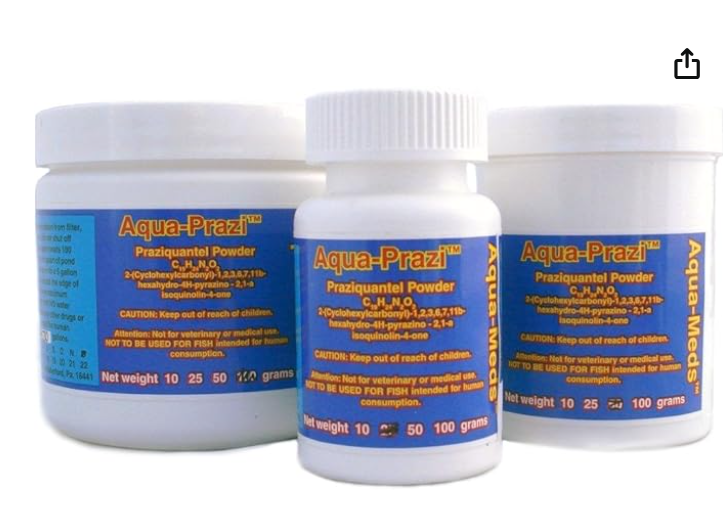
Aqua Meds Aqua Prazi — Praziquantel (100g)
Aqua Meds · Amazon’s Choice · 4.6 stars (81 reviews)
The most trusted praziquantel treatment for koi gill flukes, skin flukes, and tapeworms. Safe for biological filter. Treat full pond. Repeat after 5–7 days to eliminate newly hatched flukes.
View on Amazon →As an Amazon Associate I earn from qualifying purchases. Price unaffected.
6. Swollen Gill Disease (Bacterial Gill Disease)

Symptoms: Gill plates (operculum) visibly swollen or protruding away from the body — in severe cases, the gill plate cannot close fully. Labored breathing; fish hang near the surface or near oxygenated water inlets; pale or necrotic (dying) gill tissue visible when the gill plate is gently lifted.
Cause: Bacterial infection of the gill tissue — most commonly Flavobacterium columnare or Aeromonas species — causes rapid necrosis of the gill lamellae. The swelling results from tissue inflammation and fluid accumulation. Typically triggered by poor water quality, high ammonia, or oxygen depletion that stresses and damages the delicate gill tissue, allowing bacteria to take hold.
Treatment:
- Immediate 30–50% water change with well-oxygenated dechlorinated water
- Increase aeration — gill disease is life-threatening when oxygen transfer is compromised
- Treat with oxytetracycline (in food) or a broad-spectrum antibacterial
- Salt treatment (0.2% concentration) to reduce osmotic stress
- Improve water flow to increase oxygen levels across the pond
7. Ulcers & Aeromonas (Bacterial Ulcer Disease)
Symptoms: Open red or red-white sores (ulcers) on the body — typically 5–50mm in diameter, ranging from shallow skin lesions to deep craters exposing muscle tissue. The edges are inflamed and red; the center may be white, grey, or necrotic. Fish may show redness at the base of fins, hemorrhaging, and lethargy as infection progresses.
Cause: Ulcers result when Aeromonas hydrophila or similar gram-negative bacteria enter damaged skin — from a minor injury, parasite attachment wound, or stress-induced skin compromise. Aeromonas is present in all pond water; it becomes a pathogen only when fish are immunocompromised. Poor water quality, parasites, overcrowding, and temperature fluctuations are the primary predisposing factors.
Treatment:
- Remove fish to a quarantine tank for treatment
- Gently clean the ulcer with diluted povidone-iodine using a cotton bud — remove any dead tissue carefully
- Apply a topical wound treatment (Orabase, koi-grade wound sealer, or propolis gel) to seal the ulcer from further infection
- Treat systemically with antibiotics — either medicated food (most effective for internal spread) or API Melafix as a supportive antibacterial
- Add 0.1–0.2% aquarium salt to the quarantine tank
- Test and improve water quality in the main pond — treating the fish without fixing the water guarantees reinfection
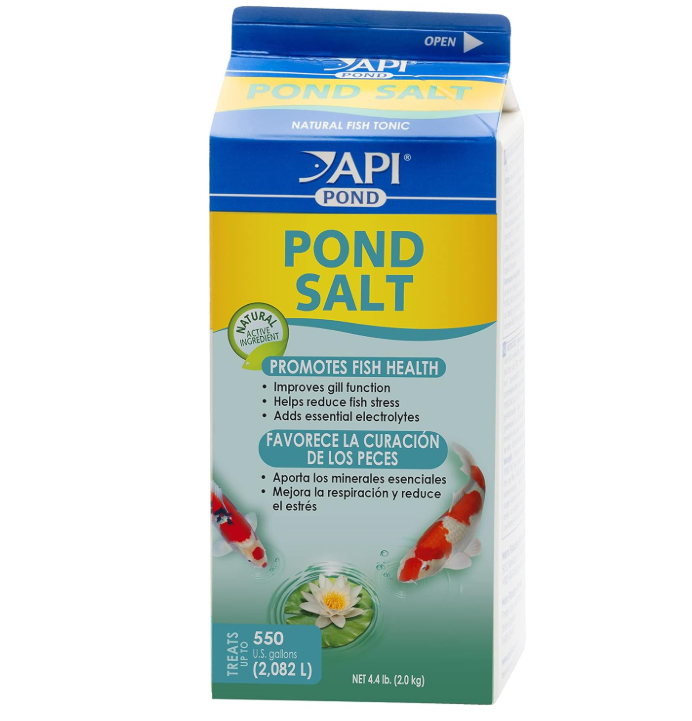
API Pond Salt — Pond Water Salt (4.4 lb)
API · Made from evaporated sea water · Non-iodized
Salt treatment is recommended for 8 of the 11 diseases in this guide. Reduces osmotic stress, supports gill function, and inhibits harmful bacteria. Use 0.1–0.3% concentration depending on condition. Essential first-response treatment — always keep stocked.
View on Amazon →As an Amazon Associate I earn from qualifying purchases. Price unaffected.
8. Fin Rot (Bacterial / Fungal)
Symptoms: Fin edges appear ragged, frayed, or dissolving. White or red edges where the fin is degenerating. In bacterial fin rot, the rot progresses from the fin margin toward the body. In fungal fin rot, a fluffy white border precedes the tissue loss. Without treatment, fin rot progresses to the fin base and can eventually reach the body wall.
Cause: Most commonly bacterial (Aeromonas, Pseudomonas) entering through fin damage — rough handling, fin nipping by other fish, net abrasion, or injury on sharp surfaces. Poor water quality (especially high ammonia) is almost always the underlying trigger. Fungal fin rot (Saprolegnia) is secondary to bacterial damage or physical injury.
Treatment:
- Correct water quality first — fin rot will not resolve in poor water regardless of treatment
- API Melafix (for bacterial fin rot) or API Pimafix (for fungal) daily for 7 days
- Salt bath (0.1% in main pond or 0.3% in quarantine tank)
- Fins can regenerate if caught before damage reaches the body — recovery takes weeks to months
- Remove any sharp objects or rough surfaces that may have caused initial damage
9. Fungus (Saprolegnia)

Symptoms: White, grey, or brownish cotton-wool-like patches on the skin, fins, or around wounds. Fungus typically appears as a secondary infection on top of an existing wound, bacterial ulcer, or area of damaged skin. The fluffy growth consists of fungal hyphae — the “roots” of the Saprolegnia organism.
Cause: Saprolegnia and related water molds are present in all ponds. They do not infect healthy, undamaged skin — they colonize dead or damaged tissue. Fungal infection is therefore almost always secondary to another problem: a bacterial ulcer, an anchor worm wound, a net abrasion, or skin damage from a spawning injury.
Treatment:
- Identify and treat the primary cause — the underlying wound or infection that the fungus is growing on
- API Pimafix daily for 7 days (natural antifungal — West Indian Bay oil)
- Salt bath: 0.3% aquarium salt in quarantine tank inhibits fungal growth
- For severe patches: carefully remove the cottony growth from the wound with a soft wet cloth or cotton bud, then apply diluted povidone-iodine to the area before returning to treatment water
- Methylene blue at recommended concentration is an effective antifungal for tank treatment
10. Koi Herpesvirus (KHV) — The Most Dangerous Koi Disease
⚠ EMERGENCY — There is no cure. Mortality can reach 80–100% of a pond population within days.
If you suspect KHV: isolate any new fish or sick fish immediately, report to your national aquatic health authority (required by law in many countries), and do not move water, equipment, or fish from the affected pond.
Symptoms: Sudden mass deaths — fish may appear healthy one morning and be dead by evening. Survivors show: severe lethargy; sunken or sunken-looking eyes; gill necrosis (white, pale, or mottled patches on gills — gills feel rough and pale when examined); hemorrhaging on skin and fins; skin lesions. The disease is active at 17–28°C (63–82°F) — fish may appear to recover at temperatures outside this range only to relapse when temperature returns to the active zone.
Cause: Cyprinid Herpesvirus 3 (CyHV-3) — a highly contagious herpesvirus specific to common carp and koi. Spreads through water, fish-to-fish contact, shared equipment, and possibly through intermediate hosts like Argulus. Once a pond is infected, the virus cannot be eradicated. Surviving fish may become lifelong carriers, capable of infecting naive fish during future temperature-triggered outbreaks.
Prevention (only protection):
- Quarantine ALL new koi for a minimum of 4 weeks before introduction to your main pond — this is the single most effective KHV prevention measure
- Never share equipment (nets, buckets, filters) between ponds without disinfection
- Do not mix water from different pond systems
- Buy from reputable KHV-tested suppliers where possible
- In some countries, KHV vaccination is available — ask your aquatic veterinarian
11. Columnaris (Mouth Rot / Saddleback Disease)
Symptoms: White, grey, or yellowish lesions appearing first around the mouth, then spreading across the head area and dorsal surface. A “saddleback” appearance (pale saddle-shaped lesion behind the dorsal fin) is the disease’s characteristic presentation. Frayed fins; labored breathing; lethargy. Columnaris progresses rapidly — can kill fish within 24–48 hours in warm water.
Cause: Flavobacterium columnare — a gram-negative bacterium present in pond water that becomes pathogenic under stress conditions. Warm water (above 25°C / 77°F) accelerates its virulence dramatically. Skin damage (from parasites, handling, netting) provides the entry point.
Treatment:
- Isolate immediately — Columnaris can spread to other fish
- Improve water quality and reduce water temperature if possible
- Treat with oxytetracycline or other antibiotics effective against gram-negative bacteria
- Salt treatment at 0.1–0.2% concentration helps inhibit F. columnare
- API Melafix and Pimafix combination as supportive treatment
All Diseases — Treatment Quick Reference
| Disease | First Action | Primary Treatment | Isolate? |
|---|---|---|---|
| White Spot (Ich) | Raise temp to 25–27°C | Formalin/malachite green — treat full pond | Optional |
| Dropsy | Isolate; salt 0.3%; Epsom salt | Metronidazole / kanamycin in food | Yes — always |
| Anchor Worm | Manual removal with tweezers | Dimilin / Lernaea treatment for pond | No — treat pond |
| Fish Lice (Argulus) | Manual removal; wound care | Potassium permanganate / Parazin P | No — treat pond |
| Gill Flukes | Increase aeration | Praziquantel — full pond; repeat in 7 days | No — treat pond |
| Swollen Gills | 50% water change; more aeration | Oxytetracycline in food; salt 0.2% | Yes |
| Ulcers | Isolate; clean wound with iodine | Antibiotic food + topical wound sealant | Yes |
| Fin Rot | Fix water quality first | API Melafix + salt 0.1% | Optional |
| Fungus | Treat underlying wound | API Pimafix; salt 0.3%; methylene blue | Yes |
| KHV | Isolate pond — no cure | Supportive only; notify authorities | Entire pond |
| Columnaris | Isolate; lower temperature | Oxytetracycline + salt 0.1–0.2% | Yes |

API Pond 5-in-1 Test Strips (25 Count)
API · Tests pH, Nitrite, Nitrate, KH, GH · Fast dip-and-read
Test your pond water before treating any sick fish. Poor water quality is the #1 cause of koi disease — and treating a fish without fixing the water guarantees reinfection. Fast dip-and-read results in seconds. Use weekly for prevention, daily during disease outbreaks.
View on Amazon →As an Amazon Associate I earn from qualifying purchases. Price unaffected.
Prevention: The 5 Pillars of Koi Health
80% of koi diseases are caused or significantly worsened by poor water quality. Prevention is always cheaper and less stressful than treatment.
1. Water Quality
- Ammonia and nitrite: 0 ppm always
- 20% water changes weekly
- pH stable at 7.0–8.5
- Test weekly — act on any deviation
2. Quarantine All New Fish
- Minimum 4 weeks in separate tank
- Watch for any disease signs
- Do not share water or equipment
- KHV test from reputable suppliers
3. Avoid Stress
- 250 gallons per adult koi minimum
- Stable temperature — avoid swings
- Strong aeration at all times
- Heron and predator protection
4. Diet & Nutrition
- Quality food matched to season
- 5-minute rule — remove uneaten food
- Wheat germ in cool water
- Stop feeding below 50°F / 10°C
5. Daily Observation
Observe every fish at every feeding. You cannot treat what you don’t notice. Early detection — a single flashing fish, one slightly clamped fin, a fish hanging slightly low in the water — gives you days to respond before a disease becomes critical. The pond keeper who watches closely prevents 90% of disease crises simply by acting before they escalate.
Quarantine Tank Setup
A proper quarantine tank is the most important piece of koi disease management equipment you own — both for new fish and for sick fish requiring treatment.
- Volume: 100–500 gallons depending on fish size. Larger is better — more stable water chemistry.
- Bare bottom: No gravel or substrate — makes waste visible, easier to clean, and allows medication to be administered and removed precisely.
- Sponge filter only: Power filters can expose weakened fish to dangerous flow. A cycled sponge filter provides biological filtration safely.
- Heater: Maintain a stable temperature matching the main pond (±2°F). Sick fish have impaired temperature regulation.
- Aeration: Run an air stone continuously — medications often reduce oxygen absorption and sick fish have elevated oxygen demands.
- Cover: Sick or stressed koi sometimes jump — a mesh cover prevents losses.
- Keep stocked with essential medications: API Melafix, API Pimafix, aquarium salt, metronidazole, praziquantel, methylene blue, and a water test kit.
See our related guides: Bloated Koi Fish Treatment · String Algae Treatment
Related Reading on Giobel Koi Center
Frequently Asked Questions
What are the most common koi fish diseases?
How do you treat white spot on koi fish?
What does dropsy look like in koi fish?
How do you identify fish lice on koi?
What causes koi to flash or rub against surfaces?
What is KHV in koi fish?
How do you prevent koi diseases?

Giovanni Carlo
Koi keeper & founder, Giobel Koi Center · Labangan, Zamboanga del Sur
Giovanni has been keeping koi since the 1980s on his farm in Mindanao. He has dealt with every common koi disease over his decades of pond keeping and writes from genuine hands-on experience with diagnosis, quarantine, treatment, and the water quality management that prevents most health issues from occurring in the first place.

Passionate about fish keeping since elementary school in the 1980s, Giovanni Carlo has dedicated countless hours to collecting and breeding a diverse array of ornamental freshwater fish. From vibrant guppies and majestic koi to striking bettas and classic goldfish, he continues to explore the fascinating world of aquatics, sharing knowledge and enthusiasm with fellow fish enthusiasts.
Hello,
Greeting from Vietnam.
Currently, I am rearing couple of KOI fishes, however, I got a problem with them after breeding.
Do you have any social account that I can quickly contact to ask for your help?
Thank you
Hello, what is the problem you encounter, yes, you can subscribe to my youtube channel Giobel Koi Center and leave comment on one of my videos so I can respond to it.